Senior Placement Agencies Find Their Niche in Portland Oregon

Senior Placement Agencies advocate for familiesThis weekend’s Oregonian featured an informative article entitled “Senior placement consultants help clients find care communities that fit their needs“.  It’s a story about how placement and referral services can help families find senior housing, and act as expert liaisons between community and client.  Senior List co-founder Amie Clark (who also owns and operates The Senior Resource Network) was featured in the article, as was colleague Jennifer Cook (with Living Right Senior Placement).  The key to finding the right placement agency is to find an agency that has the best interests of the client at heart.  A placement agency needs to be well informed, aware of state filings, and personnel should be credentialed.  In the Portland metro area, there are over 250 assisted living/memory care facilities and over 1,000 adult care homes to navigate, so having an expert on your side makes all the difference.

“Finding the right fit between our clients and a community makes all the difference in the world” says Clark.  “We do the leg-work for the client ahead of time, like reviewing state records, understanding the level of care provided, and in some cases policing monthly service costs.  Even the little things like how good the food is, or social/recreational services become big things when your loved one moves into a care community.”  Amie and Jennifer are both members of OSRAA, The Oregon Senior Referral Agency Association.  The association regulates local agencies by requiring member agencies be in business for 3 years minimum, AND meet standards and ethics requirements.  Click through to read how placement and referral agencies can help find senior-housing solutions in your local area.

Exercise May Improve Dementia and Alzheimer’s Risk Factors

Alzheimer's Association International Conference Logo

The Alzheimer’s Association International Conference

More and more studies are showing a relationship between cognitive function and exercise.  New results from clinical trials were reported recently at the Alzheimer’s Association International Conference held in Vancouver BC.  Four (4) studies noted a reduced risk factor when targeted exercise was implemented as part of a regimen.The first study noted that moderate walking may enhance the region of the brain related to memory, and increase the nerve growth factor.  Kirk Erickson, PhD from the University of Pittsburgh noted that ”the aging brain remains modifiable, and that sedentary older adults can benefit from starting a moderate walking regimen”.  The study reported an increase in the brain region identified with memory (in those that exercised).

The second study from the University of British Columbia examined the effect of resistance training on thinking and memory in older adults.  This study entitled the EXCEL (Exercise for Cognition and Everyday Living) study looked at resistance training vs. balance and tone exercises and found that the more rigorous resistance training led to improvements related to memory and other outcomes (vs the balance and tone group).

Two additional studies reported found similar results.  The bottom line?  Exercise is good (for everybody)… Especially older adults at risk for MCI (mild cognitive impairment).

For more information visit the Alzheimer’s Association or visit the AAIC 2012 homepage.

Senior Housing Referral Companies- What you Need to Know

Senior Placement and Referral Agencies; Explained

A senior housing referral company helps clients locate appropriate senior housing in a given geographic area.  A reputable placement and referral service can save you time and energy in your search for senior housing. They should know which communities can supply appropriate care and be able to refer their client to all types of communities. To validate the reliability of a referral company, ask them if they work only with communities that they have contracts with or if they will also refer you to communities that won’t sign contracts. Also, make sure they have personally toured each of the prospective communities and see if they collect information on both substantiated and unsubstantiated complaints. Finally, when looking for a referral agency, choose one that provides you with a list of suitable living options and will escort you on visits to the properties at your request.

Referral companies who do not charge clients for their services will expect the client to work with them exclusively; referral companies gather similar information, so there is no need to work with more than one. This type of referral company receives a “finder’s fee” from the community that the client chooses. Other types of senior referral companies may charge for their services at hourly or set rates. When working with a fee-for-service company, make sure to get the charges in writing before you begin the referral process.

When working with a referral company, let them know your needs, preferences, comfort levels, and expectations. Be honest and straight forward. The more information you provide to them, the better they can serve you and find a place that will best suit your needs.

Choosing suitable housing for a loved one is an important decision for you and your family. Utilizing a referral company will help ensure you find a great place.

Programs of All-Inclusive Care for the Elderly (PACE)

We all want the best care for our aging loved one, but getting that care can be frustrating. If you have an aging loved one, you know what it’s like to drive your loved one from appointment to appointment; to manage all of their medications; to deal with doctors who don’t talk to one another; and you struggle with leaving your loved one at home, alone and without the supervision, the company andthe  interaction they want (and need).

It doesn’t have to be this way. Thousands of families across America have found a different and better kind of care for their aging loved ones – PACE.  Programs of All-inclusive Care for the Elderly (PACE) provide comprehensive health services for individuals age 55 and over who are determined to be “nursing home eligible” by their state’s Medicaid program. The care model is centered around the belief that it is better for the well-being of seniors with chronic care needs and their families to be served in the community whenever possible.

What do we offer?
PACE services include primary and specialty medical care, medications and medical supplies; all emergency medical, surgical and hospital services; social services; therapies (occupational, physical, speech, recreation, etc.); day health center services; home care; transportation to and from the day center, medical appointments and PACE organized trips; minor modifications to the home to accommodate disabilities; and anything else the program determines is medically necessary to maximize a member’s health.

Who do we serve?
PACE programs enroll only the very frail–a patient population for whom prevention and health promotion makes a significant difference.  Most PACE members have multiple diagnoses, with an average of over 7 diagnoses per member. Among the most common are cardiac problems, diabetes, hypertension, and vascular disease.

How do we do it?
At the core of the PACE care model is the interdisciplinary team. This team is made up of doctors, nurses, therapists, pharmacists, social workers, caregiver aides, chaplains and others. Primary care providers and other caregivers are trained in working with seniors and are focused on treating the whole person. They work together with the participant and any appropriate family members to create an individualized care plan. PACE programs provide high levels of preventive services, such as frequent check-ups, exercise programs, dietary monitoring, programs to increase strength and balance, and more.

PACE programs organize their services in a “PACE Center”. These Centers have a Day Health Center, physician’ offices, nursing, social services and rehabilitation services, along with administrative staff, all in one site. Members attend centers from rarely to daily, depending on their care plans. Most members attend about 2 days per week.

Where do our participants live?
Participants may live in their own home or with a family member and receive in-home support from a PACE employed or contracted caregiver. Others live in some type of care facility such as an adult care home, assisted living facility or residential care facility.

Caregiver Tips For Treating Dementia Patients: Flash Cards

One of the most painful realities for dementia caregivers is the loss of recognition.  As memory erodes, the patient loses the ability to recognize those most dear to them such as spouses, children, and siblings.  Michelle Bourgeois, a speech-pathology professor at Ohio State University has come up with a system that allows caregivers to bridge that communication gap, at least temporarily.  She advises caregivers to use flash cards to help ease those identity issues and answer the questions which dementia patients will repeat endlessly.

For instance, Bourgeois had a caregiver create two flashcards .  One had a photo of herself as a child, which she labeled “This is my daughter Susan, at age 6.”  The second card had a photo of her at her current age.  That one was labeled “This is my daughter Susan now.”  The woman showed the cards to her mother, who had lost the ability to know who her daughter was.  The mother studied the two photos and captions and was able to recognize her daughter and converse with her as her daughter and not as some vaguely familiar stranger.

One had a photo of herself as a child, which she labeled “This is my daughter Susan, at age 6.”  The second card had a photo of her at her current age.  That one was labeled “This is my daughter Susan now.”

Bourgeois advises caregivers to use similar systems to provide answers to the obsessively repeated questions.  When the asking begins, the caregiver can hand the card to the patient and say, “The answer is on the card.”  She reports that in the majority of case, it calms the patient and the questioning stops.  One key to using this system to bridge the communications gap is to be sure that the print on the card is large and easy to read, and that whatever is printed is a short, simple sentence.

Blessings, Joanne

 *Photo: Rasdourian via Flickr

Moving Mom Into A Nursing Home

In elder or dementia caregiving, one of the hardest decisions to make is to move your loved one out of his or her home (or your home) and into a more institutional setting.  Making the move bearable for your loved one may not always be possible.  They may stand firm… They’re staying put, and that’s that!

It may help with the transition if you can remember some significant changes from your own life:

Questions to consider before moving mom into a nursing home:

  • What did it feel like to you as a child when your family moved to a new home in a new location?  Think about those first few days of trying to find your things, especially if some of them had to be left behind.  Try to recall what your emotions were when you went to the new school the first time—all those strangers and you didn’t know anyone.  Did your parents’ logical explanations and promises that “everything will be alright” make any impact on how you felt?
  • What did it feel like as an adult when you went to a new job for the first time?  Managing to learn a lot of new names in a short period of time was stressful, wasn’t it?  The same was probably true of learning new work rules—written and un-written—so that you weren’t creating problems right off the bat.
  • Can you remember what it felt like to give up control of your life when you went into the military or other organization?  You know, when someone else told you what to do and how to do it… You were probably a bit resentful, even if you managed to comply.  Most of us find small ways in which to act out that rebellion—sneaking a forbidden treat, making jokes about the people in charge, etc.

“For emotional preparation, the prospective resident should be involved in as much of the decision-making as possible. Fear of the unknown can make an admission more difficult. Both the caregiver and resident should be able to spend some time in the facility, with the staff, other residents, and other family members until some kind of comfort is developed.”  Peter Silin, MSW, RSW

I think you get the point.  Moving your loved one puts them into the emotional pool I’ve just asked you to swim in.  By answering these questions, you can begin to experience some of what your loved one is experiencing.  This sense of loss of the familiar, confusion in the new place with new people, and new regimes is especially heightened if your loved one is suffering from dementia.

Stretch your imagination far enough to strategize ways to ease the transition and AND the emotional upset it will engender.  There’s a terrific article by Peter Silin, MSW, RSW entitled “Moving Into a Nursing Home: A Guide For Families“.  Take a look at it if you’re in the process, or if you can see this in your future down the road.  It can be a big help in easing the stress for you and your loved one.

Blessings, Joanne

*Photo: Bardaga via flickr

Downsizing To Community Living- What To Bring With You

The Senior Resource Network is a leading placement and referral agency in Portland Oregon.  Amie Clark (owner/operator of The Senior Resource Network, and co-founder of The Senior List) wrote a helpful post entitled “Downsizing To Community Living- what to bring and what to let go”.  It contains some valuable tips that we’d like to share with you here on The Senior List.  Here is a list of what to bring with you.  For the list of what to leave behind, click through to the original article.

What to bring to your new senior community:

  • Bed- Generally, beds are not furnished (the exception would be an adult care home), unless your insurance is paying for a hospital bed.  Depending on the size of the bedroom, a twin, double, or full-sized mattress is best.  You want to make sure there is plenty of room around the sides of the bed to maneuver safely, especially if other furniture is in the room.  A foot-board and headboard may be desired, depending on the space.
  • Chairs and Sofa
  • Shower curtain and rings- Most communities supply the rod.
  • Towels- Several (2-3)complete sets of towels.  If housekeeping is done weekly, this should be plenty.
  • Sheets- At least two sets, unless the bed is changed frequently, most housekeeping is weekly that includes laundering sheets.
  • Bedspread, blankets, and pillows
  • Laundry Basket
  • Garbage cans- In a retirement or assisted living setting, a small garbage in the bathroom(s) and kitchen area are handy.
  • Clothes Hangers
  • Personal Items & Toiletries- toothpaste, toothbrush, denture products, comb/brush, soap, shampoo, shaving products, incontinence supplies*, glasses, hearing aids.
  • Clock, personal photos, and decorative items- familiar items in your new home, like curtains, artwork, and houseplants can make a world of difference to make your new accommodations feel more like home.
  • Telephone (optional)
  • TV/ Radio
  • Dresser/ Nightstand
  • Clothing- Garments that are washable- commercial washing machines can be very harsh on clothing, I would limit dry clean items, and comfortable for everyday use.  Perhaps a few dressy items for special events.

*Some communities will assist in ordering incontinence supplies as they may be able to purchase in bulk at reduced prices.

For a list of local placement and referral specialists in your community, check out the agency listings on The Senior List Eldercare Directory.  Be sure to look for ratings and reviews as they can be a helpful tool when deciding who to work with.

Choosing a Senior Care Facility

How To Choose A Senior Care Facility:

Aunt Florence was recently widowed, and wanted to stay in the home she’d shared for more than a decade with her second husband.  It was isolated and more than two hours drive from her two nephews.  Her own children had disowned her at her remarriage, and they would not even discuss their mother’s care with their cousins. Then there was another really BIG problem:  Florence was clearly suffering from dementia with significant memory loss and paranoia.  In theory, the solution was simple enough—find a senior care facility for Florence.  She insisted however, on staying in her own home.  When she fell and broke her hip, there was no question of her living on her own.

Are you facing a similar dilemma, trying to decide whether to move your loved one, and if so to what type of facility?  Here are some suggestions to help you sort out the choices.  They come from Stages of Senior Care: Your Step-by-Step Guide to Making the Best Decisions by Paul and Lori Hogan, founders of Home Instead Senior Care.

You are probably trying to make choices between an assisted living facility (ALF) or a nursing facility. Generally, people in an ALF require some, but not a lot of assistance.  In a nursing facility, people like Aunt Florence need more supervision and medical assistance.  ALF residents have a greater degree of independence than in a nursing home.  For the most part, they live in small apartment-like units and are free to set their own personal schedules as they decide.

In both types of facilities, patients are not allowed to be in charge of their own medications.  Those are handled by the staff whether or not the patients are capable of handling them own their own.  This even applies to supplements like vitamins.  Both settings offer opportunities for social interaction and plenty of activities to help keep residents’ minds active.  It’s a benefit of moving your loved one away from an isolated existence at home.  Safety is another reason for choosing a care facility over staying at home.  Falls, like Florence’s, and other emergencies  are all reasons to consider moving your loved one out of his or her home.

Cost is an obvious issue.  Be sure to ask at the facility you’re considering what is included in the monthly fee, and most importantly what is not.  Does your loved one (or you) have the financial resources to stay in a care facility over a long period of time?

Are you prepared for the downside, such as anger and resentment on the part of your loved one at being moved, perhaps against his or her wishes?  An ALF with its small apartments and nursing facility with one-half of a two-bed room don’t allow the patient to bring many possessions with them.

In theory, it’s a good idea to have your loved one’s approval to move him or her to one of these types of facilities, but in reality you may never receive it.  Perhaps the better question to ask is about your ability to continue to provide care and keep your loved one safe and comfortable in the home.  Try to see the issue from the perspective of your health and well-being as well as their comfort and safety.

Finally, be sure to spend time picking the right facility.  Visit more than once and spend time observing how the staff members interact with their patients.  Note sights, sounds and smells.  Keep in mind that there is a wide range in quality of either type of facility.

The Cost of Eldercare

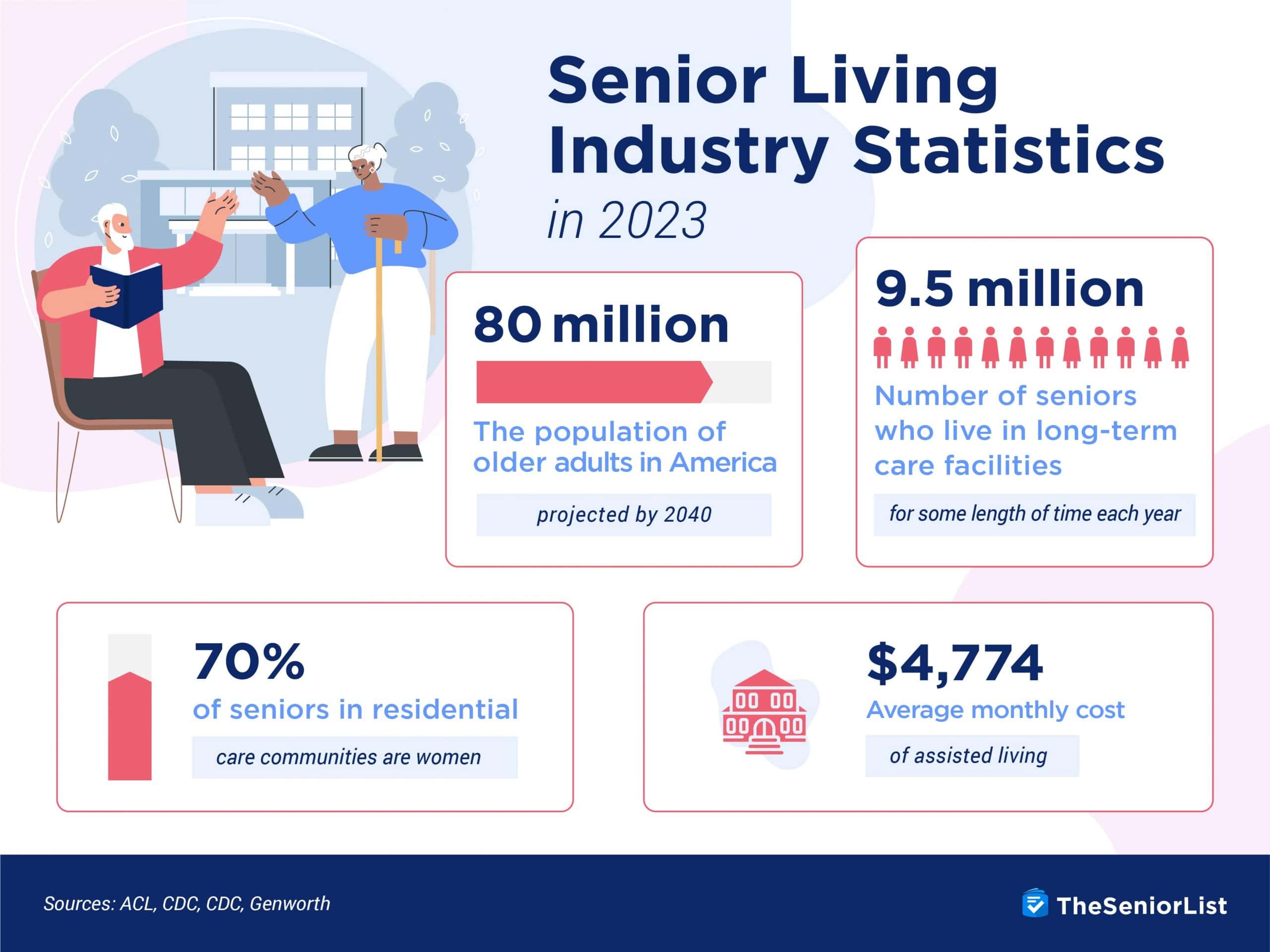
Here at The Senior List we often field calls from clients and other professionals about the cost of care across the nation. I am thrilled to share an incredible tool I recently discovered to help answer those questions! The Cost of Care Map has been developed by Genworth Financial, a leading financial security company.

The Cost of Care Map provides an overlay of each state, citing yearly costs for Nursing Homes, Assisted Living, Adult Day Health Care, Home Health Aide, and Homemaker Services. Some states are even called out by metro region, allowing the user to compare metro areas within particular states. What struck me was the vast differences in costs not only across the states, but even within specific states themselves! The tool is very user friendly and serves as a cold dose of reality to the rising costs of care in all settings.

What is a Retirement Community?

What Is A Retirement Community?

Retirement Communities and/or Independent Living Facilities are most appropriate for seniors who can manage their health care needs on their own or with assistance from family in an apartment type setting. Independent Living does not offer health care services or assistance, but may offer a monthly meal plan, housekeeping, social activities, and transportation.

Some communities will partner with an In-Home Care Agency to provide some services to residents. Services may include Medication Management, Bathing and Grooming Assistance, or Incontinence care. If additional care services are being provided, at some point the cost of the apartment and care will equate that of an Assisted Living Community. Some Independent Facilities are located on a campus where other levels of care are offered should one need them in the future.

Independent Living costs range from $1000-$2500 per month, depending on apartment size, amenities, and meal plan. Some Independent Facilities will provide one to two meals per day and may offer a meal plan if a resident prefers to cook occasionally.

Only private pay is accepted at Independent Facilities. Medicaid does not cover housing costs for Independent living. Long Term Care Insurance typically does not cover Independent Living, but may cover the cost of outside in-home care services.

What are the advantages of a Retirement Community?

  • Nutritious Meals, Activities, and Housekeeping offered
  • Maintain Independence in a social setting
  • No upkeep or utilities to manage (except personal phone and cable)

What should I look for when searching for a Retirement Community?

  1. I personally prefer retirement communities to be adjacent to another level of care, most commonly, an assisted living or residential care facility. If a move occurs in the future, it is much easier to move across the courtyard instead of the other side of town.
  2. What amenities are offered? Are the activities varied? Is an exercise program offered?
  3. If your loved one is driving, is there reserved and covered parking available for residents?
  4. Are pets allowed? Is smoking allowed on campus?
  5. How involved is the management staff in the lives of the residents? Will they notify you if they see changes in your loved one?
  6. How often are meals served? Is there a flexible meal plan option? Is the cost of meals included in the overall price?
  7. How is the food? Invite yourself for lunch (most will offer)- observe staff interacting with the residents. Is there a social atmosphere in the dining room or are residents keeping to themselves. Do residents seem happy? Do the staff know the residents by name? The dining room is a great indication of the “mood” of the building.
  8. How does the physical building look? Is it well kept? Are repairs needed? Ask about the maintenance response time. How available are they for minor repairs for the resident’s apartments (light bulbs, hanging pictures, etc…)?

When is it time to transition to higher level of care? First, I would suggest that if a resident requires care to begin with, a retirement community will only be a temporary solution. If a resident has lived in a retirement community and is requiring more supervision, can’t safely manage daily activities, and requires frequent checks from staff, a higher level of care is needed.