Best Portable Oxygen Concentrators of 2026
 |
June 5, 2026
|
|
June 5, 2026
|
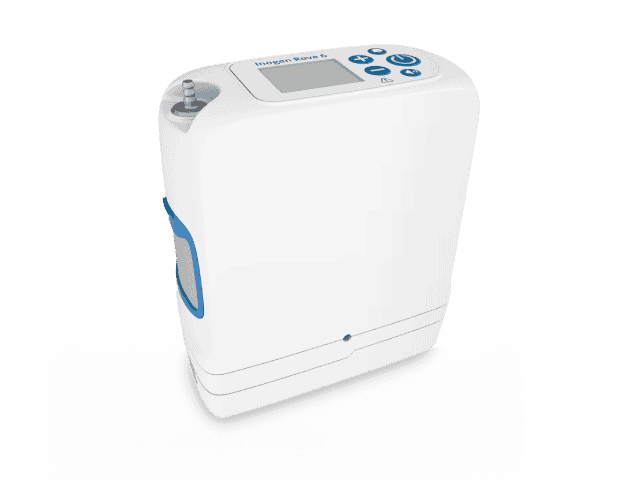
If you or a loved one is one of the 1.5 million U.S. adults using supplemental oxygen annually in an outpatient setting,1 portable oxygen concentrators (POCs) like the Inogen Rove 6 can help support an active, independent, and social lifestyle.
With so many options on the market, it can be difficult to narrow down which device is best for your lifestyle and prescription. To help you narrow it down, we’ve evaluated portable oxygen concentrators based on verified specifications, clinical suitability, and real-world user feedback. Check out the list of our top five recommended POCs of 2026.
Before Getting Started: Save time searching by having your prescription nearby. Your prescribed flow type (pulse dose or continuous flow), setting number, and daily hours of use will immediately eliminate most devices from consideration.
The Best Portable Oxygen Concentrators of 2026
- Inogen Rove 6 : Best Overall
- Inogen Rove 4 : Best Portability
- O2 Concepts Oxlife Liberty2 : Best for Continuous Flow
- CAIRE Freestyle Comfort : Best Ergonomic Design
- GCE Zen-O Lite : Best for Adaptive Delivery
The Best Portable Oxygen Concentrators Compared
|
Inogen Rove 6
 |
Inogen Rove 4
|
O2 Concepts Oxlife Liberty2
 |
CAIRE Freestyle Comfort
 |
GCE Zen-O Lite
 |
|
|---|---|---|---|---|---|
| Our rating | 4.8 | 4.8 | 4.5 | 4.3 | 4.2 |
| Price* | $2,795 |
$2,695 |
From $2,700 |
From $2,600 |
From $2,500 |
| Weight with battery | 4.8 lbs |
2.9 lbs |
8 lbs |
5–6 lbs |
5.5 lbs |
| Battery life (maximum) | 12.75 hours |
6 hours |
4.5 hours |
16 hours |
4.5 hours |
| Delivery mode | Pulse dose |
Pulse dose |
Pulse dose and continuous flow |
Pulse dose |
Pulse dose |
| Warranty | 3 years of lifetime |
3 years of lifetime |
3 years |
3 years |
3 years |
| FAA-approved | Yes |
Yes |
Yes |
Yes |
Yes |
| Read More | Inogen Rove 6 Review | Inogen Rove 4 Review |
*Price Disclaimer: All price ranges reflect publicly available MSRP data as of early 2026 and are provided for informational comparison only. Actual prices vary by retailer, promotional discounts, and date of purchase. Always verify current pricing directly with the supplier before making a decision.
Further Reading: Learn more in our guide to portable oxygen concentrator prices.
1. Inogen Rove 6
800-577-7143
What We Like Most:
- Five flow settings
- Quiet performance
- Lightweight
- Nine-hour battery life
Overview

Price: $2,795
The Inogen Rove 6 is our top choice for active daily use and extended travel. It’s the lightest 6-setting pulse dose POC on the market, FAA-approved, and can provide up to nearly 13 hours with an extended battery. If your prescription is at setting 4 or above, the Inogen Rove 6 is the strongest lightweight option currently available.
This device features six flow settings while still being quiet, lightweight, and user-friendly. It even connects to the Inogen Connect app (available for iOS and Android), which allows you to monitor your battery level, flow setting, and device status from your smartphone.
The Rove 6 consistently earns high marks from older adult users for its light weight, quiet operation, and reliability during travel. Independent respiratory therapists and authorized service centers rate it as the top pulse dose portable for patients needing settings 4 through 6.
Inogen offers a 30-day trial, though returns result in store credit rather than a cash refund, which is worth confirming with the supplier before purchase.
Pros
- Lightweight, even with battery
- Extended battery life of up to 12 hours and 45 minutes
- Three-year and lifetime warranties available
- Inogen can work with Medicare or private insurance
Cons
- Pulse dose only
- Not compatible with CPAP use
2. Inogen Rove 4
800-577-7143
What We Like Most:
- Five flow settings
- Quiet performance
- Lightweight
- Nine-hour battery life
Overview
Price: $2,695
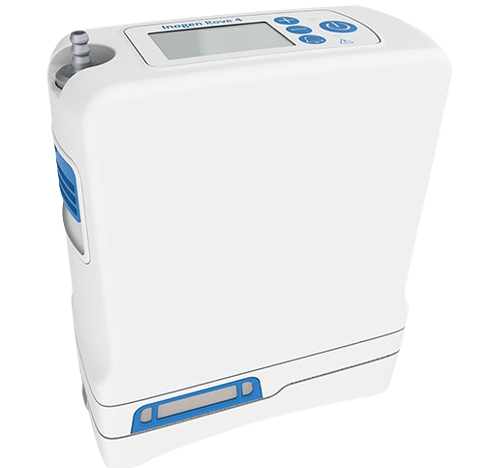
The Inogen Rove 4 is the best ultralight option for lower flow prescriptions. At 2.9 pounds with the standard battery, the Rove 4 is the lightest portable oxygen concentrator in Inogen’s current lineup and the lightest on our list.
It’s a puse-dose device that features four flow settings, making it ideal for someone with a lower prescription. If your prescription is above setting 4, we recommend going with the Inogen Rove 6.
Seniors who have used the device share that the Rove 4 is one of the most comfortable devices for all-day carry, and that the device draws almost no attention in public settings.
Like the Rove 6, Medicare may offer coverage through Inogen’s direct insurance program for qualifying patients, and there is a 30-day free trial. The Rove 4 also connects to the Inogen Connect app.
Pros
- Discreet and lightweight
- Battery life of up to 6 hours
- Four pulse dose settings
- Can be used while charging
Cons
- Not suitable for prescriptions above setting 4
- Not compatible with CPAP use
3. O2 Concepts Oxlife Liberty2
Overview
Credit: The Oxygen Concentrator Store
Price: From $2,700
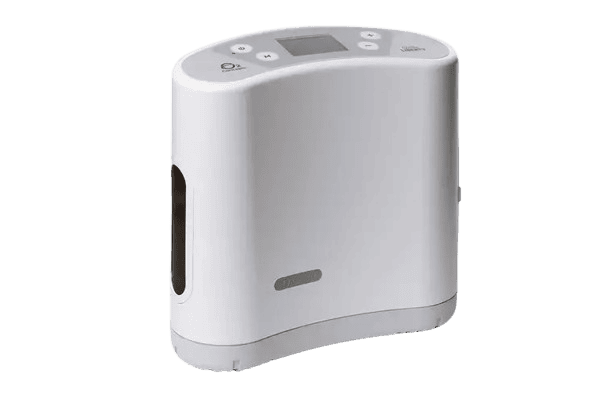
The Oxlife Liberty2 is the best dual-mode device for continuous flow needs. It’s the lightest portable oxygen concentrator to offer both pulse dose and continuous flow, making it suitable for nighttime use, CPAP integration, and patients whose prescription requires a steady oxygen stream.
We were impressed that a device with 10 flow settings and dual flow options was only eight pounds, and loved that it’s compatible with car, AC, and battery power for maximum travel flexibility.
Note: For patients who need continuous flow only at night, we recommend choosing a stationary home unit for bedside use. The Liberty2 is best for patients who need continuous flow portability during the day or during travel.
Pros
- Pulse dose and continuous flow
- Compatible with CPAP use
- Suitable for nighttime use
- 10 flow settings
Cons
- Heavier than pulse dose options in this guide
- Limited continuous flow battery life (one to three hours)
4. CAIRE Freestyle Comfort
What We Like Most:
- Long lasting battery
- 3-year warranty
- Lightweight design
- Intelligent oxygen delivery
Overview
Price: From $2,600
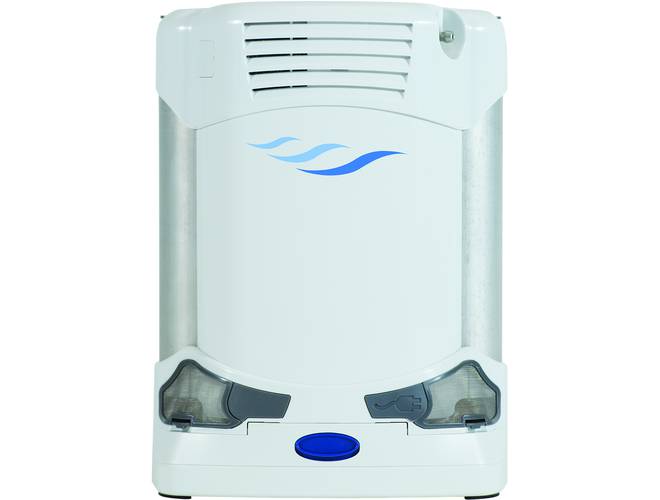
The CAIRE FreeStyle Comfort is the best ergonomic design for all-day wear. Its contoured ergonomic shape is designed to rest naturally against the body and can be worn three ways (shoulder strap, carry bag, or backpack).
Its smart oxygen delivery automatically adjusts to your breathing rate, making it a smarter option for users with varying activity levels throughout the day, and its optional 16-cell extended battery delivers up to 16 hours of runtime (The standard 8-cell battery provides up to eight hours at setting 2.).
The FreeStyle Comfort is great for users who spend extended hours in active settings like walking, shopping, or attending events. The device’s three carry options give users flexibility that single-carry units don’t offer, and the glow-in-the-dark control buttons are a practical accessibility feature for nighttime use.
Pros
- Ergonomic, convertible design
- Smart oxygen delivery features
- Can last up to 16 hours with a 16-cell battery
- Three-year warranty covers the device and sieve beds
Cons
- Not suitable for prescriptions above setting 5
- Not compatible with CPAP use
5. GCE Zen-O Lite
Overview
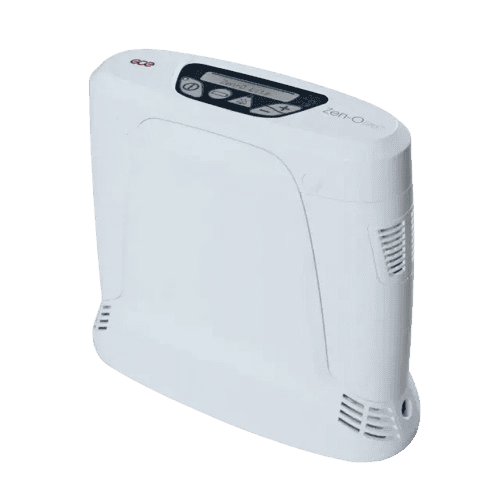
Price: From $2,500
The GCE Zen-O Lite offers the best adaptive delivery for variable oxygen needs. Its patented Rate Responsive Therapy and breath sensitivity technologies automatically increase oxygen delivery when breathing rate rises during exertion and reduces it at rest. This is particularly useful for users with fluctuating activity levels throughout the day.
Like the CAIRE FreeStyle Comfort, the Zen-O Lite offers five pulse dose settings and has a similar weight. We love how easy the backlit display is to use, especially for older adults, and that users who are physically active can enjoy its adaptive delivery system.
The Zen-O Lite’s main limitation is that it may not be as accessible as Inogen or CAIRE products, which are more widely distributed.
Pros
- Breath sensitivity and Rate Responsive Therapy
- Five pulse settings
- Lightweight — only 5.5 pounds
- Large backlit display
Cons
- Not suitable for continuous flow prescriptions
- Less consistent battery than Inogen and CAIRE units
How to Choose the Best Portable Oxygen Concentrator
The right portable oxygen concentrator starts with your prescription. Before you start comparing units, you must have your doctor confirm your:
- Flow type (pulse dose or continuous)
- Prescribed setting number
- Daily hours of use
Beyond your prescription, you should also consider:
- The weight of the device relative to how long you'll carry it
- Battery life calculated at your actual prescribed setting (not the maximum figure)
- Noise level if you plan to use the device in social or quiet settings
- FAA approval for air travel
For patients considering Medicare coverage, be sure to verify which suppliers in your area offer modern POCs rather than tank systems.
Selecting Pulse Dose or Continuous Flow
Pulse dose concentrators deliver a burst of oxygen when they detect the start of each breath and are efficient, lightweight, and suitable for most active daily users.
Continuous flow units deliver a steady stream regardless of breathing pattern, and are required for patients who need oxygen during sleep, use CPAP or BiPAP, or have breathing patterns too shallow or irregular for reliable breath detection.
Matching your prescription's delivery type to your device is non-negotiable — using a pulse dose unit when continuous flow is prescribed can result in dangerously inadequate overnight oxygen delivery.
Tip: COPD accounts for roughly 80 percent of all POC prescriptions in the United States.2 If you’re living with COPD, read our guide to portable oxygen concentrators for seniors with COPD.
Selecting for Battery Life
Published battery life figures for portable oxygen concentrators are calculated under controlled lab conditions at the lowest flow setting, so it’s important to note that real-world performance at mid-range and higher settings can be significantly lower.
When evaluating any POC, look for the battery runtime figure at the setting number closest to your prescription, and when in doubt, plan for backup battery capacity, especially for full-day outings and air travel.
Did You Know? The FAA has a 150 percent battery rule when it comes to prepping for air travel. Learn more in our guide to traveling safely with a portable oxygen concentrator.
Can Medicare Cover a Portable Oxygen Concentrator?
Medicare Part B covers oxygen equipment as durable medical equipment through a 36-month capped rental structure. After you meet the annual Part B deductible ($283 in 2026), Medicare pays approximately 80% of the approved monthly rental rate, and you are responsible for the remaining 20% coinsurance.
However, Medicare covers the rental of equipment your assigned supplier chooses to provide, not a specific brand or model. Due to reimbursement rate reductions implemented by CMS in 2013, some Medicare-approved suppliers provide oxygen tanks rather than modern POCs.
If you want a specific device, directly contacting manufacturers like Inogen, which work with Medicare on the patient's behalf, is often the most reliable path.
Note that Medicare explicitly does not cover POC rentals or purchases for air travel.
Related Reading: Interested in learning about our top Medicare Advantage plans? Read our guide.
Our Methodology
Our editorial team evaluated portable oxygen concentrators currently available for purchase or rental in the United States as of 2026.
We assessed each model across five criteria:
- Clinical suitability (whether the device can meet a realistic range of prescribed flow settings)
- Weight and portability
- Battery performance at mid-range settings (not just the manufacturer-quoted maximum at the lowest setting)
- Ease of use for older adults
- FAA approval status
We excluded discontinued models and devices without FDA clearance as Class II medical devices, and sourced specifications directly from manufacturer documentation and cross-referenced against independent reviews from authorized service centers and respiratory therapists.
The Bottom Line
The best portable oxygen concentrator is always the one that matches your prescription and fits your daily routine.
For most active older adults with pulse dose prescriptions up to setting 6, we recommend the Inogen Rove 6 for its strong output, long battery life, and weight. For patients at settings 1 through 4 who want the lightest possible device, we recommend the Inogen Rove 4, or if you’re looking for all-day carry comfort and an exceptional battery life, consider the CAIRE FreeStyle Comfort. If you need continuous flow for sleep, CPAP, or higher oxygen demands, look into the Oxlife Liberty2.
Frequently Asked Questions
-
What is the best portable oxygen concentrator for COPD?
For COPD patients with pulse dose prescriptions up to setting 6, the Inogen Rove 6 is the strongest lightweight option in 2026, offering a long battery life and high output. Patients requiring continuous flow should look into the Oxlife Liberty2 or a dedicated home concentrator for nighttime use with their respiratory therapist.
-
Are portable oxygen concentrators allowed on airplanes?
Yes, but it must be FAA-compliant. Any POC bearing the required FAA compliance label (a red-text statement from the manufacturer) is permitted on all U.S. commercial flights and foreign flights to and from the U.S. All models in this guide are FAA-approved, and airlines are legally required to allow them onboard under the Air Carrier Access Act.
-
Does Medicare cover portable oxygen concentrators?
Medicare Part B covers oxygen equipment through a rental arrangement, paying approximately 80 percent of the approved monthly rental cost after the $283 annual deductible, but it does not pay for a specific POC model. Qualifying requires documented low blood oxygen levels and a physician’s prescription.
-
How long does a portable oxygen concentrator last?
With regular maintenance (including filter cleaning and periodic sieve bed replacement), most medical-grade POCs have an expected service life of four to seven years. However, the Inogen Rove 4 and Rove 6 each have an expected eight-year service life under normal use conditions.
-
What is the difference between pulse dose and continuous flow oxygen?
Pulse dose delivers a burst of oxygen when the device detects each inhalation. Pulse dose devices are typically lighter and have a longer-lasting battery compared to continuous flow devices, which deliver a steady stream at all times. Continuous flow devices are required for overnight use and CPAP compatibility.