A Guide to Portable Oxygen Concentrators for Seniors With COPD
 |
June 11, 2026
|
|
June 11, 2026
|
For seniors living with chronic obstructive pulmonary disease (COPD) or low blood oxygen levels, long-term oxygen therapy can improve survival rates and support better sleep.1
If you or a loved one is currently managing COPD and wants to lead a more active, social, and independent life, a portable oxygen concentrator can make a huge difference. In fact, COPD accounts for roughly 80 percent of all portable oxygen concentrator (POC) prescriptions in the United States.2
In this guide, we’ll discuss eligibility, how doctors determine if you need a supplemental oxygen prescription, and tips for managing the disease with a POC.
Pro Tip: Inogen is among the more well-trusted companies that make POCs.To learn more, read our guide to Inogen Portable Oxygen Concentrators.
How Can Supplemental Oxygen Help Manage COPD?
Almost 16 million Americans have been diagnosed with COPD, and many more are believed to have the condition without knowing it.3
COPD encompasses two main conditions: chronic bronchitis and emphysema. Over time, both conditions reduce the lungs' ability to transfer oxygen into the bloodstream efficiently, resulting in hypoxemia. For those whose COPD has advanced to the point of causing persistent low blood oxygen, long-term oxygen therapy (oxygen use for 15+ hours per day) can improve survival rates4, however, only using a stationary, at-home oxygen device greatly limits what the user can do and where they can go on a daily basis.
Related reading: The 7 Best Medical Alert Systems (2026)
POCs Can Lead to Greater Freedom
Portable oxygen concentrators are a lightweight and practical way to access oxygen therapy while outside the home. POCs draw in room air, strip out nitrogen, and deliver concentrated oxygen — typically 90 percent purity or higher — through a nasal cannula.
Unlike oxygen tanks, POCs produce oxygen continuously from the surrounding air, so they never run out as long as they have power. This makes them fundamentally different from the older metal tank systems many people picture, and far more practical for daily independence.
For people with COPD who need long-term oxygen therapy, a portable oxygen concentrator can help support:
- A more active lifestyle
- A richer social life
- Greater freedom outside the home, including travel
While a POC cannot reverse the underlying lung damage from COPD, it can support your body's oxygen needs and protect your body from the strain of chronically low oxygen levels.
Helpful Resource: Learn more about POC costs and purchasing options in our guide to Portable Oxygen Concentrator Prices.
Is Pulse Dose or Continuous Flow Better for COPD?
Most people with COPD who are prescribed portable oxygen therapy will do well with a pulse dose device (one that detects each breath and delivers a burst of oxygen on inhalation). Pulse dose units are lighter, smaller, and have longer battery life than continuous flow portables, making them more practical for daily active use.
However, some COPD patients require continuous flow: a steady, uninterrupted oxygen stream regardless of breathing pattern. This is especially important for patients who need oxygen during sleep, because breathing slows and becomes shallower at night, and a pulse dose sensor may not reliably detect each breath.
Continuous flow is also necessary for patients who use a CPAP or BiPAP machine, since COPD and obstructive sleep apnea frequently coexist, a combination known as COPD-OSA Overlap Syndrome.
Your doctor's prescription will specify which delivery mode you need, along with your flow rate setting.
Learn more: For more information on the differences between pulse dose and continuous flow POCs, read our guide on Continuous Flow Portable Oxygen Concentrators.
How Does a Doctor Decide If You Need Supplemental Oxygen?
If your doctor suspects your COPD has reached the point where supplemental oxygen would help, they'll order one of two tests; the results must fall below a specific threshold before insurance will cover a POC.
Qualifier 1: Pulse Oximetry Reading
Using a fingertip sensor, the test measures the percentage of your red blood cells that are carrying oxygen. For most healthy adults, this reads 95–100 percent.
To qualify for covered oxygen therapy, your reading needs to be at or below 88 percent while you are resting, awake, and breathing normal room air.
Tip: If you've been diagnosed with COPD, ask your doctor if your blood oxygen levels have been tested at rest. This test is the first step toward determining whether you qualify for supplemental oxygen therapy.
Qualifier 2: Arterial Blood Gas
An arterial blood gas (ABG) study requires a blood draw and measures the actual pressure of oxygen dissolved in your blood in millimeters of mercury (mmHg). A result at or below 55 mmHg qualifies for coverage.
Additional Qualifiers
There is also a middle category: if your reading falls in a slightly higher but still concerning range (like a pulse oximetry of 89 percent or a blood gas of 56 to 59 mmHg), you may still qualify if you also have a related complication such as heart failure, pulmonary hypertension, or swelling in the legs from fluid buildup.
Separate qualifying pathways also exist for those who only drop to low oxygen levels during exercise or sleep, rather than at rest.
Will Medicare cover my POC costs? Learn more in our in-depth guide.
Tips for Managing COPD With a Portable Oxygen Concentrator
Living well with both COPD and a portable concentrator requires some planning. Here are some of our favorite tips to integrate into your daily routine:
Keep a backup supply.
Every POC user should have a secondary oxygen source for power outages and device malfunctions. This could be a small portable oxygen tank or a backup concentrator. Your equipment supplier can help you identify the right option.
Carry charged spare batteries whenever you leave home.
Battery life at higher flow settings is shorter than the manufacturer's quoted maximum, which is typically tested at the lowest setting. For individuals with COPD who use higher settings during activity, extra batteries are not optional — they're essential.
Understand your flow settings for different activities.
Many COPD seniors use a lower setting at rest and a higher setting during physical activity. Your respiratory therapist can help you determine the right setting for each situation, rather than leaving the concentrator at a single fixed flow all day.
Ask your pulmonologist about conducting a walk test while wearing your POC. This brief supervised test — walking at a normal pace while monitoring your blood oxygen saturation — confirms whether your prescribed flow setting is adequate during moderate activity or needs to be increased for exertion.
Stay current on device maintenance.
Replace nasal cannulas regularly, clean or replace filters per the manufacturer's schedule, and watch for any change in the sound or performance of your unit. A well-maintained concentrator maintains oxygen purity and delivery reliability over its full service life.
FYI: Around 1.5 million US. adults use supplemental oxygen in an outpatient setting.4
Our Methodology
Our goal for evaluating portable oxygen concentrators for COPD was to help readers understand which types of devices best support different oxygen needs, lifestyles, and prescription requirements associated with chronic obstructive pulmonary disease.
The Senior List editorial team reviewed publicly available manufacturer specifications, clinical guidance on long-term oxygen therapy (LTOT), Medicare oxygen qualification standards, and peer-reviewed research related to COPD and supplemental oxygen use. We also examined how portable oxygen concentrators perform in real-world situations important to COPD patients, including walking, travel, sleep support, and extended daily use.
To compare devices fairly, we evaluated each portable oxygen concentrator across several factors that directly affect usability and long-term value for COPD patients. We only included FDA-cleared, medical-grade oxygen concentrators from established manufacturers and relied on publicly available MSRP pricing and authorized dealer information available in early 2026. Actual prices may vary depending on retailer promotions, battery bundles, and regional availability.
Our editorial team also reviewed current Medicare oxygen therapy qualification criteria, including blood oxygen thresholds and rental coverage rules, to help readers better understand how COPD patients may qualify for covered oxygen equipment. In addition, we consulted peer-reviewed medical literature and interviewed a healthcare expert to ensure our recommendations reflect both clinical best practices and the practical realities of living with COPD.
Lastly, we considered the everyday experience of portable oxygen concentrator ownership (battery management, backup oxygen planning, exercise support, and overnight oxygen needs) so readers can better determine which type of device is most appropriate for their specific stage of COPD and prescribed oxygen therapy.
Bottom Line
For people living with COPD, a portable oxygen concentrator is a meaningful part of a more active, connected, and comfortable daily life. Long-term oxygen therapy improves survival, stamina, and mood in COPD patients with documented low blood oxygen levels, and modern POCs have made accessing oxygen therapy more practical and possible.
With the right POC, the right settings, and a backup plan in place, COPD doesn't have to define where you can go or what you can do.
Frequently Asked Questions
-
How do I know if my COPD is severe enough to qualify for a portable oxygen concentrator?
The standard qualifying threshold is a blood oxygen saturation at or below 88 percent — or an arterial blood gas result at or below 55 mmHg — measured at rest while breathing room air. Your doctor can order this testing during an office visit. A COPD diagnosis alone is not sufficient — the low oxygen measurement must be documented.
-
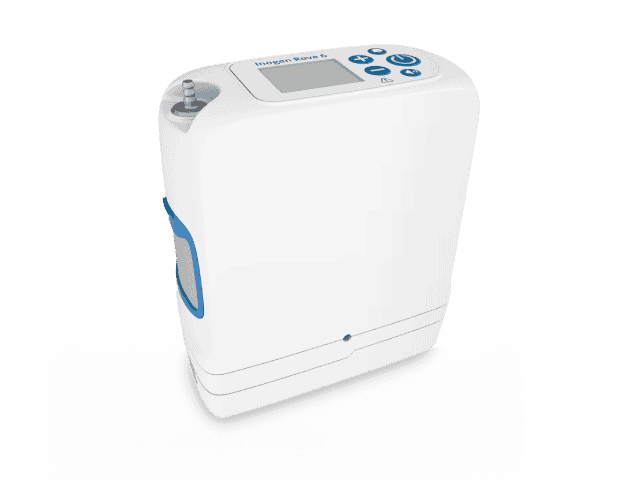
Is the Inogen Rove 6 suitable for COPD patients who need oxygen overnight?
No, the Rove 6 is a pulse dose device and is not recommended for overnight use by patients who require continuous flow, as shallow breathing during sleep can reduce delivery reliability. Patients who need nocturnal oxygen should discuss a continuous flow portable or stationary home concentrator with their doctor.
-
Can I use a portable oxygen concentrator during exercise with COPD?
Yes, research has confirmed that POCs perform comparably to liquid oxygen systems during a standardized walking test in COPD patients on long-term oxygen therapy. Ask your respiratory therapist about the right flow setting for exercise, as many patients need a higher setting during activity than they use at rest.
-
Will Medicare cover a portable oxygen concentrator for my COPD?
Medicare Part B covers oxygen equipment as a rental for qualifying COPD patients, paying approximately 80 percent of the approved monthly cost after the $283 annual Part B deductible, provided your blood oxygen levels meet the clinical thresholds. Coverage is for rentals only — Medicare does not pay for the outright purchase of a specific POC model.
-
How long does a portable oxygen concentrator last with daily use for COPD?
With proper maintenance, most medical-grade POCs have an expected service life of four to seven years, though component wear varies based on hours of daily use and environmental conditions. The Inogen Rove 6 carries a published expected service life of eight years under normal use conditions.