Continuous Flow Portable Oxygen Concentrators
 |
June 11, 2026
|
|
June 11, 2026
|
When most seniors picture a portable oxygen concentrator, they may imagine a lightweight device that slips into a shoulder bag and is easily transportable on errands and for travel. Those units, which almost universally use pulse dose delivery, are excellent for many patients. But for a meaningful portion of oxygen therapy users, they simply aren't enough.
A continuous-flow portable oxygen concentrator delivers a steady, uninterrupted stream of oxygen regardless of your breathing pattern, just as traditional oxygen tanks and home concentrators do. For seniors who need this type of delivery, a continuous-flow device can be a clinical necessity. They can be essential during sleep, while using CPAP equipment, or when a higher flow rate is prescribed.
We’ve found that buying a portable oxygen concentrator outright can cost $2,000 to $3,000 or more for a new model, while continuous-flow units typically sit at the higher end of that range due to their more complex engineering.1
We’ve created this guide to help you gain a clear understanding of what continuous flow means and whether it may be the right oxygen therapy for you. We’ve also compiled the best options so you can compare this year's models to make sure you get the best fit that’s right for you.
Tip: If you're navigating the rental route instead, our portable oxygen concentrator rental guide discusses what Medicare covers and what to expect in terms of costs.
What’s the Difference Between Pulse Dose vs. Continuous Flow?
Choosing the right oxygen concentrator therapy device that’s best for you should begin with understanding how the device works and, most importantly, how it can benefit your health.
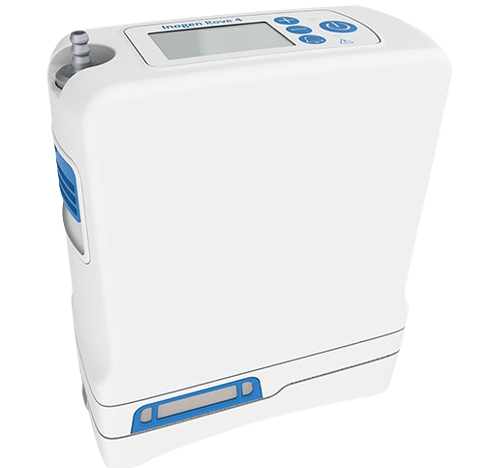
Pulse dose delivery (also called demand delivery) uses a breath-sensing trigger. The concentrator detects when you begin to inhale and releases a short burst of oxygen. Between breaths, no oxygen is delivered. This is helpful because the device isn't running continuously, requiring less power, allowing it to be built lighter and smaller, yet delivering longer battery life. The vast majority of lightweight, travel-friendly POCs, including popular models such as the Inogen Rove 4 and CAIRE FreeStyle Comfort, use pulse-dose delivery exclusively.
Continuous flow delivery works differently. The concentrator produces oxygen at a steady, constant rate, measured in liters per minute, and releases it through your nasal cannula at all times — whether you're inhaling, exhaling, or breathing shallowly during sleep. This mirrors how traditional oxygen tanks and stationary home concentrators work. The steady output means no missed breaths, no breath detection required, and reliable delivery even when breathing becomes irregular or slowed.2
However, a core trade-off is that continuous flow requires more power and larger internal components, making units heavier and reducing battery life. Pulse-dose units prioritize portability, while continuous-flow units prioritize clinical completeness.
Who Actually Needs Continuous Flow?
Not every oxygen therapy user requires continuous flow, but for those who do, using a pulse-dose device instead is neither safe nor effective. Your doctor's prescription determines which delivery mode is appropriate. That said, there are several clinical situations where continuous flow is consistently recommended.
Sleep and overnight oxygen therapy. During sleep, breathing typically slows and becomes shallower. Pulse dose devices rely on breath detection to trigger oxygen delivery. In light sleepers, deep sleepers, and particularly mouth breathers, the sensor may not reliably detect each breath. When no breath is detected, no oxygen is delivered, which can cause dangerous overnight oxygen desaturation. For this reason, physicians regularly recommend continuous flow for nighttime use.3
CPAP and BiPAP compatibility. Seniors managing both COPD and obstructive sleep apnea — a common combination known as COPD-OSA overlap syndrome — typically use a CPAP or BiPAP machine at night. Continuous flow is the only oxygen delivery mode compatible with these devices, as the pressurized airflow from a CPAP system interferes with the breath-sensing mechanism in pulse dose units.4 A 2025 meta-analysis published in Sleep Research found that among patients with severe COPD, the prevalence of COPD-OSA overlap syndrome may be as high as 50% — underscoring how frequently this combination arises in practice.5
>>> Further reading: Does Medicare Cover CPAP Machines?
Higher prescribed flow rates. Patients who require more than 3 LPM of oxygen will typically find that most portable pulse dose devices cannot meet that need. Continuous-flow portables capable of delivering up to 3 LPM fill this gap for active patients who need more oxygen support than lightweight pulse-dose units can provide.
Irregular or shallow breathing patterns. Patients with certain conditions, including advanced COPD, interstitial lung disease, or pulmonary fibrosis, may have highly irregular breathing patterns that pulse dose sensors struggle to track consistently. For these patients, the predictability of continuous flow reduces the risk of inadequate delivery.
FYI: If you currently use a pulse dose concentrator at night, ask your doctor about an overnight oximetry test. This simple at-home test measures your blood oxygen saturation throughout the night and can confirm whether your current device is maintaining adequate levels — or whether a switch to continuous flow is warranted.
Why Continuous Flow Portables Are Heavier
There's a straightforward engineering reason why continuous-flow portable concentrators are heavier than pulse-dose models: producing oxygen continuously requires more energy. A continuous-flow device requires larger components, including higher-capacity batteries to power the system. Together, these components tend to add weight and bulk.
While the lightest pulse-dose POCs weigh under 3 pounds, even the most compact continuous-flow portables typically start around 6 pounds and can reach 18 pounds or more for cart-based models. This is a practical matter; if a unit’s s too heavy for you to carry comfortably, you’ll be less inclined to use it consistently, which defeats the purpose.
The good news is that design improvements have made continuous flow portables significantly lighter than they were five years ago. The Oxlife Liberty2, currently among the lightest continuous flow portable units on the market, weighs approximately 6.35 pounds.6
Top Continuous Flow Portable Oxygen Concentrators in 2026
The table below compares the leading continuous flow portable concentrators available in 2026. All models listed are FDA-cleared medical devices and are FAA-approved for air travel.
| Model | Weight | Continuous Flow Range | Pulse Dose? | Best For |
|---|---|---|---|---|
| Oxlife Liberty2 | ~6.35 lbs | 0.5-2.0 LPM | Yes (settings 1-10) | Lightweight versatility, day & night use |
| CAIRE SeQual Eclipse 5 | ~18.4 lbs (with cart) | 0.5-3.0 LPM | Yes (settings 1-9) | High-flow prescriptions, road trips, CPAP |
| Oxlife Independence | ~16.7 lbs (with cart) | Up to 3.0 LPM | Yes (settings 1-6) | 24/7 portability, dual-battery hot-swap |
| GCE Zen-O | ~9.9 lbs | Up to 2.0 LPM | Yes (settings 1-6) | Mid-range versatility, reliable daily use |
Note: Battery life, flow output, and weight figures reflect manufacturers' published specifications and may vary by flow setting and battery configuration.
Oxlife Liberty2 earns the top spot for most patients who need continuous flow in a genuinely portable form factor. It's the lightest unit in the category, offers both pulse dose and continuous flow modes in a single device, and supports fine-incremental flow adjustments (in 0.25 LPM steps) that give physicians flexibility when setting therapy. It's also compact enough to fit under an airline seat, a meaningful distinction from the cart-based models below.
CAIRE SeQual Eclipse 5 is the strongest choice for patients who need up to 3 LPM of continuous flow or require the highest available pulse dose settings. Its cart-based design makes it better suited to road trips and structured outings than to spontaneous everyday carry, but its output ceiling is unmatched in the portable category.
Oxlife Independence matches the Eclipse 5's maximum continuous output at 3 LPM while coming in roughly two pounds lighter, which may be the deciding factor for patients choosing between the two. Like the Eclipse 5, it's a cart-based unit better suited to planned outings than daily carry.
GCE Zen-O is a reliable mid-weight option for patients who need continuous flow up to 2 LPM and want something more manageable than a cart-based unit. Its dual-battery capacity doubles runtime for longer outings, and its replaceable sieve beds make it a practical long-term ownership choice.
What About Inogen?
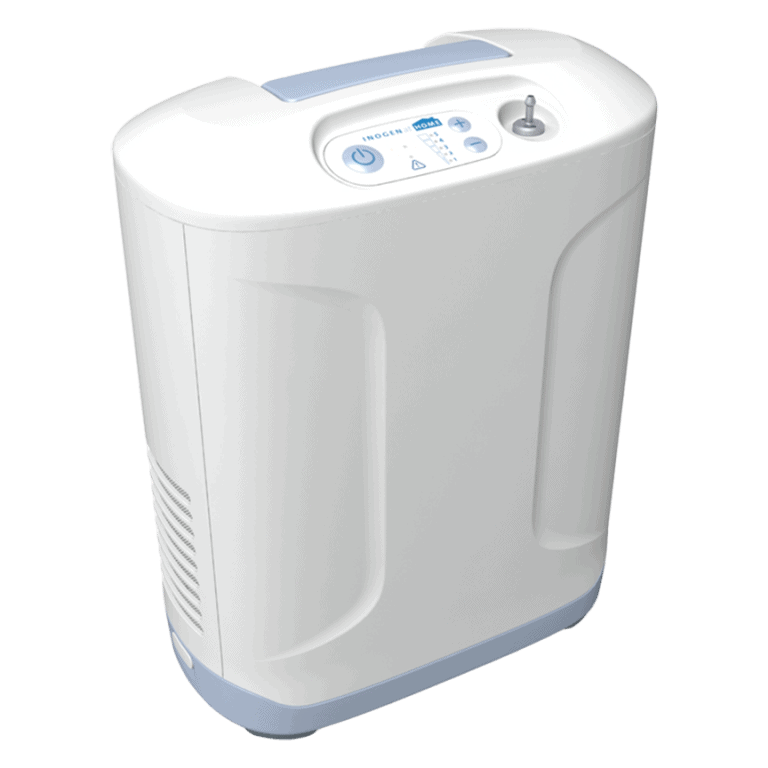
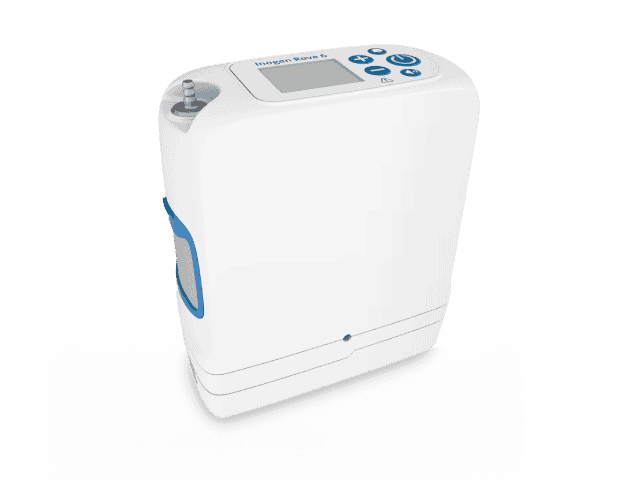
Inogen's current portable lineup — the Rove 4 (2.9 lbs) and the Rove 6 (4.8 lbs) — are pulse dose only and don’t offer continuous flow. Both are exceptional units for daytime use and travel, however. But seniors who need overnight continuous flow will need to pair them with a home concentrator, such as Inogen’s At Home stationary concentrator. It provides continuous flow up to 5 LPM for home and overnight use. Some seniors who’ve used the Rove 6 plus Inogen At Home bundle have found it the most practical solution for covering both needs.
Tip: If your continuous flow prescription is 2 LPM or below and you want to travel by air, the Oxlife Liberty2 is the only unit on this list that fits under an airline seat, making it the most practical choice for air travelers in this category.
How to Choose the Right Model
The right continuous flow portable concentrator comes down to four questions, answered in order.
- What does your prescription say? Your prescribed flow rate in LPM and whether your doctor specifies continuous flow (particularly for sleep) sets the ceiling on which devices can work for you. A prescription for 3 LPM continuous flow narrows the field to the Eclipse 5 or the Independence immediately.
- How will you primarily use it? A patient who needs continuous flow only at night and uses pulse dose during the day has different requirements than someone who needs continuous flow around the clock. Dual-mode units like the Oxlife Liberty2 address both needs in a single device.
- How much can you comfortably carry? If you'll be carrying the unit during outings, weight matters significantly. If the device will primarily sit bedside or travel by car, a heavier cart-based model may be perfectly practical.
- Do you need CPAP or BiPAP compatibility? If yes, confirm that any unit you consider explicitly supports integration with your sleep therapy device. Most continuous flow portables do, but verify with your supplier before purchasing.
If you travel regularly on oxygen, it's also worth pairing your POC with a GPS medical alert device for an added layer of safety when you're away from home. And if cost is a concern, check our senior discounts guide. Some manufacturers and suppliers offer meaningful savings for older adults.
Frequently Asked Questions
-
Can I use a pulse-dose concentrator at night instead of a continuous-flow unit?
Some seniors can safely use a pulse dose device overnight, but many cannot, particularly mouth breathers and those with shallow or irregular breathing, whose breath may not reliably trigger the sensor. An overnight oximetry study ordered by your doctor is the most reliable way to confirm which delivery mode maintains adequate oxygen saturation during sleep.
-
What is the lightest continuous flow portable oxygen concentrator available in 2026?
The Oxlife Liberty2 is the lightest true continuous-flow portable on the market, weighing approximately 6.35 pounds, and offers both pulse-dose and continuous-flow modes in a single device. It is FAA-approved for air travel and supports continuous flow from 0.5 to 2.0 LPM.
-
Are continuous flow portable oxygen concentrators compatible with CPAP machines?
Yes, continuous flow is the only oxygen delivery mode compatible with CPAP and BiPAP machines, making it the necessary choice for patients managing both sleep apnea and conditions requiring supplemental oxygen. Confirm the specific connection configuration with your respiratory therapist before combining devices.
-
Why are continuous flow portable concentrators heavier than pulse dose models?
Producing a constant stream of oxygen requires a larger compressor, larger sieve beds, and higher-capacity batteries than the burst-based delivery used by pulse-dose units, all of which add weight to the device. This is an engineering constraint, not a quality issue.
-
How much do continuous flow portable oxygen concentrators cost?
In 2026, new portable oxygen concentrators range from roughly $2,000 to $3,000 or more, with continuous flow models typically at the higher end due to their more complex engineering. Medicare Part B may cover some of this cost through a rental arrangement if your prescription meets the qualifying criteria.
Our Methodology
To create this guide, we drew on several sources of input. We reviewed peer-reviewed clinical research on oxygen delivery modes and nocturnal oxygen therapy, and consulted with licensed respiratory therapists and medical reviewers to ensure the accuracy of our clinical recommendations.
We also incorporated real-world input from older adults and caregivers navigating oxygen therapy decisions because the practical questions people ask don't always match what the clinical literature covers. Product specifications were verified against current manufacturer data and retailer listings as of 2026. Where pricing is cited, we used the most recently verified figures available and note that costs are subject to change.
The Bottom Line
A continuous flow portable oxygen concentrator may not be the right device for everyone. It’s clear, however, that if you’re among those who could benefit from this type of oxygen therapy, we’ve found that continuous flow is safer and more reliable for nighttime oxygen delivery. It’s also essential for CPAP and BiPAP compatibility and necessary for patients whose prescriptions exceed what lightweight pulse-dose units can provide.
The key, then, is to start with your prescription, not a product. Once your doctor has documented your flow rate, delivery mode, and hours of daily use (including overnight), you'll have a clear idea of which device category you need and will be able to compare specific models more easily to determine the best fit for you.