Oxygen Concentrators and Sleep Apnea
 |
June 11, 2026
|
|
June 11, 2026
|
If you or someone you care for has been diagnosed with sleep apnea, you've likely come across both CPAP machines and oxygen concentrators while researching treatment options. It can be genuinely confusing to understand which device does what, and whether both are needed at the same time.
The short answer: they solve different problems. A CPAP machine keeps your airway physically open during sleep so you can breathe. An oxygen concentrator increases the oxygen content of the air you breathe when your blood oxygen is chronically low. These are not interchangeable, and using one when you actually need the other can be dangerous.
That said, there are real situations, particularly when sleep apnea coexists with a lung condition like COPD or heart failure, where both devices are prescribed together. Understanding when each applies, and what the research says, can help you have a more informed conversation with your doctor.
Quick Take: If you've been diagnosed with sleep apnea and your doctor mentions oxygen therapy, ask them to clarify whether you have obstructive sleep apnea, central sleep apnea, or both — and whether your blood oxygen levels have been tested while you are asleep. Those two things together determine whether a concentrator is needed.
Two Devices With Two Very Different Jobs
It helps to start with what each device actually does. While they look similar (both sit on a nightstand, both involve tubing and a power cord), they work on entirely different principles.
A CPAP machine draws in ordinary room air, pressurizes it, and delivers it through a mask. It does not change the oxygen content of that air. The pressurized stream acts as a physical splint, keeping the walls of your upper airway from collapsing inward during sleep. Sleep apnea is, at its core, a mechanical obstruction problem: muscles relax, the airway narrows, breathing stops, and the body jolts awake. CPAP prevents the obstruction.
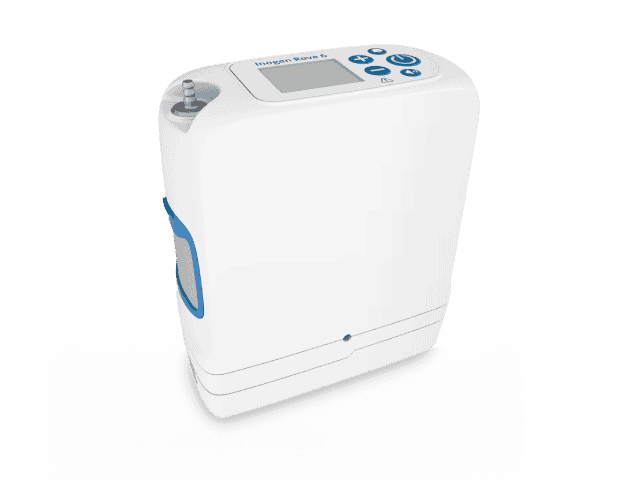
An oxygen concentrator does something entirely different. It draws in room air, strips out the nitrogen (which makes up about 78% of the air we breathe), and delivers the remaining oxygen — concentrated to roughly 90% to 95% purity — through a nasal cannula. It applies no pressure to the airway and cannot keep a collapsed throat open. Its job is to correct a problem with blood oxygen levels, not a problem with airway mechanics.
The distinction matters: CPAP treats the blockage. An oxygen concentrator treats low oxygen levels. Treating low oxygen without addressing the blockage is incomplete care. And treating the blockage without addressing persistently low oxygen, when that's also a problem, leaves part of the condition unmanaged.
Obstructive Sleep Apnea: Why CPAP — Not Oxygen — Comes First
Obstructive sleep apnea (OSA) is the most common form of sleep apnea. A 2024 systematic review published in Respiratory Medicine estimated that approximately 83.7 million U.S. adults — around 32% of all adults over 20 — are living with OSA, making it one of the most prevalent chronic conditions in the country.1 Each time the airway collapses during sleep, oxygen levels drop temporarily, but the root cause is mechanical, not a chronic deficiency of oxygen in the blood.
This is why CPAP is the standard first-line treatment for OSA, and why an oxygen concentrator alone is not an appropriate substitute. Clinical evidence confirms that while supplemental oxygen can reduce the frequency of apneic events in some OSA patients, it may also increase the duration of each individual breathing pause — in some ways making the problem worse, not better, when the underlying airway obstruction isn't addressed.
For many people with OSA, effective CPAP therapy resolves the oxygen problem entirely: once the airway is kept open and breathing is normalized throughout the night, blood oxygen levels return to normal on their own. No supplemental oxygen is needed.
FYI: An oxygen concentrator is not a replacement for CPAP therapy in obstructive sleep apnea. Using one instead of the other — or stopping CPAP in favor of oxygen alone — is not medically appropriate and should only happen under the explicit guidance of a physician.
When an Oxygen Concentrator Enters the Picture
There are several clinical situations where a doctor may prescribe supplemental oxygen (sometimes alongside CPAP, sometimes independently) for those with sleep-related breathing disorders.
Central Sleep Apnea. Central sleep apnea (CSA) is a less common but more complex form of the condition. Where OSA is a mechanical problem, CSA is neurological: the brain intermittently fails to send the proper signal to the muscles that control breathing. There is no airway obstruction — the breath simply doesn't happen. Oxygen therapy is more commonly prescribed for CSA than for OSA, and is sometimes used alongside PAP therapy to maintain adequate oxygen levels during breathing pauses. CSA is associated with heart failure, stroke, and certain medications, including opioids.
Sleep apnea with persistent hypoxemia despite CPAP. For some people, CPAP effectively opens the airway and eliminates apnea events, but blood oxygen levels remain below normal overnight for reasons unrelated to the apnea itself — often because of an underlying lung condition like COPD or interstitial lung disease. In these cases, a doctor may prescribe supplemental oxygen alongside CPAP, delivered simultaneously through an adapter that connects the concentrator to the CPAP circuit.
Sleep apnea when CPAP cannot be tolerated. For individuals who are unable to tolerate CPAP therapy despite multiple attempts, oxygen therapy may be offered as a partial measure to reduce the severity of nighttime desaturation, though it is consistently less effective than CPAP at treating the underlying obstruction.2 This is considered only after documented failure of CPAP and its alternatives.
Further Reading: To learn about oxygen concentrators for rent, including costs, read our guide to oxygen concentrator rentals.
The Overlap Syndrome: When COPD and Sleep Apnea Collide
One clinical situation deserves particular attention for older adults: the coexistence of COPD and obstructive sleep apnea, known as the overlap syndrome. It's far more common than many people realize. One-fifth to two-thirds of COPD patients also have OSA, depending on the study population.3
Why does it matter so much? Because people with both conditions experience significantly more severe nocturnal oxygen desaturation than those with either condition alone. Research published in the American Journal of Respiratory and Critical Care Medicine found that daytime blood oxygen levels below 65 mmHg were present in 57% of overlap syndrome patients, compared to just 23% of COPD patients without OSA, and that pulmonary hypertension was present in 36% of overlap patients versus only 7% of COPD-only patients.4 The combined burden on the heart and lungs is substantially greater.
For people with overlap syndrome, treatment typically involves both CPAP to address airway obstruction and supplemental oxygen to correct hypoxemia. Providing care for only one of the two conditions is not considered adequate care. If you or someone you care for has been diagnosed with both COPD and sleep apnea, and you're navigating Medicare coverage for the devices involved, it's worth reviewing both the CPAP and oxygen equipment benefits — they fall under separate coverage rules.
Further Reading: Check out our guide to the Best Medicare Advantage plans.
How a CPAP Machine and Oxygen Concentrator Work Together
When both devices are prescribed, the practical setup is simpler than it sounds. The oxygen concentrator connects to the CPAP circuit via an adapter — typically a T-shaped or inline connector — that blends concentrated oxygen into the pressurized air stream before it reaches the mask. The result is CPAP-pressurized air enriched with supplemental oxygen, delivered through the same mask you already use.
Most patients find the combined setup only marginally more complex than CPAP alone. Your equipment supplier can advise on the correct adapter for your specific CPAP model.
One important safety note: the flow rate on the oxygen concentrator must be set by your prescribing physician, not self-adjusted. Too much oxygen can cause oxygen toxicity, a serious condition that affects the lungs and the central nervous system. Too little may be insufficient to correct overnight desaturation. Both extremes carry real clinical consequences, which is why combined therapy always requires medical supervision.
We find that some people find it useful to track overnight oxygen saturation alongside CPAP compliance. A health-focused smartwatch with pulse oximetry can give you a general picture between formal clinical tests, though it shouldn't replace those ordered by a physician.
Choosing the Right Oxygen Concentrator for Nighttime Use
If your doctor has prescribed supplemental oxygen for use during sleep — whether on its own or alongside CPAP — the device must meet specific requirements that differ from those of a typical travel-focused portable concentrator.
The most important factor is delivery mode. Nighttime oxygen use almost always requires continuous flow: a steady stream of oxygen delivered regardless of breathing pattern. Most lightweight portable concentrators use pulse-dose delivery, which requires the device to detect each breath and deliver a burst of oxygen on inhalation. During sleep, however, breathing slows and shallows, and pulse oximetry sensors can miss breaths, leaving gaps in oxygen delivery. Continuous flow oxygen concentrators decrease this risk.
FYI: Our continuous flow oxygen concentrator guide walks you through the top 2026 models in detail, including weight, flow settings and attributes to help you determine the right fit for you.
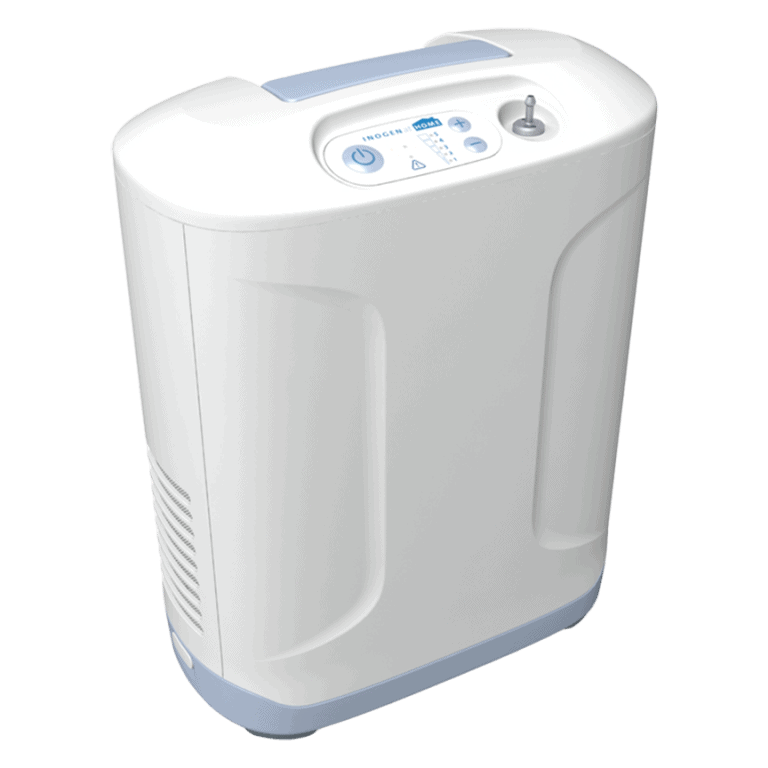
For seniors who are prescribed supplemental oxygen solely during sleep at home, a stationary home concentrator, such as the top-rated Inogen At Home, is often the most practical and cost-effective solution. These units plug into the wall, run continuously, and deliver up to 5 LPM of continuous-flow oxygen at a lower price point than portable continuous-flow units. A portable continuous flow concentrator is the right choice when the user also needs to use oxygen outside the home, or when travel is a priority.
Our Methodology
To create this guide, we reviewed peer-reviewed clinical research on sleep apnea, oxygen therapy, and overlap syndrome, and consulted resources from licensed respiratory therapists and medical reviewers to ensure clinical accuracy. We also drew on real-world input from older adults and caregivers navigating sleep apnea and oxygen therapy decisions.
Product recommendations were verified against current manufacturer specifications as of 2026. All statistics reflect the most recently published research available at the time of writing.
The Bottom Line
CPAP and oxygen concentrators are not competitors or substitutes — they address different physiological problems. For many people with OSA, CPAP alone is the complete solution. For others — particularly those with central sleep apnea, COPD-OSA overlap syndrome, heart failure, or persistent low oxygen levels despite CPAP — supplemental oxygen becomes a necessary part of the treatment plan. If there's any uncertainty about whether your overnight oxygen levels are adequately managed, getting an overnight oximetry test is the most direct way to find out.
Frequently Asked Questions
-
Can I use an oxygen concentrator instead of a CPAP machine for sleep apnea?
No, an oxygen concentrator cannot replace CPAP for obstructive sleep apnea because it applies no airway pressure and cannot prevent the physical airway collapse that causes OSA. CPAP treats the obstruction; an oxygen concentrator treats blood oxygen levels.
-
Does everyone with sleep apnea need an oxygen concentrator?
No, many people with obstructive sleep apnea find that effective CPAP therapy brings their blood oxygen levels back to normal on its own, making supplemental oxygen unnecessary. A concentrator is typically added only when blood oxygen remains low despite CPAP, when a coexisting lung condition is present, or in cases of central sleep apnea.
-
Can an oxygen concentrator be used at the same time as a CPAP machine?
Yes, when both are prescribed, a concentrator connects to the CPAP circuit via an inline adapter, enriching the pressurized air with supplemental oxygen before it reaches the mask. The flow rate must be set by your physician, as too much or too little oxygen carries health risks.
-
What type of oxygen concentrator is best for overnight use?
Continuous flow delivery is almost always required for overnight oxygen use because pulse-dose devices rely on breath detection, which can miss breaths during the shallow breathing of deep sleep. For home nighttime use only, a stationary home concentrator is often the most cost-effective option. Portable continuous flow units are better suited for patients who also need oxygen away from home during the day.
-
What is overlap syndrome, and why does it matter for oxygen therapy?
Overlap syndrome describes the coexistence of both COPD and obstructive sleep apnea in the same patient. It carries significantly greater risks than either condition alone, including more severe overnight oxygen drops, higher rates of pulmonary hypertension, and increased cardiovascular risk. Treatment typically requires both CPAP and supplemental oxygen, since each addresses a different component of the combined condition.