A Complete Guide to Home Oxygen Concentrators
 |
June 11, 2026
|
|
June 11, 2026
|
For the more than a million Americans who need supplemental oxygen, a home oxygen concentrator can be life-changing.1 Oxygen concentrators can provide continuous, medical-grade oxygen without the hassle of refilling heavy tanks or managing deliveries. Modern oxygen concentrators are smaller and more streamlined than in decades past, and they can help older adults stay healthy, active, and enjoy life as they always have.
If you or a loved one has recently been prescribed supplemental oxygen, navigating the options can feel overwhelming. The right oxygen concentrator for you will depend on recommendations from your doctor and insurance carrier. To help you choose the best one for your needs, we’ll explain how a home oxygen concentrator works, how it compares to portable options, its costs, and how to pay for one.
Tip: If you've been prescribed supplemental oxygen, ask your doctor these three questions: “How many liters per minute do I need?” “Do I need oxygen around the clock or only during certain activities?” and “Will I need it while sleeping?” The answers will tell you whether a home concentrator, a portable unit, or both are right for you.
Our Methodology: How We Evaluated Home Oxygen Concentrators
Oxygen concentrators are medical equipment requiring a doctor’s prescription. In our evaluation of oxygen concentrators currently on the market, we rigorously researched and tested devices to gauge their durability, reliability, and costs. Other important factors we considered included:
- Company reputation: We only recommend companies with long track records of supplying reliable medical equipment to consumers. We also look for companies that make it easy to contact sales and support agents and that provide ample information about their products (including features, warranties, and repair and replacement information) to consumers.
- Oxygen purity: Devices should be capable of providing oxygen at 87 to 99 percent concentration.
- Flow rate: Home oxygen concentrators should reliably and consistently provide at least 2 liters and up to 10 liters of oxygen per minute. We also look for devices with multiple flow settings so users can get exactly the level of oxygen they need.
- Device size and design: We looked for oxygen concentrators that were easy to move around in the home. Some devices are smaller and less obtrusive than others, and device weights vary across the industry. It’s important that an older adult can lift and move a home oxygen concentrator to where they need it.
- Power sources: We checked how close a concentrator needed to be to an electrical outlet to ensure the device was convenient for users, as well as whether extension accessories were available. If a device had a battery-powered option, we tested its battery life to ensure it met the company’s claims. We preferred that battery-operated devices last at least four hours and ideally eight hours or more.
- Noise level: Older, less sophisticated oxygen concentrators can be noisy. We tested decibel levels of the oxygen concentrators to ensure they were as quiet as the company stated.
- Safety features: We found that it’s helpful for new users of oxygen concentrators in particular to have visible gauges showing oxygen levels, oxygen purity levels, and battery life. Portable oxygen concentrators often have battery backups that kick in during a power outage, but home oxygen concentrators do not. Home concentrator users might consider purchasing a portable battery station for emergency backup power in case of an outage.
- Cost: Oxygen concentrators can be expensive, so we appreciated companies that offered discounts and financing options, and that also consulted with customers’ doctors, insurance companies, and Medicare to help older adults find affordable ways to pay for their devices.
- Warranty: If you rent a home oxygen concentrator, repairs and replacements should be included. For concentrator purchasers, we preferred lifetime warranties – or at least three-to-five-year warranty options.
Tip: If you do buy a home oxygen concentrator, make sure you purchase one from an authorized dealer for the brand. Buying from unauthorized dealers typically doesn’t come with manufacturer warranties.
How Home Oxygen Concentrators Work
A home oxygen concentrator is also called a stationary concentrator. They are plug-in devices that draw in air and filter out nitrogen to deliver concentrated oxygen at 90 percent to 95 percent purity through a nasal cannula or mask. Unlike compressed oxygen tanks that store a finite supply, a concentrator produces oxygen continuously as long as it is plugged into a power source.
Home concentrators are designed for continuous flow oxygen delivery: a steady, uninterrupted stream of oxygen measured in liters per minute (LPM). Most home models deliver between 1 LPM and 5 LPM, while high-flow units can reach 10 LPM for patients with more severe oxygen needs.
Portable concentrators, on the other hand, rely on pulse dose delivery, which means they release short bursts of oxygen only when the user inhales. Portable oxygen concentrators are less likely to be appropriate for users who need a continuous flow of oxygen, particularly during sleep. To learn more about portable oxygen concentrators, read our Guide to Portable Oxygen Concentrators.
Most home concentrators plug into a standard wall outlet and weigh between 30 and 55 pounds. They have wheeled bases so users can move them from room to room. Modern home oxygen concentrators make some noise: typically 40 to 55 decibels, which is the same decibel level as a humming refrigerator or a suburban area at night.2
>> Further Reading: The 7 Best Medical Alert Systems for Seniors in 2026
Key Differences Between Home vs. Portable Oxygen Concentrators
The major difference between a home concentrator and a portable concentrator is obvious: Home, or stationary, concentrators are meant for home use; portable concentrators provide oxygen when users are out and about. Home concentrators are typically more powerful, as they’re meant to deliver a continuous flow of oxygen for users with higher supplemental oxygen needs. A portable concentrator helps users with lower supplemental oxygen needs stay mobile and active. They’re lightweight and battery-powered, but more limited in terms of oxygen flow rate.
Many patients who require 24/7 oxygen therapy use both: a home concentrator for in-home use and a portable unit for errands, appointments, and travel. In some cases, Medicare might cover most of the costs of renting oxygen concentrators, once your Part B deductible is met.3
| Feature | Home Concentrators | Portable Concentrators |
|---|---|---|
| Primary use | In-home continuous therapy | Mobility, travel, active daily life |
| Delivery mode | Continuous flow (steady stream) | Pulse dose (most); some continuous |
| Flow rate capacity | Up to 5-10 LPM | Typically 1-3 LPM |
| Weight | 30-55 lbs | 2.8-10 lbs |
| Power source | AC wall outlet only | Battery + AC/DC |
| FAA air travel | Not applicable | FAA-approved models available |
| Price range (new) | $500 – $2,000 | $1,500 – $4,500+ |
| Energy use | 150-600+ watts | 40-150 watts |
Our Favorite Home Concentrator: The Inogen At Home
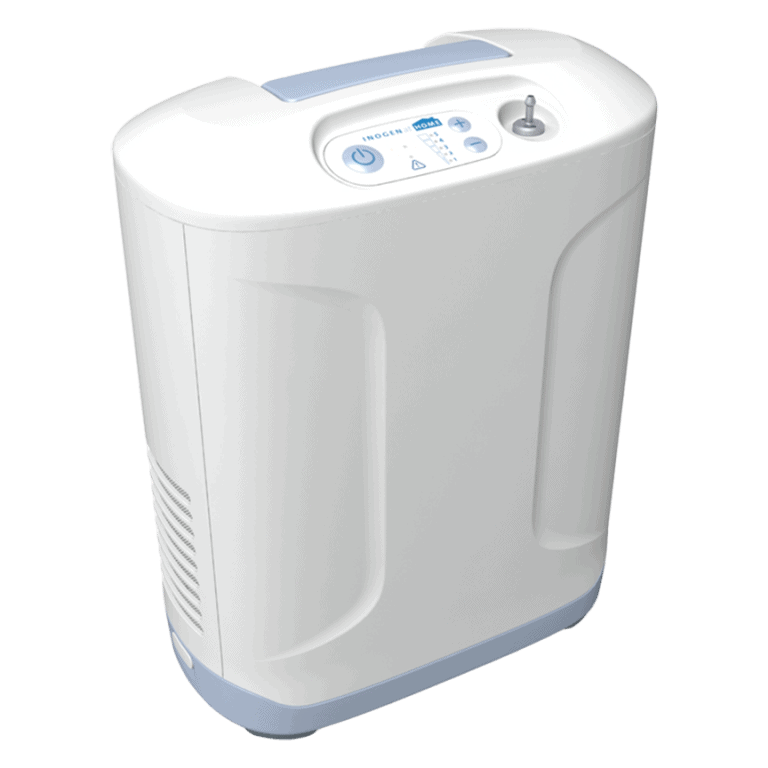
Among home oxygen concentrators currently on the market, the Inogen At Home is a standout. It delivers up to 5 LPM of continuous flow oxygen, weighs just 18 pounds, and uses only 100 watts of power on flow setting 2, which is roughly equivalent to a traditional incandescent light bulb.4 We also appreciate that the device is small and unobtrusive and that the control panel on its top is easy to read and use. Older adults who prefer simple devices are unlikely to find Inogen At Home's functions too techy or complicated.
Tip: Enter your info into Inogen’s online energy calculator to figure out how a home oxygen concentrator might affect your monthly power bill.5
And because it’s unusually quiet for a home concentrator, operating at 45 decibels, it won’t be bothersome if you’re using it while watching TV or chatting with a friend. The Inogen Connect app is also handy: You can access tech support, instructional manuals, how-to videos, and store your insurance, contacts, and health information right on your phone. The app also keeps track of your device's battery level, flow settings, and usage habits, all valuable information that helps you and your doctor stay up to date on your health.
Another plus: If you call and speak to Inogen’s sales team, they will work with your doctor, Medicare, and insurance provider to help find whatever help is available to pay for the purchase or rental of your home oxygen concentrator.
A few notes of caution, however, if you’re new to the world of oxygen concentrators: As with any of these devices, including the Inogen at Home, do not smoke, use lighters or matches, or burn candles near them. Also be aware that this device can’t be used in conjunction with BiPAP or CPAP machines, humidifiers, or nebulizers.6 If this is a consideration, talk with your doctor about the oxygen concentrator that’s best for you. To read more about Inogen’s products, check out our review, Inogen Portable Oxygen Concentrator Costs, Pricing in 2026.
Did You Know? You can try out Inogen oxygen concentrators free for 30 days. Call a sales rep for details.
What to Look for When Choosing a Home Concentrator
Not every home oxygen concentrator is right for every patient. Your doctor’s recommendation and insurance coverage will help you narrow down your choices. Here are some elements to consider when choosing your device:
Flow Rate
Your doctor's prescription specifies the flow rate you need in liters per minute. Most home concentrators deliver 1 to 5 LPM, which is sufficient for most users. If your prescription calls for more than 5 LPM, you will need a high-flow model capable of reaching 7 to 10 LPM. It’s important that the device you choose can handle your supplemental oxygen needs; a device that can’t deliver the LPM you need can compromise your health and safety.
Noise Level
How much noise an oxygen concentrator makes is a quality-of-life factor particularly important for those who need oxygen overnight. The quietest home units operate at 40 decibels, roughly the sound level of a quiet library. Older models and high-flow units tend to run louder, which can affect sleep quality. If you plan to use the unit overnight and are not a heavy sleeper, make sure your device is not too loud to keep you up.
Weight and Mobility
Most home concentrators sit on wheeled bases and can be moved from room to room, but if you live in a multifloor home, it might not be practical for you to carry a concentrator upstairs, as they can weigh 50 pounds or possibly more. If you might need a lightweight home model, be sure to let your doctor know so you can find a unit that works for your needs.
CPAP/BiPAP Compatibility
If you use a CPAP or BiPAP machine for sleep apnea in addition to oxygen therapy, confirm that any concentrator you consider is compatible with your sleep equipment. (The Inogen At Home oxygen concentrator does not.) Some units include a dedicated humidifier bottle connection for this purpose. To learn whether Medicare covers CPAP machines, read our guide, Does Medicare Cover CPAP Machines in 2026?
Warranty and Service
Most home oxygen concentrators carry a three-year warranty; some even offer a lifetime warranty option. Warranty terms can be specific to whether you are purchasing or renting your device, so check whether a local authorized service center is available in your area before you buy.
Home Oxygen Concentrator Costs
As a medically necessary piece of equipment, many older adults can get help from Medicare to pay for renting a home oxygen concentrator. Device costs can range widely: Cheaper models might cost as little as $500, while some devices can cost $10,000 or more. The good news is that Medicare might cover up to 80 percent of the cost of your oxygen concentrator (more about that below!). Keep in mind that while second-hand concentrators might be cheaper, they’re much less likely to come with any sort of warranty than a device purchased from the manufacturer or an authorized dealer.
>> Related Reading: Our 2026 Guide to Home Care for Seniors
Running a home oxygen concentrator 24 hours a day might hike up your electricity bill — and the amount varies significantly depending on your unit's wattage and local electricity rates. One study concluded that median annual electricity costs for oxygen concentrators ranged from $36 for low-flow concentrators and up to around $750 per year for high-flow concentrators.7
Here are a few tips to help you manage energy costs of your oxygen concentrator:
- Contact your utility company to ask about life support equipment or medical baseline rate programs. Many utilities offer discounts on power costs for customers who depend on electrically powered medical equipment.
- Consult a tax professional about whether oxygen therapy electricity costs qualify as a deductible medical expense on your federal return.
- Compare wattage ratings across models — energy efficiency differences between brands can affect long-term costs.
Medicare and Insurance Coverage
Home oxygen concentrators are considered durable medical equipment (DME) by U.S. Centers for Medicare and Medicaid Services. If you’ve been prescribed medically necessary supplemental oxygen by your doctor and receive Medicare, you can get 80 percent of the costs covered once you pay your Part B deductible ($283 in 2026).
If you qualify, Medicare covers rental costs for supplemental oxygen for three years (36 months); if you still need supplemental oxygen, your supplier must continue to provide it for another two years (24 months).
To qualify for help paying for a home oxygen concentrator, you’ll need a prescription from your doctor. He or she will do diagnostic tests. This typically includes measuring oxygen and carbon dioxide levels in your arteries (called “arterial blood gas” tests) or pulse oximetry tests, which measure oxygen levels in red blood cells.
>> Also Check Out: The Best Medicare Advantage Plans for Seniors in 2026
The Bottom Line
A home oxygen concentrator is an investment in your health, comfort, and independence. Choosing the right one starts with your doctor’s prescription, which will specify the flow rate, whether you need continuous flow, and whether overnight use is part of your therapy. You’ll also want to consider your device's energy efficiency, noise level, cost, and ease of use. The right equipment will support your therapy reliably for years and give you the confidence to stay active, engaged in your community, and enjoy your life.
Frequently Asked Questions
-
What is the difference between a home oxygen concentrator and a portable one?
A home concentrator is a plug-in stationary unit that delivers continuous flow oxygen around the clock as a primary therapy device. Lightweight and battery-powered, portable concentrators are designed for mobility and travel; they typically deliver pulse dose oxygen and have lower flow capacity than most home units.
-
Can I use a home oxygen concentrator while sleeping?
Yes — most home concentrators provide a continuous flow of oxygen and are designed for 24-hour use, including overnight. Some are even CPAP/BiPAP compatible for patients who use sleep therapy equipment. If noise is a concern, look for units rated at 40 decibels or below, which are quiet enough for most bedroom environments.
-
How much does a home oxygen concentrator cost?
New home oxygen concentrators generally range from $500 to $5,000, depending on flow capacity, brand, and features. Medicare covers some rental costs for qualifying patients, with most paying 20 percent coinsurance after their annual Part B deductible is paid.
-
Do I need a prescription for a home oxygen concentrator?
Yes — supplemental oxygen is a prescribed medical therapy in the United States, and FDA-cleared home oxygen concentrators require a physician’s prescription.
-
How long does a home oxygen concentrator last?
With proper maintenance, most home oxygen concentrators will last from five to seven years. Regular filter cleaning and annual professional servicing help maximize lifespan and maintain oxygen purity.