Best iPhones for Seniors in 2026
 |
July 17, 2026
|
|
July 17, 2026
|
The stereotype that older folks are uninterested in or intimidated by top-of-the-line cell phones is fading, as nearly 80 percent of people 65 and older now use a smartphone.1 For many active seniors comfortable with cell phone technology, an iPhone is a great choice, combining sleek design with intuitive interfaces. In my experience, I've been surprised by how easily flip phone users were able to adapt to an iPhone's controls.
There are over 17 generations of iPhones, and within each generation, there are several models with slightly different specifications. After months of testing, I've come up with three of my favorites — including my top overall pick, the iPhone 17e. Whether you're looking for a budget-friendly iPhone or one with a high-definition camera, this list has the best options for you.
Pro Tip: With an iPhone, you'll have your choice of networks. To find plans with unlimited talk, text, and data for $30 per month, read our review of the best cell phone plans for seniors.
The Best iPhones for Seniors
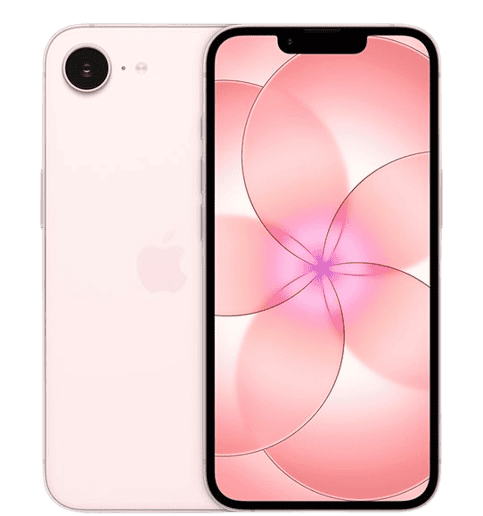
- iPhone 17e : Best Value
- iPhone 17 : Best Camera for the Price
- iPhone 17 Pro Max : Biggest Screen
FYI: iPhones are great, but they're hardly affordable. If you're looking for cell phones as low as $59, then read the guide to the best cheap phones for seniors.
iPhones for Seniors Compared
| Model | Price | Screen size (inches) | Main camera (MP) | Battery life (video playback hours) | Weight |
|---|---|---|---|---|---|
| iPhone 17e | $599 | 6.1 | 48 | 26 | 5.96 oz |
| iPhone 17 | $799 | 6.3 | 48 | 20 | 6.24 oz |
| iPhone 17 Pro Max | $1,199 | 6.9 | 48 | 27 | 8.22 oz |
Best iPhones for Seniors
iPhone 17e - Best Value
(844) 580-0512
What We Like Most:
- $599 price tag
- 48 MP camera
- 26 hours of video playback
- 6.1-inch screen
Overview
Price: $599 from Consumer Cellular
The iPhone 17e is one of Apple’s latest iPhones. It’s the least expensive new iPhone at $599, but you can find older, cheaper models through third-party retailers. And while nearly $600 might be a little steep for some seniors, when you compare it to the iPhone 17 Pro Max’s $1,199 starting price, it seems a lot more reasonable.
This iPhone has great features, including:
- Long battery life: The phone worked for 26 hours without needing a charge. If the older adult in your life often forgets to charge their phone, this would make a great option.
- 6.1-inch screen: It’s not quite the largest screen on this list (the iPhone 17 Pro Max comes in at 6.9 inches), but you should have no issue navigating on the 17e’s 6.1-inch screen. Plus, it’s less bulky than the Pro models, weighing less than 6 ounces.
- Hearing aid compatibility: The 17e is hearing-aid compatible and has many other accessible features, such as Voice Control and AssistiveTouch.
Read More: Best Phones for Hearing Impaired Users
The iPhone 17e can be used on networks like AT&T, T-Mobile, or Verizon. To save the most, choose a phone with 256 GB of storage; it will cost $799 for 512 GB of storage.
Most seniors are more than happy with 256 GB of storage, but if you take a lot of photos or videos, you may want to pay for more storage. Since iPhones can easily sync to iCloud, you could save on storage costs by keeping some (or all) photos and videos accessible via the internet.
The iPhone 17e is best for seniors who want a newer iPhone without paying higher-end iPhone prices. It’s also a strong fit for older adults who care more about battery life, simple calling, texting, FaceTime, and everyday photos than having the most advanced camera or largest screen.
With a Consumer Cellular plan, unlimited talk and text with 1 GB of data starts at $20 per month. Consumer Cellular also offers a 5 percent discount to AARP members.
While 1 GB of data isn’t enough for regular streaming, Consumer Cellular won’t hit you with overage fees if you go over your limit. Instead, the company will automatically bump you up to the next plan tier. Plus, when you’re connected to your home Wi-Fi, none of that usage counts toward your monthly data allowance.
Read More: Consumer Cellular Review
Pros
- Face ID and Voice Control
- Long battery life and faster charging time than the 16e
- Large screen
- Emergency SOS function
Cons
- Can't be immersed in water
- Inferior camera compared to the iPhone 17 Pro and 17 Pro Max
Did You Know? If you’re looking to save on your cellular plan, check out the guide to senior cell phone discounts.
iPhone 17 - Best Camera for the Price
What We Like Most:
- 18 MP front camera and dual 48 MP rear camera
- High-definition display
- Ceramic Shield 2 is more scratch-resistant than previous models
- Optional urgent response features
- Long battery life
Overview
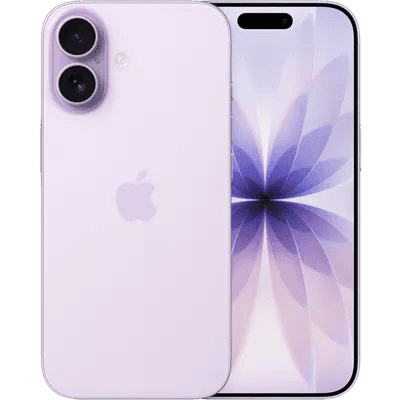
Price: $829.99 from Verizon
With a $829.99 price tag, it’s just $200 more than the iPhone 17e. Although certainly not cheap, the iPhone 17 comes with a solid set of features that hold up well even alongside newer models. You can also snag refurbished models for $740 on Amazon.
If you want a phone primarily to take pictures and videos, the iPhone 17 offers one of the most advanced cameras on this list, with almost as many features as the iPhone 17 Pro and Pro Max. The rear camera is 48 MP , and you can zoom in optically two times, which is great for faraway shots. Plus, with a 6.3-inch diagonal display, it’s fun and easy to review and edit photos and videos right on the iPhone.
The iPhone 17 is best for seniors who take a lot of photos and videos but don’t necessarily need the newest or most expensive iPhone. It’s a good middle-ground choice for grandparents, travelers, or active older adults who want crisp photos, a bright display, and familiar iPhone controls at a lower price than the latest Pro models.
The iPhone 17 is available from Verizon, AT&T, and T-Mobile. While Verizon has a plan for adults ages 55 and up, it’s only available to Florida residents, who can buy one line for $45 a month or two lines for $80. For everyone else, prices start at $55 per line per month. All Verizon plans include:
- Unlimited talk and text
- 5G data
- Talk, text, and data in Mexico and Canada
- International texting
- Spam blocker
To learn more about the plans for this phone, check out the rundown of Verizon phones for seniors.
Pros
- Highest quality, 48 MP camera
- Super Retina XDR display
- Zoom optically two times
- Urgent response button
Cons
- Cost
- Not the longest battery life
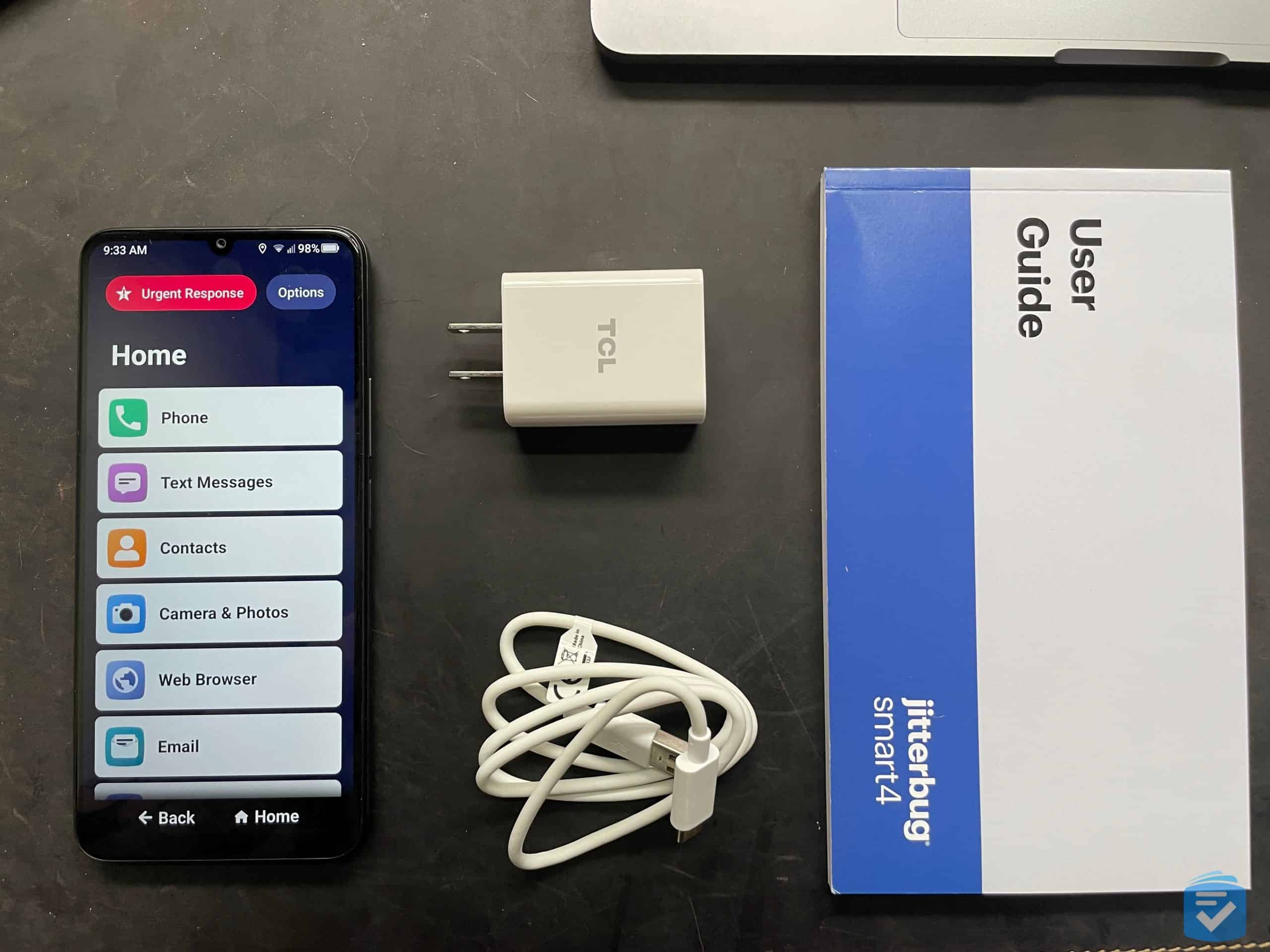
Pro Tip: Looking for simpler and cheaper alternatives to an iPhone? The Jitterbug Smart4 is one of our favorite smartphone options that was made specifically for seniors. To learn more, read the Jitterbug Smart4 review.
iPhone 17 Pro Max - Biggest Screen
What We Like Most:
- 6.9-inch screen
- Ultra-wide camera
- Up to 27 hours of video playback
- Ability to send and receive messages via satellite
Overview
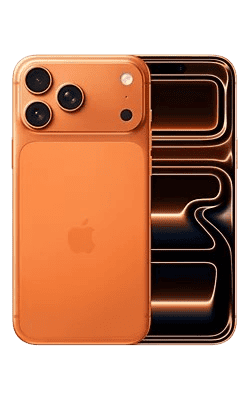
Price: $1,199 from T-Mobile
The iPhone 17 Pro Max has the largest screen of any iPhone on this list. At 6.9 inches, it’s ideal for someone with vision issues. And because this is one of Apple’s newest iPhones, it has incredible camera quality, 27-hour battery life, and the ability to send and receive text messages even when you don’t have a cellular signal — via Apple’s satellite, meaning you’re never out of reach.
The iPhone 17 Pro Max is an excellent choice for anyone who enjoys taking photos. In addition to its 48 MP camera, it features an ultra-wide lens that lets you capture even the smallest details, like a ladybug perched on a leaf. For amateur photographers, it’s a big perk not having to carry a separate camera along with their phone.
The iPhone 17 Pro Max is best for seniors who want the easiest screen to read and don’t mind paying more for premium features. It’s especially useful for older adults with vision concerns, frequent photo-takers, or anyone who wants a larger display for texting, video calls, maps, reading, and watching videos.
One drawback of the 17 Pro Max is its price, which starts at $1,199 for 256 GB of storage. T-Mobile also offers a financing option: $4.16 a month for two years
Pros
- Large screen
- Long battery life
- 48 MP camera
- Water-resistant up to 6 meters
- Emergency SOS function
Cons
- Expensive
- Weighs over 8 ounces
Our Methodology: How We Evaluate iPhones for Seniors
Apple releases new iPhone models every year, and it's often difficult to discern the differences among them.
To narrow down the best options, current and older iPhone models were compared based on price, battery performance, screen size, camera quality, and hearing aid compatibility. Close attention was also paid to accessibility features that matter to older adults, including display readability, ease of navigation, Assistive Access, voice controls, and overall comfort for seniors who may be new to smartphones.
Here are the primary features considered when searching for the best iPhone for seniors:
- Affordability: It's no secret that smartphones can cost upward of $1,000. When choosing the best iPhones for seniors, preference was given to devices with more affordable price tags, save for the very expensive 17 Pro.
- Battery life: Due to their variety of uses, iPhones and other smartphones often have issues with battery life. In testing, all of the phones on this list had batteries powerful enough to last an entire day before needing a recharge.
- Camera quality: One of the best features of any iPhone is its camera. All of the phones on this list make it easy to take high-quality photos worthy of sharing.
- Hearing aid compatibility: Many older adults use hearing aids, so to avoid any excess noise or high-pitched feedback, all of these phones were tested to make sure they are compatible with hearing devices.
- Network choice: Smartphones are often paired with expensive cellular plans, so devices that are compatible with discounted plans featuring unlimited talk, text, and data were prioritized.
FYI: All of the top iPhone picks have been reviewed by a team of experts to ensure senior usability and accessibility.
iPhone Senior Mode
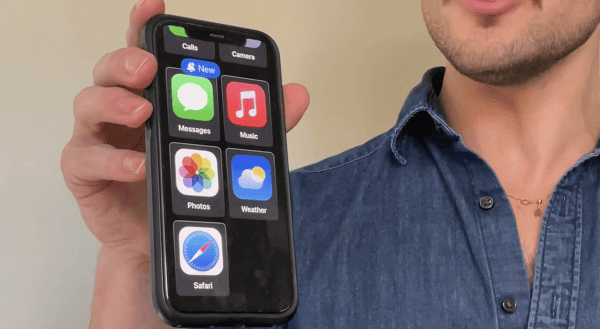
In 2023, Apple released an update to iOS, the operating system that powers iPhones. The update introduced a new feature that many have dubbed the iPhone's Senior Mode.
Officially called Assistive Access, the feature allows you to:
- Streamline the layout of a traditional iPhone
- Enlarge the touch screen's digital buttons
- Limit the use of certain apps and features
All of these features help mitigate confusion. With Assistive Access, you can shrink the learning curve drastically.
How to Use iPhone Senior Mode
To set up Assistive Access, follow these steps on your iPhone:
- Open Settings
- Tap Accessibility
- Scroll down and select Assistive Access
- Choose Set Up Assistive Access
- Enter your device passcode if prompted
- Confirm the Apple ID for the primary user
- Choose whether apps display in rows or grids
- Select which apps you want available in Assistive Access
- Review the feature overview and continue
- Set a passcode used to exit Assistive Access
- (Optional) Add a recovery Apple ID
- Tap Start Using Assistive Access or choose to enable it later
Assistive Access can be a really useful feature for seniors who want a simpler experience.
Senior iPhone Buyer's Guide: Which One Is Best for You?
Many older adults won’t find the latest and most sophisticated iPhone models necessary, and simpler models are much less expensive as well. Simpler iPhone models come equipped with a clear screen, dependable battery life, and strong accessibility features will be a better fit than paying extra for camera upgrades or high-end performance they may never use.
That said, if you're shopping for a senior with vision issues, the iPhone 17 Pro Max may be the easiest to use thanks to its 6.9-inch screen, which makes text, photos, and menus much clearer.
For older adults on a fixed income, the iPhone 17e offers the best balance of price, battery life, and modern features.
For seniors with hearing aids, the iPhone 17 Pro Max stands out for compatibility, while tech-averse users (and those with mild memory concerns) may do best with any iPhone running Assistive Access, as it simplifies the layout and enlarges controls. All iPhones on this list are compatible with the Assistive Access feature.
Which Cellular Provider Is Best for iPhones?
The best cellular provider for iPhones will depend on where you live, your budget, and the iPhone model itself. The Federal Communications Commission provides a map of 4G LTE and 5G coverage in the U.S.2
Navigate the map to your city or town to find out which networks cover your area. Most likely, you'll have coverage for multiple providers, although this may not be the case in more remote areas.
You should also consider the cost of the cellular data itself. With AT&T, you can get two cell phone lines and internet service for $99 per month, and T-Mobile's 55+ Essential Choice plans start at $60 a month for two unlimited phone plans. Verizon's Unlimited Welcome plan starts at $55 per month for one phone line.
Take into account what you'd get with each plan, including:
- Unlimited talk and text
- Mobile hot spot data
- International calling and texting
- Streaming quality
- 5G access
Not every provider will be available with every iPhone. The newer iPhones that Apple sells are compatible with AT&T, T-Mobile, and Verizon, but older models might be available only with resellers like Amazon. Make sure you can get the model you want with your preferred network.
What About a Pre-Owned iPhone for Seniors?
Buying a pre-owned iPhone is a great way to save money. New iPhones like the iPhone 16 Pro start at $769, but older models like the iPhone SE can be found for around $172 or less from some resellers.
Look for models that are labeled “certified preowned” or “refurbished.” What's the difference?
Refurbished phones: According to Verizon, refurbished phones are used phones that a company has repaired. The seller has restored the phone to its factory settings and wiped its data.
Certified preowned phones: Certified preowned is an umbrella term for all of the preowned phones that Verizon — or any seller — sells, some of which may not have needed repair.
Typically, a preowned iPhone will work as well as a new iPhone for seniors, and you'll set it up as if it's a new iPhone. It may have some scratches, however, which will lower the price tag.
Verizon, for example, grades each preowned phone for its cosmetic condition: good, very good, or great. It's recommended to buy a preowned phone from a source such as Verizon or AT&T. It's a bigger risk if you're buying from an individual seller on Amazon, because the phones aren't held to a unified standard.
Is the iPhone 16e Still Worth Buying?
If you want to get a refurbished or pre-owned iPhone to save on the upfront cost, the now-discontinued iPhone 16e is an extremely popular option among seniors. It offers most of the same advanced features that you would expect from an iPhone.
The iPhone 16e's small size (6.1-inch display and weight of less than 6 ounces) might also be a bonus for seniors who don't want to hold a heavy, oversized smartphone.
The iPhone 16e may not have made the list of the top iPhones for seniors, but it's still worth considering. For those on a budget who want an iPhone that's affordable, lightweight, yet still powerful enough to handle many of the same tasks as newer smartphones, the iPhone 16e is a solid choice.
Frequently Asked Questions
-
Are iPhones good phones for seniors?
Yes, iPhones can be excellent phones for seniors, especially for older adults who want a simple interface, accessibility features, and communication tools like calling, texting, and FaceTime. In practice, iPhones are often easier for seniors to learn than many people expect, particularly when features like larger text, Siri, and Assistive Access are enabled from the start.
-
Which iPhone is the easiest to use for seniors?
Because the iPhone 16 Pro Max has the largest screen, at 6.9 inches, it’s easy for seniors to use. All iPhones have an option called Assistive Access that allows you to make items larger and simplify your home screen into grids or rows of customized, enlarged apps.
-
Which is easier for seniors: iPhone or Android?
iPhones are often easier for seniors because of their simple, consistent interface and features such as larger text options, Siri voice commands, and built-in accessibility tools like senior mode.
Android phones can also be senior-friendly, but their variety of models and interfaces may feel less intuitive to those new to smartphones. Overall, iPhones tend to have a gentler learning curve, while Android offers more customization for tech-savvy users.
-
Are iPhones hearing aid compatible?
Yes, all of the iPhones included on this list are hearing aid compatible and include additional accessibility features as well.
-
Is there a senior discount for iPhones?
No, there is no senior discount for iPhones. Apple does not offer any discounts based on age.