The Best Prepaid Phones for Seniors in 2026
 |
January 17, 2026
|
|
January 17, 2026
|
While prepaid phone plans often get a bad rap, they’re one of the most affordable ways to obtain cellular service. In addition to lower costs, prepaid plans also do away with overage charges, cancellation fees, and the dreaded long-term commitments of the major wireless carriers.
In this guide to the best prepaid phones for seniors, we’ll count down five of our favorite devices that are compatible with prepaid plans. If you’re looking to ditch the contracts and costs of postpaid cellular plans, then one of these affordable phones is sure to please.
Did you know that some postpaid plans can cost as low as $15 per month? Read our guide to the best senior phone plans to compare the most affordable cellular carriers for older adults.
Our Favorite Prepaid Phones for Seniors
- Iris Easy Flip : Most Affordable
- Jitterbug Flip2 : Best Overall
- Samsung Galaxy A13 5G : Cheapest Unlimited Data
- Iris Connect : Best for Hearing Aids
1. Iris Easy Flip - Most Affordable

What We Like Most:
- $59 device
- Up to 48 hours of talk time
- Hearing aid compatible
- Plans start at $20 per month
Overview
Device cost: $69 when purchased from Consumer Cellular
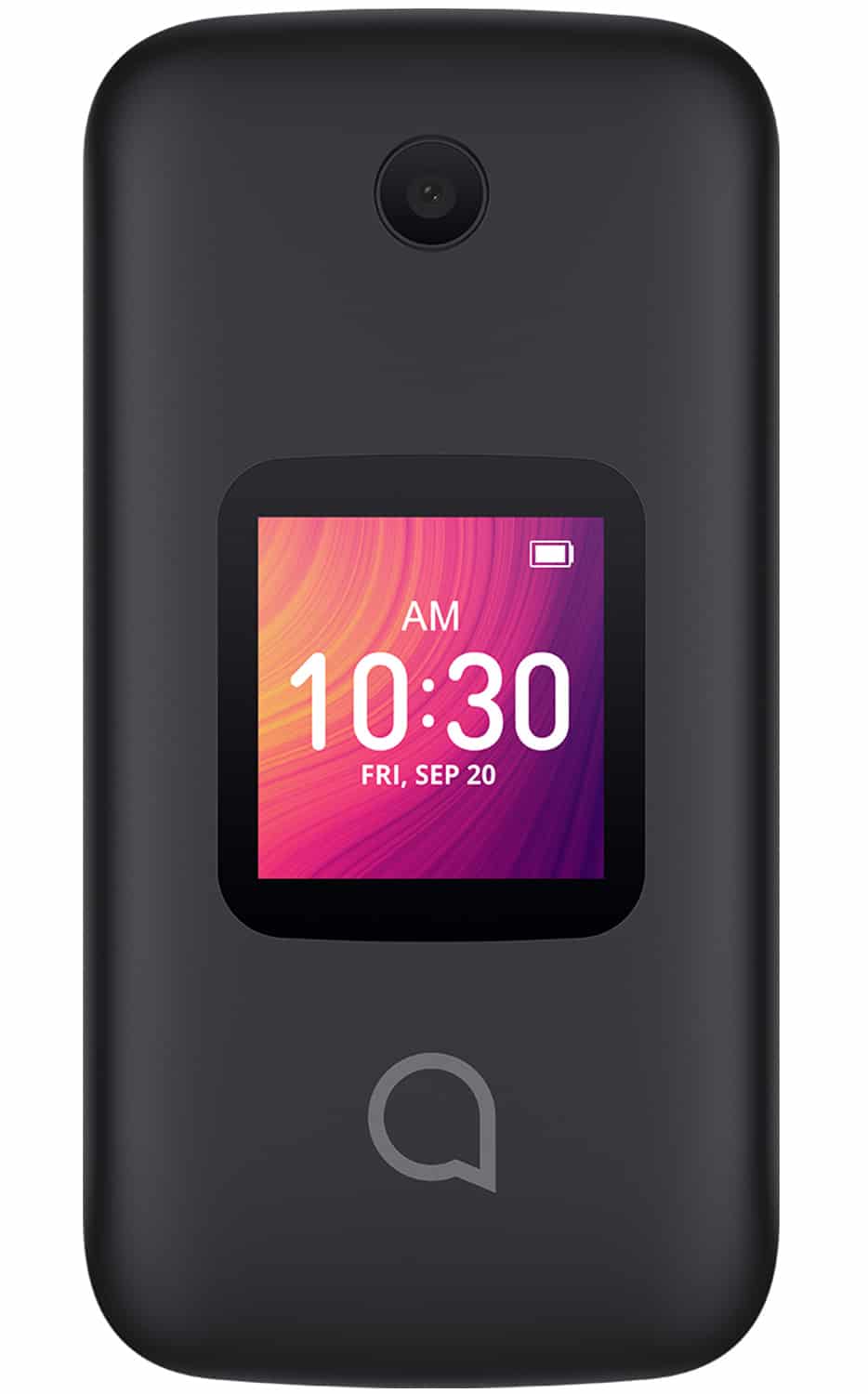
If affordability is top of mind, you’ll love the price tag on the Iris Easy Flip. The flip phone costs $59, and data plans start at only $20 per month.
Features
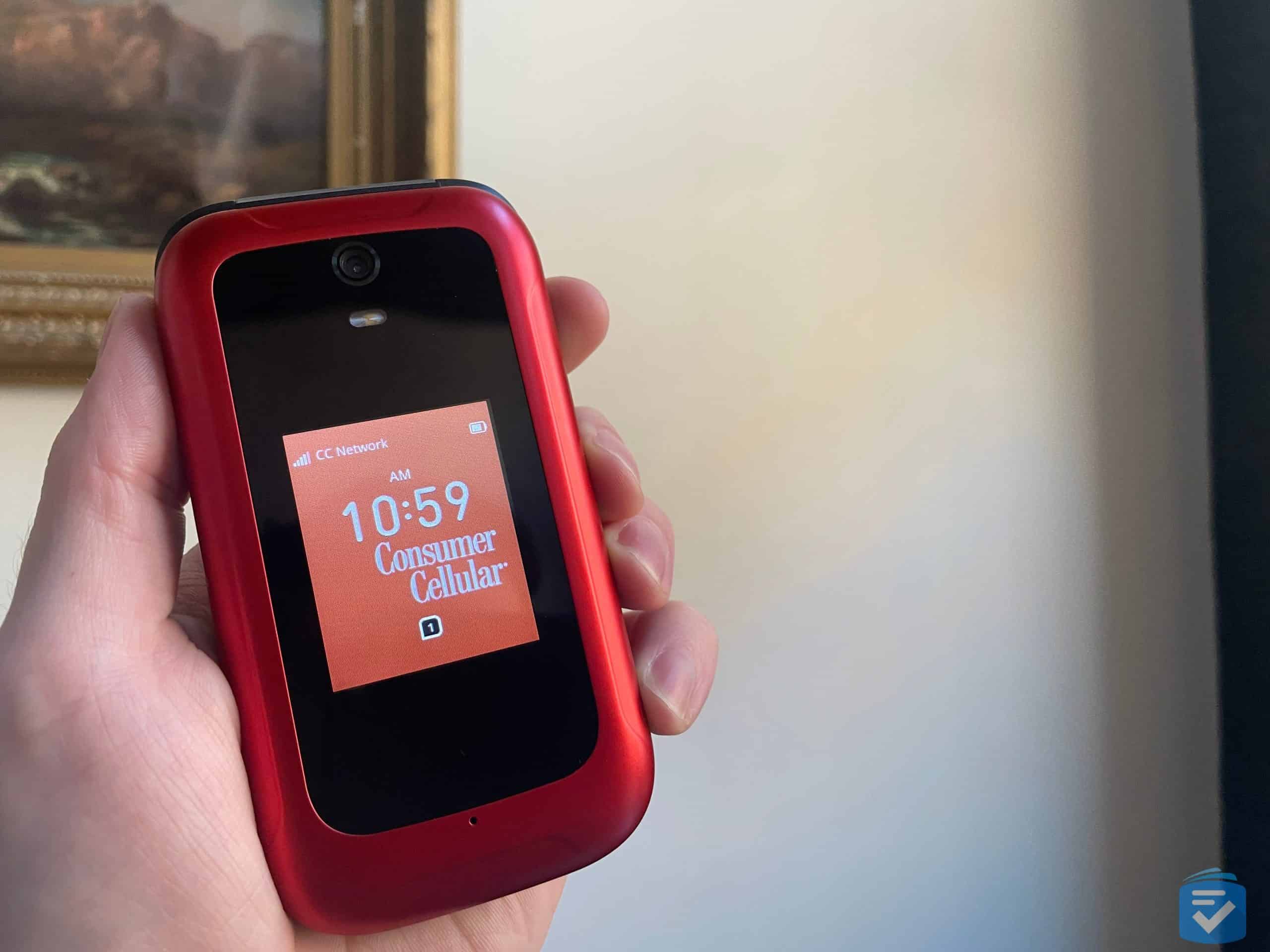
Like the Jitterbug Flip2, the Iris Easy Flip had a simple design that was completely intuitive for us to use. As a regular flip phone, it has that physical keyboard that makes it much easier to send calls and texts, with large buttons ideal for someone with visual impairment. But what the Iris Easy Flip has that the Flip2 lacks is apps and internet access, just like a smartphone. We loved using it to check our email and surf the web in waiting rooms.
Prepaid Plans
The Iris Easy Flip is available from Consumer Cellular. Per month, you can expect to pay $20 for unlimited talk, unlimited text, and 1 GB of data. Plans with unlimited data start at $40 per month for subscribers ages 50 and older.
>>Read more: Consumer Cellular Plans for Seniors
One major difference between the Flip2 and the Iris Easy Flip is overage charges. With the Iris Easy Flip, if you go over your monthly data cap, you’ll be upgraded automatically to the next tier of plan. While this does mean you’ll have to pay more, it circumvents the potentially costly issue of overage charges.
Iris Easy Flip Plans
| Amount of data per month in GB | 1 | 5 | 10 | 20 | Unlimited |
|---|---|---|---|---|---|
| Cost per month | $20 | $25 | $35 | $45 | $40-$60* |
| Unlimited talk/text | Yes | Yes | Yes | Yes | Yes |
| 5G access | Yes | Yes | Yes | Yes | Yes |
| Discounts | Yes | Yes | Yes | Yes | Yes |
| Nationwide coverage | Yes | Yes | Yes | Yes | Yes |
*The unlimited plan costs $40 per month for subscribers aged 50 and older.
Drawbacks
If you want to use your phone to take high-quality photos, the Iris Easy Flip probably isn’t the best option. It lacks a front-facing camera — i.e., a “selfie” camera — and its rear-facing camera is grainy and washed out at best. If you want a high-quality camera, we’d recommend the Iris Connect or the Samsung Galaxy A13 5G.
Our Verdict
Despite its subpar camera, the Iris Easy Flip gave us the best of both worlds: smartphone capabilities for a flip phone price.
To learn more about this phone, read our full Iris Easy Flip review.
Pros
- Highly affordable
- Long battery life
- Dedicated speakerphone button
- Classic, intuitive design
Cons
- No selfie camera
- Limited app support
2. Jitterbug Flip2 - Best Overall

855-403-6340
What We Like Most:
- $79.99 price tag
- Emergency alerts available
- Affordable unlimited data
- No long-term contracts or cancellation fees
Overview
Device cost: $79.99 when purchased from Lively
If you’re looking for an affordable phone with flexible monthly contracting, the Jitterbug Flip2 is the phone for you. It’s the only phone on this list to offer medical services for seniors, like an on-call nurse, emergency alerts sent to friends and family, and even a care advocate who can help you meet your health goals.
Features
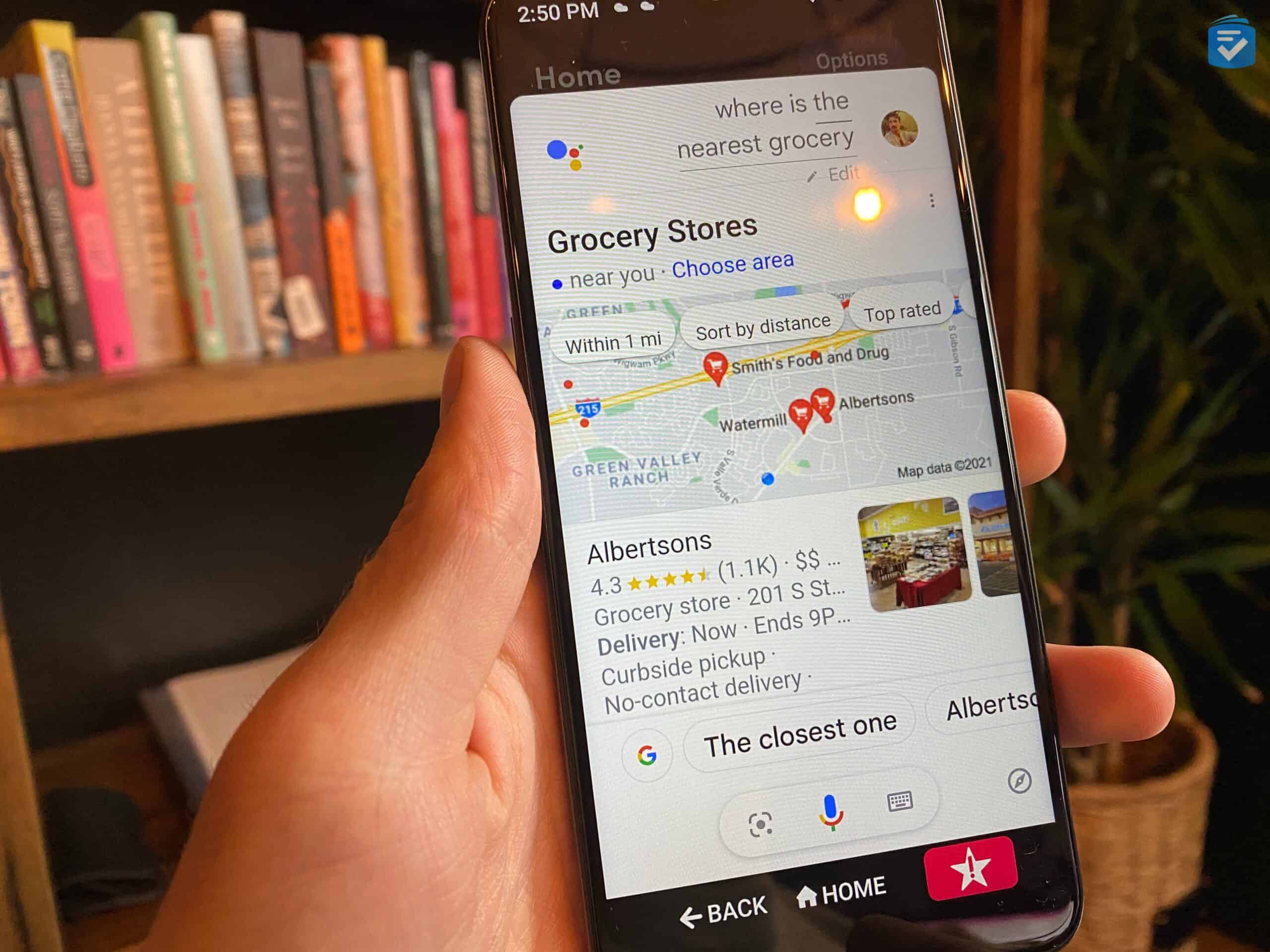
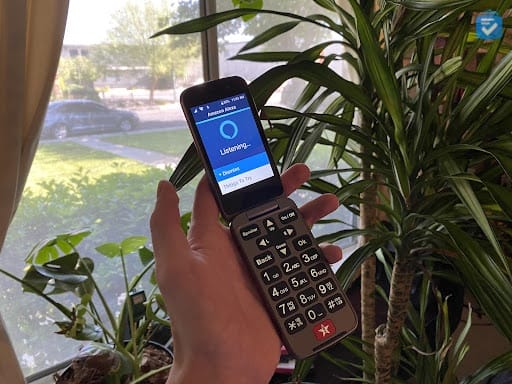
Of the phones we tested for this article, the Flip2 is the only flip phone aside from the Iris Easy Flip, which means it is super easy to use. It has those things you may remember as buttons, meaning you don’t have to type on a hard-to-read smartphone, ideal for people with vision issues. But just because it’s a flip phone doesn’t mean it was lacking in modern features. Take Alexa, for example, Amazon’s voice assistant. We used Alexa with the Flip2 to make calls for us, send and write text messages, and even check our battery level.
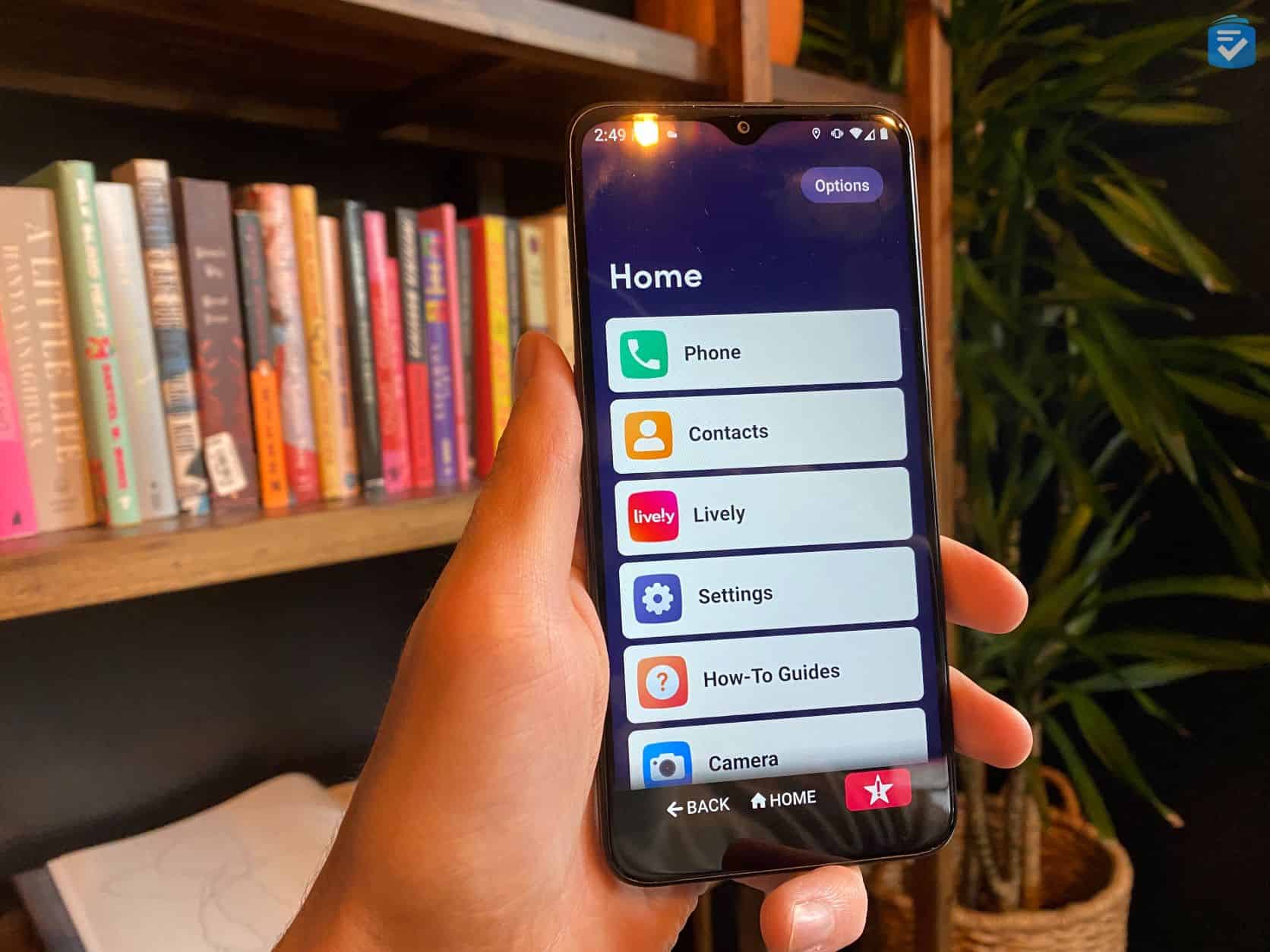
The last feature we want to point out is the dedicated “urgent response” button at the bottom of the keyboard — red with a white star and exclamation point. If we need help, all we have to do is push that button, which is much quicker than dialing 911. Lively, the company behind the Flip2, uses our phone’s location data to see where we are and send emergency responders or our family and friends — whatever we need. This phone is designed for seniors, keeping safety foremost in mind.
Prepaid Plans
With a Jitterbug plan, you can pay anywhere from $19.99 to $49.99 for unlimited talk and texting. There is no additional charge for data, which isn’t the case with other Lively products like the Jitterbug Smart4 or Smart3 smartphones. There are no long-term contracts or cancellation fees. Note that the plans below include a $5-per-month discount for enrolling in automatic and paperless billing, which we prefer, as it meant we didn’t have to remember to pay the bill each month. Since there is no high-speed data, there are no overage charges, and we didn’t pay an activation fee.
Technically, Lively is not a prepaid carrier; however, it requires no long-term contract, meaning you can cancel at any time without penalty.
Jitterbug Flip2 Plans
| Plan | Basic | Premium | Preferred |
|---|---|---|---|
| Monthly cost | $19.99 | $39.99 | $49.99 |
| Unlimited talk and text | Yes | Yes | Yes |
| Urgent response | No | Yes | Yes |
| Lively app | No | Yes | Yes |
| Nurse on call | No | No | Yes |
Drawbacks
Because the Flip2 is a flip phone and not a smartphone, it lacks some modern features, like video chatting, music and video streaming, and internet usage. Essentially, we used this phone just to make calls and texts, which may not be enough functionality for some people. If you want to use the internet on your phone, all of the other phones on this list allow for it.
Our Verdict
If you want a phone that lets you talk and text while protecting you medically in case of an emergency, there’s no better option than the Jitterbug Flip2. Even though its plans are not technically prepaid, they have many of the advantages of prepaid plans, like no long-term contract and low prices.
To learn more about this phone, read our full Jitterbug Flip2 review.
Pros
- Simple design
- Affordable plans
- Optional safety features
- Alexa voice commands
Cons
- No video calls
- No app support
3. Samsung Galaxy A13 5G - Cheapest Unlimited Data
What We Like Most:
- 6.5-inch display
- Unlimited data starting at $15 per month
- No overage charges
- Compatible with M3/T3 hearing aids
Overview
Device cost: $169 when purchased from Mint Mobile
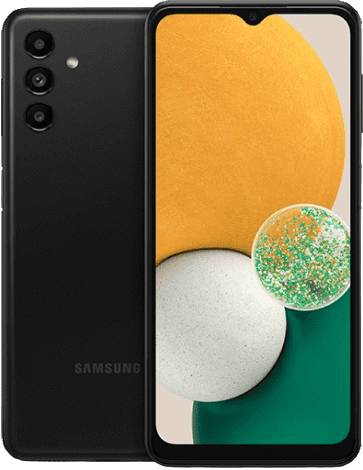
With the Samsung Galaxy A13 5G, you’ll get all of the features you want from a smartphone, like a large screen, 64 GB of memory, and Google Play, with an incredibly affordable prepaid plan. Mint Mobile plans start at $15 per month, and there are no overage charges whatsoever.
Features
The Samsung Galaxy A13 5G is most similar to Apple’s iPhone 13, but instead of being part of the Apple ecosystem, it’s part of the Android ecosystem. That means that we had all of the apps from Google Play, which is as expansive as the App Store. And since we organize our entire lives with Google’s apps, like Gmail, Google Calendar, and Google Docs, it was easy to find everything we needed straight from the Samsung Galaxy A13 5G.
Being designed by one of the largest companies on this list, the Samsung Galaxy A13 5G worked smoothly, with no glitches or slow download speeds. Finally, the cameras were of great quality, with a 5 MP selfie camera, and in the back, three cameras: one 50 MP, one 2 MP for wider shots, and one 2 MP for depth. We were amazed at how good our photos looked on the Samsung Galaxy A13 5G, and we’re not even good at photography!
Prepaid Plans
Although the Samsung Galaxy A13 5G works with T-Mobile, Ultra Mobile, Assurance Wireless, TracFone, and Total by Verizon, among other providers, we chose Mint Mobile because it has the lowest prices on the market. We paid at the beginning of the month for our phone service: only $15 with a three-month commitment for 5G of data, or only $30 for unlimited data. But if you buy the phone itself from Mint Mobile and get a six-month plan, the first six months of service are free. You can’t get any cheaper than that!
Although Mint Mobile’s plans are prepaid, if you go over your limit, service won’t end, unlike Cricket Wireless. Rather, the company will just give you slower data, and there’s the ability to upgrade. There’s also no activation fee and a seven-day money-back guarantee, minus the cost of shipping. However, the company doesn’t give refunds beyond this period, so there’s no way to get rid of any unused data. Once you buy it, it’s yours for the keeping!
To learn more about these plans, read our guide to Mint Mobile senior plans.
Mint Mobile Plans
| Amount of data per month in GB | 5 | 15 | 20 | Unlimited |
|---|---|---|---|---|
| Cost per month | 3 months: $15 6 months: $20 12 months: $15 |
3 months: $20 6 months: $25 12 months: $20 |
3 months: $25 6 months: $35 12 months: $25 |
3 months: $30 6 months: $35 12 months: $30 |
| Unlimited talk/text | Yes | Yes | Yes | Yes |
| 5G access | Yes | Yes | Yes | Yes |
| Discounts | 6 months of free service with a phone purchase | 6 months of free service with a phone purchase | 6 months of free service with a phone purchase | 6 months of free service with a phone purchase |
| Nationwide coverage | Yes | Yes | Yes | Yes |
Did You Know? Mint Mobile uses T-Mobile’s network, the largest 5G network in the U.S.1
Drawbacks
People with arthritis may want a phone that works with a wireless charging dock, like the Jitterbug Flip2. Unfortunately, this isn’t an option with the Samsung Galaxy A13 5G. Additionally, it’s the most expensive item on this list, costing $169 from Mint Mobile. If you want a more affordable smartphone, keep reading about the Iris Connect, which costs $89.
Our Verdict
With the breadth of Google Play, professional-grade cameras, and up to 38 hours of talk time, the Samsung Galaxy A13 5G is at the top of the market in terms of features. Mint Mobile is a great prepaid provider for this phone, offering six months of service for free with a phone purchase.
Pros
- Stellar cameras
- Google Play store compatibility
- Google Assistant voice commands
- Alexa voice commands
Cons
- Potentially complicated design
- No wireless charging
4. Iris Connect - Best for Hearing Aids
844-580-0512
What We Like Most:
- Compatible with M3/T3 hearing aids
- $89 smartphone
- 25-hour battery life
- 13 MP camera
Overview
Device cost: $89 when purchased from Consumer Cellular
If you’re one of the 14 percent of U.S. adults age 50 and older with hearing loss2, you may need a phone that works with your hearing aids. The Iris Connect is a smartphone compatible with M3/T3 hearing aids, and it costs only $89.
Features
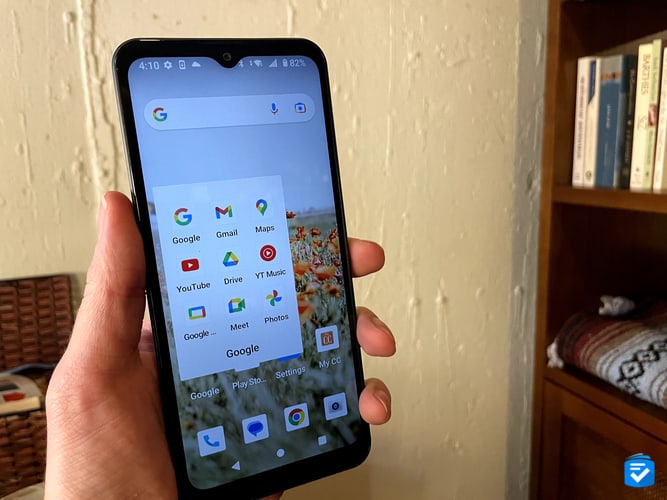
Aside from its compatibility with hearing aids, we love that the Iris Connect uses the Android 13 operating system, meaning, we had access to Google Play, just like we did with the Samsung Galaxy A13 5G. From getting directions from Google Maps as we drove to giving commands to Google Assistant, the Android version of Siri, this phone gave us the features we love with a smaller price tag. But it still had a smooth performance, displaying our most frequently used apps on the home screen so we could navigate with little friction. Plus, we love how the home screen has the Google search bar at the top, because when are we not Googling something?
Prepaid Plans
The Iris Connect, like the Iris Easy Flip, uses Consumer Cellular, which, again, is not technically a prepaid plan. That means we paid at the end of the month, not the beginning, and there were overage charges in the form of an upgrade. Say we signed up for 1 GB of data per month for $20 and ended up using 3 GB instead. Automatically, Consumer Cellular would upgrade us to the next level, which is 5 GB for $25. It’s not terrible, but it’s something to keep in mind if you are trying to stick to a strict monthly budget.
However, all of Consumer Cellular’s plans are monthly, so there are no cancellation fees. Note that Consumer Cellular bills paperlessly and automatically, so there’s no additional discount. However, if you’re one of AARP’s 38 million members3, you can save 5 percent monthly.
Iris Connect Plans
| Amount of data per month in GB | 1 | 5 | 10 | Unlimited |
|---|---|---|---|---|
| Cost per month | $20 | $25 | $35 | $50 |
| Unlimited talk/text | Yes | Yes | Yes | Yes |
| 5G access | Yes | Yes | Yes | Yes |
| Discounts | Yes | Yes | Yes | Yes |
| Nationwide coverage | Yes | Yes | Yes | Yes |
Drawbacks
Since Consumer Cellular is only monthly, not prepaid, you may end up paying more than you initially bargained for if you go over your monthly data limit. What’s more, since all billing is automatic and electronic, you may not even realize you’re paying more for cell service until you’ve already been charged. To avoid this, we recommend turning on usage alerts so you can get emailed and texted when you’ve reached 50 and 75 percent of your monthly data.
Our Verdict
With hearing aid compatibility and an $89 price tag, the Iris Connect is an affordable Android phone with low monthly fees from Consumer Cellular.
To learn more about this phone, read our full Iris Connect review.
Pros
- Highly affordable for a smartphone
- Front and rear-facing cameras
- Google Assistant voice commands
- Long battery life
Cons
- Less powerful cameras
Prepaid vs. Postpaid Cellular Service
In recent years, with the prevalence of “unlimited” plans, the lines have blurred somewhat between prepaid and postpaid cellular plans. However, there is one primary difference, and this is how you are billed. Prepaid plans are paid upfront, while postpaid plans are billed on a recurring monthly basis.4
With a prepaid cell phone plan, a person pays upfront for an allotment of talk minutes, text messages, and data usage. For example, a hypothetical prepaid carrier might charge a person $20 for 500 minutes of talk, 500 text messages, and 5GB of data. With this plan, once a person spends 500 minutes talking on the phone, their service will be cut off, and they’ll have to pay to renew their service.
With a postpaid plan, a person pays a flat monthly rate that covers an allotment of talk, text, and data; however, this allotment automatically renews each month when a person pays their monthly recurring bill. Depending on the cellular carrier, a person might be locked into making these monthly payments for up to two years.
The primary benefit of prepaid plans is lower prices. Overall, prepaid plans can end up costing $20 less per month than postpaid plans. Another benefit of prepaid plans is the flexibility, as you won’t be locked into a contract. They’re also more flexible in terms of the service. You can choose exactly how much talk, text, and data you want so you pay only for what you actually need. Although they lack the bells and whistles of postpaid plans, prepaid plans are a great way to shave a little off from your bottom line.
NOTE: Cricket Wireless offers prepaid phone plans with HBO Max Basic with Ads, one of the only prepaid carriers to offer streaming subscriptions.
How Do Prepaid Phones Work?
Prepaid phones are phones that you pay for at the beginning of the month instead of the end. However, we must admit that the term “prepaid phone” is a bit of a misnomer, as most phones are compatible with a range of networks, some prepaid and some postpaid. Still, if you buy a phone with a prepaid plan, it means that you will get a finite amount of data each month. Beyond that, typically, your service will shut off, but there won’t be any overage charges. While prepaid phones tend to be cheaper than postpaid phones, you’ll also experience slower data. Plus, prepaid phones don’t usually have perks like streaming subscriptions or device upgrades, although there are some exceptions, like Cricket Wireless. If budget is your primary concern, however, getting a prepaid phone is a great way to save money.
Where Can You Buy Prepaid Cell Phones?
You can buy prepaid cell phones both in stores and online from the following brands:
- AT&T Prepaid
- Boost Mobile
- Cricket Wireless
- Google Fi Wireless
- Lively
- Mint Mobile
- Simple Mobile
- Ting
- Total by Verizon
- Tracfone
- Ultra Mobile
- Verizon Prepaid
While some networks offer physical cards that you need to reload your service, the card may be digital if you buy the phone online. Stores that sell prepaid phones include large retailers like Best Buy, Walmart, Target and Consumer Cellular stores.
Is Prepaid Better Than Postpaid?
Which is better: prepaid or postpaid? The answer depends on what you’re looking for. You should get a prepaid phone if you want:
- Affordability
- Flexibility
- No contracts
- No credit checks
- No hidden fees
- No overage charges
However, you’ll have to accept the fact that your data will be throttled, that you may have to pay more upfront for devices, and that you won’t get the perks of postpaid plans like additional subscriptions or upgrades.
On the other hand, you should get a postpaid phone if you want:
- Family plans
- Faster data
- Financing options so you can pay for your phone over time
- Higher data allowances
- Priority customer support
But with prepaid plans, you have to accept that the monthly costs are higher, you’ll typically have to enter a contractual agreement, the company will most likely check your credit, and you may incur additional fees.
Bottom Line
Although you may not get extras like a Walmart+ or Netflix subscription, and although high-speed data might be throttled, prepaid plans are a great way to save money if you’re using your phone only for talk and text. Avoid overage and cancellation fees by going with a flexible, prepaid plan.
Methodology
These days, almost every cell phone is compatible with numerous prepaid and postpaid carriers. To choose our favorites, we used the following criteria:
- Cost: While modern smartphones can cost upwards of $1,000, we selected devices that cost as low as $70.
- Network compatibility: We looked for phones that were either compatible with specific affordable providers (like the Iris Easy Flip) or compatible with a wide range of networks.
- Device simplicity: First and foremost, we want to make sure these phones are easy to use, primarily for talking and texting.
- Minimal extra fees: We chose phones available on networks with minimal cancellation fees and overage charges.
Frequently Asked Questions
-
Are prepaid cell phones worth it?
Yes, prepaid cell phones are often worth it, especially for people who want to avoid contracts, overage fees, or unexpected bills. With a prepaid phone, you only pay for what you plan to use, which makes it a great option for seniors with light or moderate phone needs. Many prepaid plans offer unlimited talk and text at low monthly rates, and you can change or cancel anytime without penalties.
-
Can you buy a prepaid phone without a plan?
Yes, you can usually buy a prepaid phone without choosing a plan right away. Most retailers sell prepaid phones as standalone devices, so you can take your time picking the right plan later. Just keep in mind the phone will only work once it’s activated with a plan, either through the carrier that sells it or through one that’s compatible.
-
Do prepaid phones come with a phone number?
Prepaid phones do come with a phone number once they’re activated. When you set up your plan, the carrier assigns a new number unless you choose to transfer your existing number from another phone. If keeping your current number is important, check that your provider supports number transfers.
-
Can you buy a phone and put your SIM card in it?
Yes, you can often buy a phone and use your existing SIM card, as long as the phone is unlocked and compatible with your carrier. This is a popular option for people who want to upgrade their device without changing their number or plan. Just make sure the new phone supports the same network (like AT&T, Verizon, or T-Mobile) and SIM size as your current one.