Life Alert vs. Lifeline Comparison
 |
April 23, 2026
|
|
April 23, 2026
|
Choosing a medical alert system is vital for seniors aging in place. Though Life Alert is well-known, Lifeline is a strong modern competitor with better features and pricing. This comparison evaluates response times, costs, contracts, and technology. Our findings show that while Life Alert offers name recognition, Lifeline provides faster response, superior fall detection, and lower-cost, no-contract service.
Key Findings
- In our series of test calls, Lifeline connected users to help in an average of 12 seconds, compared to Life Alert's 120-second average response time.
- Lifeline's systems start at $39.95 per month for home protection, while Life Alert's systems start at $49.95 per month.
- Lifeline offers modern features like automatic fall detection and a caregiver app, neither of which is available with Life Alert systems.
- Although Lifeline charges setup fees, they don't lock users into long-term contracts like Life Alert, which imposes three-year service contracts on subscribers.
Did You Know: According to CDC data, falls are the leading cause of injury-related death among adults 65 and older.1 This is why we recommend medical alert systems for any senior living alone at home, as they can help a person contact help in an emergency.
Why Trust TheSeniorList?
Our team of caregivers, experts, and health care professionals conducted over 5,000 hours of in-depth research and testing to recommend the most reliable brands and devices. In this process, our team:
- Tested 50 medical alert devices from 15 different brands.
- Surveyed 1,250 seniors and caregivers on medical alert system usage.
- Consulted with nurses, EMTs, and caregivers who are experts at caring for older adults.
- Published dozens of videos that demonstrate our medical alert system testing.
- Evaluated verified customer reviews of medical alert companies from the Better Business Bureau.
How We Test Medical Alert Systems
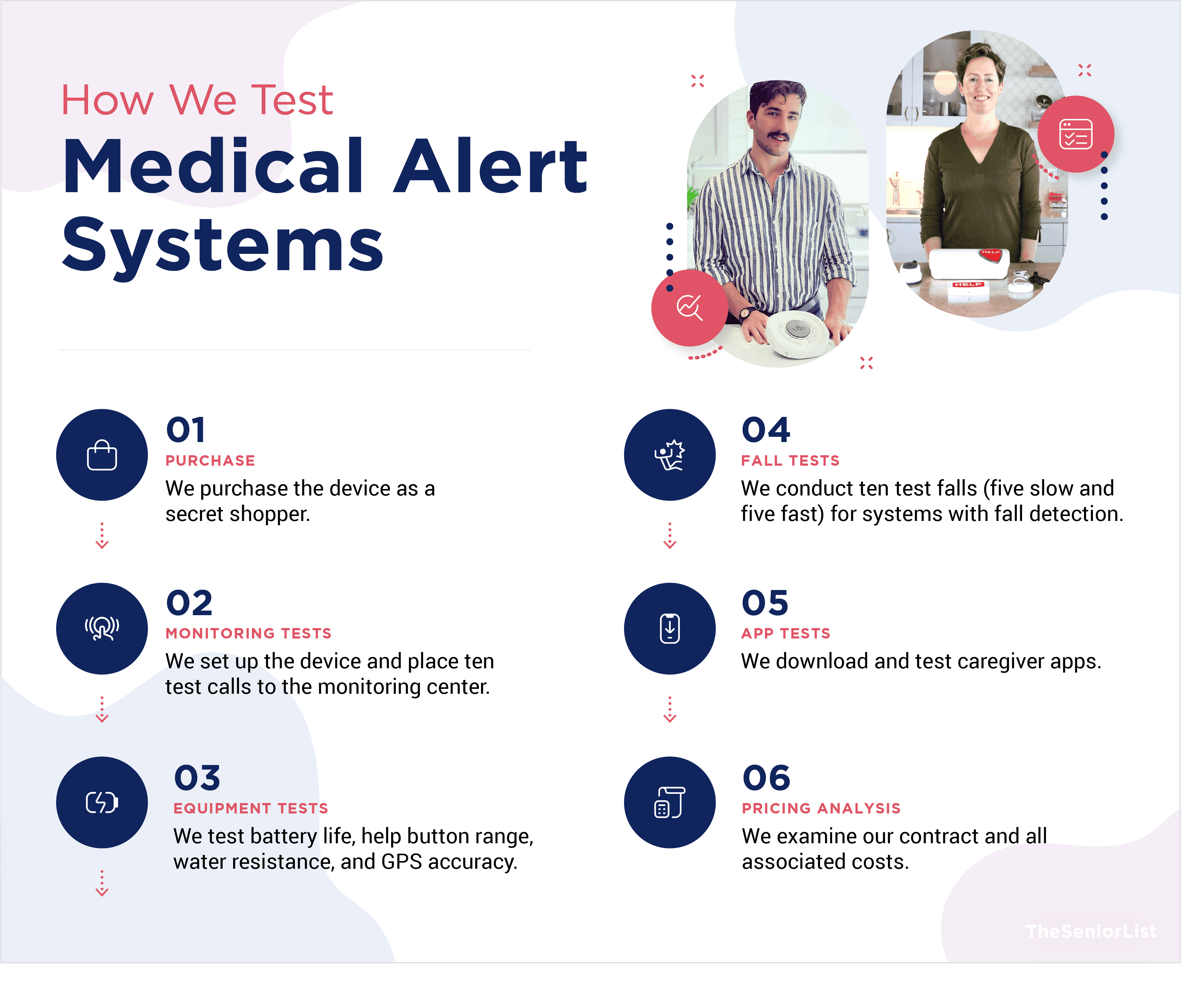
Most medical alert companies sell a variety of systems, including in-home systems, mobile systems, and smartwatches. Each device has its own features, but they all offer the same basic function: connecting a user to help in an emergency. With this in mind, we evaluate every medical alert system on the following criteria:
- Response times: The faster a medical alert system connects you to help, the better. For each system, we performed 10 test calls, noted how long it took to receive a response, and calculated an average.
- Ease of use: In an emergency, it's important that a user can successfully activate their system. So we carefully evaluated each device's design — with simplicity at the forefront.
- Customer care: A human touch is key to caregiving. With this in mind, medical alert companies must offer impeccable customer service — from the agents at their monitoring centers to their support personnel.
- Pricing and contracts: We analyze device costs, subscription costs, contract requirements, and other fees associated with a medical alert system purchase.
- Extra features: We test out voice commands, caregiver apps, fall detection, activity monitoring, and any other features included with a medical alert system.
Pro Tip: Which medical alert company comes out on top? To learn more, check out our pick for this year’s best medical alert system.

|

|
|
|---|---|---|
| Editor's Ratings | ||
| Starting Price (Home System) | $49.95 per month | $39.95 per month |
| Starting Price (Mobile System) | $69.95 per month* | $39.95 per month |
| Setup/Activation Fee | $95-$198 | $99.95 ($159 for smartwatch) |
| Minimum Contract | 3 years | None |
| Average Response Time | 120 seconds | 12 seconds |
| Fall Detection | Not available | $15 per month |
| Caregiver App | Not available | Included |
| Smartwatch Option | Not available | Yes |
| Contact | ||
| Phone Number |
Call for best price:
844-615-0088 |
*Life Alert's GPS help button costs $20 per month but must be purchased with the home system.
Lifeline Systems Overview
Credit: Lifeline
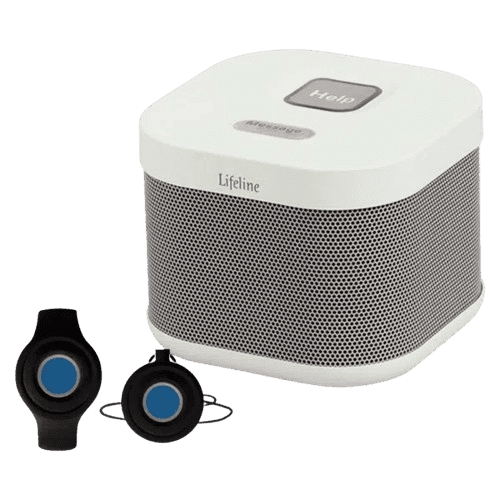
Lifeline has established themselves as a leading provider in the medical alert industry, and based on client testimonials, they appear to be the second-most popular brand (the first being Life Alert). Their systems stand out for their consistently rapid response times and modern features that cater to both home-bound seniors and active older adults.
Their system lineup includes both home and mobile systems. For in-home protection, Lifeline offers the HomeSafe system that operates on cellular service. For those who maintain an active lifestyle outside the home, Lifeline provides the On the Go system in both standard and mini sizes, plus a sophisticated smartwatch option that combines emergency response capability with wellness tracking features.
To learn more about our hands-on experience with their systems, read our full Lifeline medical alert review.
FYI: Medical alert systems can help prevent hospitalization after a fall. One study finds that these devices can reduce hospital utilization by 59 percent.2
Lifeline Devices Compared
| System | Monthly cost | For use | Additional features |
|---|---|---|---|
| HomeSafe Cellular | $39.95 | At home |
|
| On the Go | $44.95 | At home and on the go |
|
| On the Go Mini | $49.95 | At home and on the go |
|
| Smartwatch | $39.95 | At home and on the go |
|
Life Alert Overview
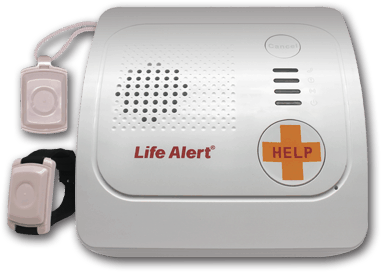
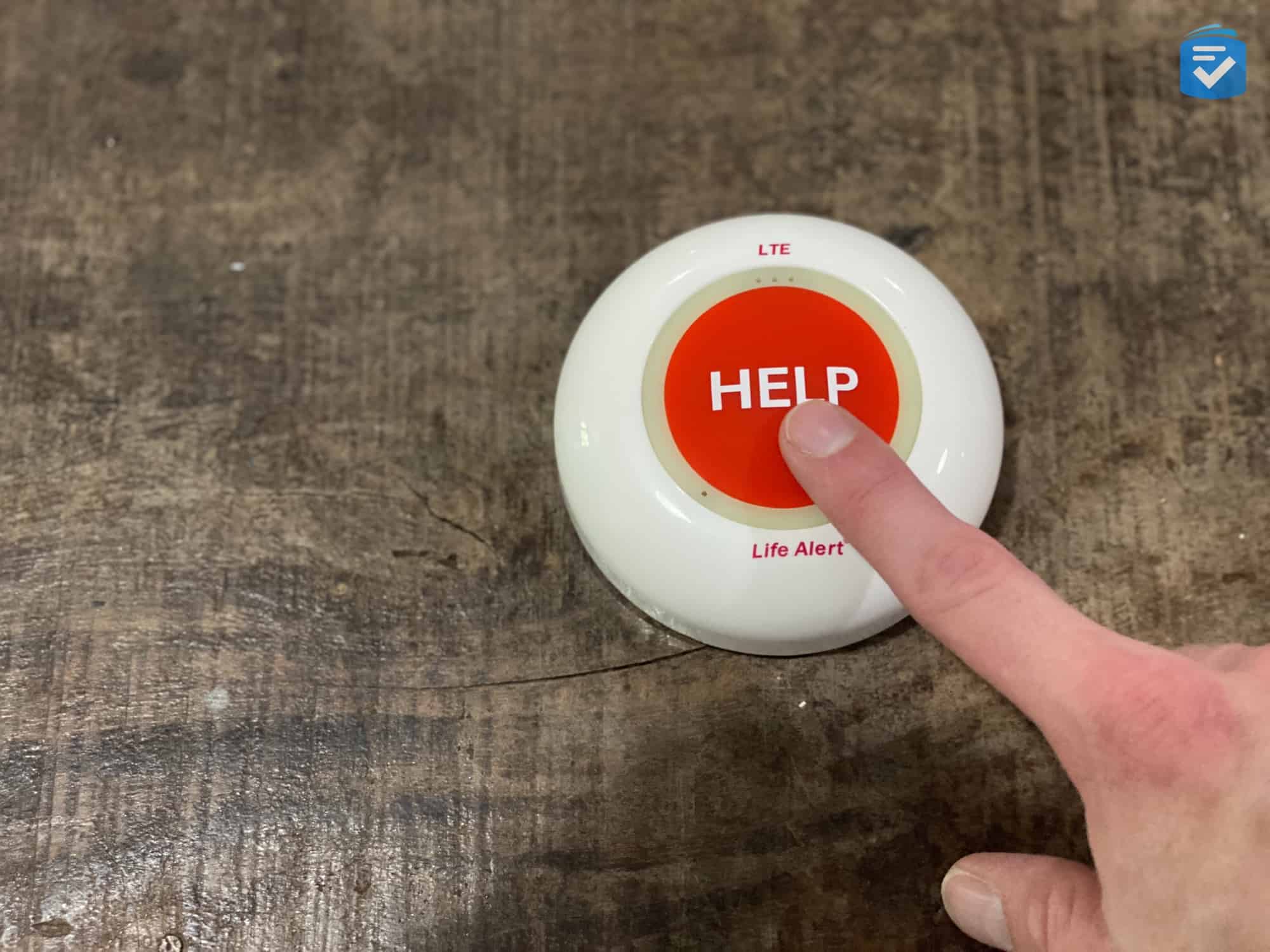
Life Alert remains one of the most recognized names in the medical alert industry, largely due to their long-standing presence and memorable marketing campaigns. The company provides straightforward emergency response services through a streamlined product lineup. While they may not offer the latest technological features –– no fall detection or caregiver apps here –– their emphasis on simplicity and reliability appeals to users who prefer uncomplicated emergency response solutions.
FYI: Among seniors, a majority of falls occur within the home.3 Because of this, it's important to test out any potential system in the user's home environment.

Their system offerings comprise three main components: a home-based system (also known as the Master Unit), a GPS-enabled mobile help button, and a waterproof wall-mounted help button. The home system serves as the foundation of their service, featuring a base unit with two-way communication capabilities and an impressive 72-hour backup battery — one of the longest in the industry. The mobile GPS help button and wall-mounted button must be purchased as add-ons to the home system.
>> Read More: The Best GPS Medical Alert Systems
To learn more about our hands-on experience with their systems, read our full Life Alert review.
Life Alert Systems Compared
| System | Monthly Cost | For Use | Additional Features |
|---|---|---|---|
| Home System | $49.95 | At home |
|
| GPS Help Button | $20* | At home and on the go |
|
| Wall-Mounted Button | $20* | At home |
|
*These devices require the purchase of the home system.
Costs and Contracts
Lifeline is significantly more budget-friendly than Life Alert. The HomeSafe plan starts at $39.95 per month, and the mobile On the Go system is $44.95 per month. Even with a $15 fall detection fee, Lifeline's overall costs are lower than Life Alert's base price.
>> Read More: Lifeline Pricing Guide
Life Alert costs start at $49.95 for their basic home system. Adding their mobile GPS button, which must be purchased alongside the home system, brings the total to $69.95 per month, and the wall-mounted help button brings the total to $89.95 per month. Perhaps more significantly, Life Alert requires customers to commit to a three-year service agreement—a considerable obligation that can be terminated only in specific circumstances, such as the user's death or transition to residential care. Even still, if the BBB complaints are to be trusted, many users have found it difficult to cancel these contracts.4
Lifeline takes a more flexible approach to service agreements. They operate on a month-to-month basis, allowing customers to cancel their service at any time without penalty. Furthermore, Lifeline offers discounts via its annual payment plans. While they do charge an initial activation fee — from $99.95 to $159 — this one-time cost can be offset by the savings that come with choosing the annual billing option.
Performance
Our extensive testing revealed a dramatic contrast in capabilities between Lifeline and Life Alert systems. The most striking difference emerged in response times, where Lifeline demonstrated exceptional efficiency, connecting users to monitoring center staff in an average of just 12 seconds. This rapid response applied consistently across both their home-based systems and mobile devices, showcasing the company's commitment to swift emergency assistance.
FYI: Lifeline’s response times were fast, but they’re not the fastest we’ve seen in our tests. To find out who performed better, read our full Medical Guardian review.
Life Alert's medical alert system had an unacceptable average response time of 120 seconds, one of the longest tested, despite professional monitoring staff. Lifeline, however, offered rapid response times and superior mobile location-tracking accuracy, consistently providing precise GPS data for quick emergency location. Lifeline's faster response and precise technology make it the superior choice over Life Alert, which only offers reliable equipment and professional staff.
Extra Features
Lifeline is the technology leader, primarily because it integrates automatic fall detection across all products. This feature, which costs an extra $15 monthly, proved effective in testing, automatically alerting monitoring staff after a sudden fall. Although no system is 100% accurate, this technology is a vital safety net for users unable to press their help button.
>> Read More: The Best Fall Detection Devices
Life Alert, despite an established market presence and higher pricing, has not yet incorporated automatic fall detection into any of their devices. For users with mobility challenges or those at elevated risk of falling, this absence represents a significant limitation in emergency protection, especially considering that falls are the leading cause of injury and death among older adults.5
Lifeline's MyLifeline caregiver app is a leading monitoring solution. It offers real-time mobile location tracking and instant push notifications for emergency calls. Families can easily monitor device status, battery levels, and update emergency contacts via its user-friendly and reliable interface, making it essential for staying connected to a loved one's safety.
Life Alert, by comparison, offers no companion app or digital monitoring platform for caregivers. This means family members have no way to remotely track their loved one's location or receive notifications about emergency situations.

Our Recommendation
Based on our comprehensive testing and analysis, Lifeline emerges as the superior choice for medical alert protection. They offer faster response times, lower monthly costs, no long-term contracts, and modern features like caregiver apps and fall detection.
While Life Alert has brand recognition and decent equipment, their two-minute response times make them difficult to recommend to anyone.
Frequently Asked Questions
-
Which is better: Life Alert or Lifeline?
While both companies offer reliable equipment, Lifeline provides faster response times, lower monthly costs, and more modern features like fall detection and caregiver tracking. They also don’t require long-term contracts.
-
Does Lifeline require long-term contracts?
No, Lifeline offers month-to-month service with no long-term commitment. They do offer discounted rates for annual payment plans.
-
Which company has faster response times?
In our testing, Lifeline averaged 12-second response times, while Life Alert averaged 120-second response times.
-
What are the main cost differences between Life Alert and Lifeline?
Lifeline’s systems start at $39.95 per month with a one-time activation fee, while Life Alert starts at $49.95 per month with activation fees approaching $200. Life Alert also requires a three-year contract.
-
Does Life Alert have an app for caregivers?
As of this writing, Life Alert has no app that allows caregivers to track a system’s usage or receive notifications in the event of an emergency.