O2 Concepts Review: Oxlife Liberty 2 Portable Oxygen Concentrator
 |
June 11, 2026
|
|
June 11, 2026
|
Price Disclaimer: All price ranges reflect publicly available MSRP data as of early 2026 and are provided for informational comparison only. Actual prices vary by retailer, promotional discounts, and date of purchase. Always verify current pricing directly with the supplier before making a decision.
Most portable oxygen concentrators make you choose between portability and prescription range. Lighter units top out at four or five pulse dose settings and skip continuous flow entirely. Heavier cart-based units cover the full clinical range but require a rolling cart. The O2 Concepts Oxlife Liberty 2 makes a different argument: at 6.6 pounds (unit only), it delivers 10 pulse dose settings, continuous flow up to 2.0 LPM, and a remote monitoring platform called DNA, all in a wearable, shoulder-carry form factor.
O2 Concepts manufactures the Liberty 2 in the U.S., and the device is designed for users whose prescriptions demand more than entry-level units can provide, without requiring the full weight and bulk of a cart-based transportable concentrator.
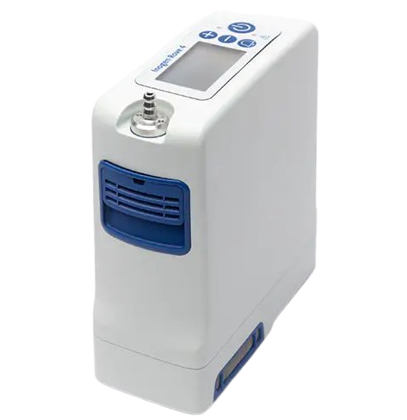
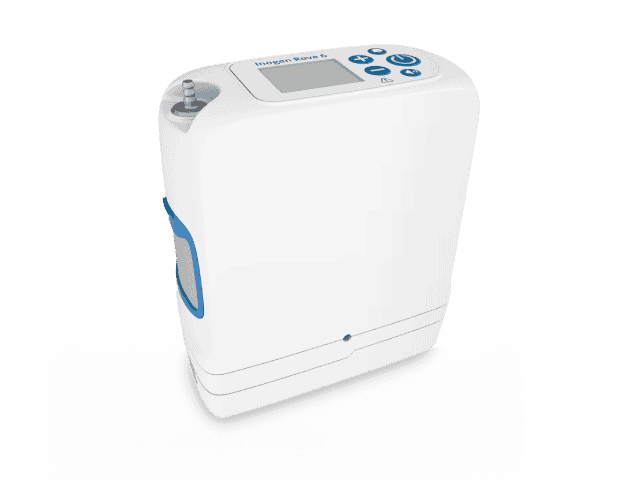
We evaluated the Liberty 2 against two of the most popular pulse dose units currently on the market: the Inogen Rove 6 and the CAIRE FreeStyle Comfort. Among the things we discuss in our review include their specs, pricing, the DNA remote monitoring platform, battery performance, and a head-to-head comparison across all three devices.
By the numbers: COPD affects approximately 16 million adults in the U.S. Many require pulse dose oxygen prescriptions above setting 5, a range that most lightweight POCs cannot cover but the Oxlife Liberty 2 handles with settings up to 10.1
Our Methodology
The Senior List editorial team evaluates portable oxygen concentrators through a framework of five primary criteria: clinical suitability across a realistic range of prescribed flow settings; sustained portability and wear comfort during extended daily activity; real-world battery performance at mid-range settings; accessibility and ease of use for older adults; and FAA approval status for travel viability.
Specifications are sourced directly from manufacturer product pages and cross-referenced with authorized dealer documentation. Pricing data is gathered from a range of authorized dealers and updated regularly; prices listed reflect typical retail ranges at the time of publication and may vary by channel and promotional timing. Medicare and insurance details reference current CMS guidance for the applicable benefit year.
We do not accept manufacturer payment for reviews, and our editorial assessments are independent of commercial relationships.
Oxlife Liberty 2 at a Glance: Quick Specs
| Specification | Oxlife Liberty 2 |
|---|---|
| Delivery mode | Pulse dose (settings 1-10) + continuous flow (0.5-2.0 LPM) |
| Weight | 6.6 lbs (unit only); 8.0 lbs with battery; 8.6 lbs with battery and case |
| Dimensions | 9.9 in W x 3.8 in L x 9.9 in H |
| Noise level | Not published by manufacturer |
| Battery life (pulse) | 4.5 hrs at setting 1; 1.25 hrs at setting 10 |
| Battery life (continuous) | 3.25 hrs at 0.5 LPM; 1.0 hr at 2.0 LPM |
| Battery recharge time | 2-3 hours (AC or DC) |
| FAA approved | Yes |
| Remote monitoring | DNA Technology Platform (optional) |
| Power | AC: 100-240VAC / DC: 11.5-15V, 10A |
| Altitude range | 0-13,123 feet |
| Warranty | 3 yrs (unit); 1 yr (sieve beds, battery, accessories) |
| Starting price (approx.) | ~$2,995 (varies by dealer and configuration) |
Pros and Cons of Oxlife Liberty 2
Pros
- Widest pulse dose range available: Ten pulse dose settings with bolus sizes from 8 to 80 mL cover prescriptions that no other shoulder-carry portable in this weight class can match.
- Continuous flow in a wearable form factor: At 6.6 pounds (unit only), the Liberty 2 is one of the few shoulder-carry POCs that offers true continuous flow up to 2.0 LPM, bridging the gap between lightweight pulse dose units and heavy cart-based portables.
- DC concurrent use: Unlike some competitors, the Liberty 2 can be operated and charged simultaneously on both AC and DC power, making it fully functional during long car trips without draining the battery.
- DNA remote monitoring platform: The optional DNA Technology Platform learns usage patterns, monitors the device remotely, and pushes software updates automatically, a level of intelligence most POCs in this class do not offer.
- FAA-approved: The Liberty 2 meets FAA requirements for in-cabin use on commercial flights, a meaningful feature given its clinical depth.
- Made in the USA: O2 Concepts manufactures the Liberty 2 domestically, which can matter for patients and providers prioritizing domestic supply chains and support.
- 3-year unit warranty: The device carries a three-year warranty, in line with CAIRE and stronger than many competitors.
Cons
- Heavier than direct competitors: At 8.0 lbs with the battery, the Liberty 2 is notably heavier than both the Inogen Rove 6 (4.8 lbs) and the CAIRE FreeStyle Comfort (5.0 lbs), which can matter significantly for all-day wear.
- Short battery life at higher settings: Battery runtime drops to 1.25 hours at pulse setting 10 and just 1 hour at 2.0 LPM continuous flow, making AC or DC power a practical requirement for extended therapy at higher prescriptions.
- Sieve bed warranty is only 1 year: Unlike CAIRE, which covers sieve beds for the full 3-year warranty period, O2 Concepts limits sieve bed coverage to 1 year, which can mean out-of-pocket replacement costs of $300-$500 in years 2 and 3.
- No published noise level: O2 Concepts does not list a dBA rating for the Liberty 2, making it harder to compare directly with units like the Inogen Rove 6 (37-39 dBA) or CAIRE FreeStyle Comfort (39.9 dBA).
- Higher starting price: At approximately $2,995, the Liberty 2 starts above both the Inogen Rove 6 (~$2,795) and CAIRE FreeStyle Comfort (~$2,195-$2,749).
Costs
The Oxlife Liberty 2 starts at approximately $2,995, with final pricing varying by dealer and the accessories or battery configurations included. O2 Concepts sells through authorized dealers and home health equipment suppliers rather than directly to consumers, so it’s worth comparing packages across multiple dealers before purchasing. Our portable oxygen concentrator prices guide tracks current market pricing across major authorized channels.
The Liberty 2 is a bit more expensive than the Inogen Rove 6 (starting at approximately $2,795) and even higher than the CAIRE FreeStyle Comfort (starting at approximately $2,195). However, that premium reflects the Liberty 2's clinical depth: 10 pulse dose settings and continuous flow capability are features that neither competitor can match at this weight. For seniors who need that range, the Liberty 2 has no direct equivalent in this form factor. For those prescribed at setting 4 or below who do not need continuous flow, the Inogen Rove 6 or CAIRE FreeStyle Comfort will serve them at a lower price point.
For Medicare-eligible patients, the Liberty 2 may be accessible through a rental arrangement with a Medicare-approved DME supplier, subject to the standard 80/20 cost split after the annual Part B deductible. HSA and FSA funds are generally applicable to prescription medical equipment, and most authorized dealers offer financing options.
If you’re not ready to purchase outright, a portable oxygen concentrator rental is also worth considering.
Pro Tip: For more information on Medicare and POCs, check out our guide Will Medicare Pay for Portable Oxygen Concentrators?
Our Walkthrough of Oxlife Liberty 2
Design and Portability
At 6.6 pounds (unit only) or 8.0 pounds with the battery installed, the Liberty 2 is heavier than most shoulder-carry portables. For context, the Inogen Rove 6 weighs 4.8 pounds and the CAIRE FreeStyle Comfort weighs 5.0 pounds. That additional weight is the direct cost of the Liberty 2's clinical range. The unit measures 9.9 inches on each side, giving it a squarish profile that is compact for what it does but noticeably bulkier than the narrower rectangular form of the Inogen Rove 6.
A carrying bag is included with the device. Our testing found that, compared to lighter units, the weight difference for Liberty 2 was perceptible but not prohibitive for most users. Where it becomes more relevant is for seniors who have limited upper body strength or shoulder issues. The 3-pound weight difference over a full day’s activity could be taxing. For those who are primarily stationary or moving short distances, the weight is unlikely to be a dealbreaker.
The device features a color LCD screen with keypad controls, a clean and readable interface that we found easy to navigate. The battery charge indicator is visible on the control panel, and the accessible battery design makes it straightforward to monitor and swap.
Oxygen Delivery: 10 Pulse Settings and Continuous Flow
We found that a major highlight of Liberty 2 is its delivery range. With 10 pulse dose settings delivering boluses from 8 to 80 mL per breath, and continuous flow from 0.5 to 2.0 LPM in 0.5 LPM increments, it covers a broader prescription range than any comparable shoulder-carry unit on the market.
For comparison: the Inogen Rove 6 tops out at pulse setting 6 with no continuous flow capability, and the CAIRE FreeStyle Comfort tops out at pulse setting 5 with no continuous flow. The Liberty 2's settings 6 through 10 are clinically significant. Patients with moderate to severe COPD who require higher flow rates often find that lightweight units simply cannot meet their prescription. The Liberty 2 is specifically engineered for this patient population.
Continuous flow at up to 2.0 LPM also opens the door for older adults managing sleep apnea alongside their COPD, a combination known as COPD-OSA overlap syndrome. Research published in the International Journal of COPD found that 10%-15% of COPD patients also have obstructive sleep apnea, making continuous flow compatibility a desirable feature.2 Note that the Liberty 2's continuous flow tops out at 2.0 LPM, compared to 3.0 LPM for the CAIRE SeQual Eclipse 5 for patients with higher continuous flow requirements.
DNA Technology Platform
The DNA (Dynamic Network Analysis) platform is O2 Concepts' standout technology and one of the Liberty 2's strongest arguments over competitors. DNA is an optional remote monitoring and device management service that connects to the Liberty 2 to learn, adapt, and report on the device's performance in real time.
In practice, DNA tracks and learns from the person's usage patterns, breathing rates, activity levels, and environmental conditions. Over time, it uses this data to optimize the device's performance for that specific user. Equally important, DNA remotely monitors the unit for required maintenance, sends alerts when service or software updates are needed, and can push firmware updates automatically. This is all without requiring the individual to bring the device into a service center.
The remote software update capability stood out as a genuine practical advantage to us. Most POC owners have little visibility into whether their device's software is current or whether maintenance is due. DNA removes that ambiguity entirely, functioning more like a connected medical device than a traditional concentrator.
The closest analog in the competitive set is CAIRE's myCAIRE telehealth app, which shares real-time usage data and flow settings with the patient's care team. DNA and myCAIRE serve somewhat different purposes: myCAIRE is primarily a clinical oversight tool designed for care teams, while DNA is more focused on device optimization and maintenance. Both are significantly more capable than Inogen Connect, which provides basic device status monitoring without the clinical data sharing or remote management features.
DNA is an optional service rather than a built-in feature included with every purchase, so confirm with your dealer whether it is included in the package pricing or available as an add-on.
Battery Performance
The Liberty 2's battery runtime depends significantly on the setting in use. At pulse setting 1, the battery lasts approximately 4.5 hours. At pulse setting 5, runtime is approximately 2.5 hours. At the maximum pulse setting 10, runtime drops to approximately 1.25 hours. For continuous flow, runtime is 3.25 hours at 0.5 LPM and 1 hour at 2.0 LPM.
These are respectable numbers at lower settings, but users who rely on higher pulse settings or continuous flow should plan around AC or DC power for anything beyond a few hours. One meaningful advantage: the Liberty 2 can be operated and charged simultaneously on both AC and DC power. This is a direct improvement over the CAIRE FreeStyle Comfort, which cannot be used while charging from a DC car adapter. For patients who travel frequently or spend extended time in vehicles, this distinction is practical.
Battery recharge time is approximately 2 to 3 hours when plugged into AC or DC power with the device off. Recharge time while the device is running will vary based on the prescribed flow setting.
COPD Wellness Stat: One study found that long-term oxygen therapy significantly reduces mortality in COPD patients with severe resting hypoxemia.3 Consistent, reliable battery performance and AC/DC flexibility are what make that therapy sustainable in daily life.
Travel and Altitude
The Liberty 2 is FAA-approved for in-cabin use on commercial flights, making it a viable option for patients who travel by air. Its rated operating altitude of up to 13,123 feet matches the CAIRE SeQual Eclipse 5 and puts it among the highest-altitude-rated portable concentrators on the market. This is relevant for live who live at elevation or travel to mountain destinations.
Pro Tip: For patients planning air travel with the Liberty 2, our guide to traveling with portable oxygen concentrators covers airline policies, pre-trip coordination requirements, and what to confirm with your airline ahead of time.
Accessories
- Carry bag: Included with the device. Multipurpose bag for shoulder carry and on-the-go transport.
- AC power supply: Included. 100-240VAC input for worldwide compatibility.
- DC power cord: Included. 11.5-15V input for vehicle charging and use.
- Additional battery: An extra battery extends available runtime without wall or car power; available through authorized dealers.
- DNA Technology Platform: Optional remote monitoring and device management service; availability and pricing vary by dealer.
Warranty, Trial, and Support
The Oxlife Liberty 2 carries a 3-year warranty on the unit itself and a 1-year warranty on the sieve beds, battery, and accessories. The 3-year unit warranty is competitive with the market standard. However, the 1-year sieve bed coverage is a meaningful limitation compared to CAIRE, which covers sieve beds for the full 3-year warranty period. Sieve beds are the primary maintenance cost on any concentrator, typically running $300 to $500 to replace. Those purchasing the Liberty 2 should budget for potential sieve bed replacement in years 2 and 3.
O2 Concepts does not publish a standard consumer trial or return window on its product pages, as purchases are routed through authorized dealers whose policies vary. Before committing to a purchase, confirm the dealer's return and trial policy in writing.
Purchasing Experience
As mentioned, O2 Concepts sells the Liberty 2 through authorized dealers and home health equipment suppliers rather than directly to consumers. To purchase, contact O2 Concepts directly or use their dealer locator to find an authorized supplier in your area.
One area where O2 Concepts differs from Inogen is Medicare coordination: Inogen provides a dedicated in-house Medicare navigation team, while O2 Concepts routes coverage coordination through the patient's chosen DME supplier. For those new to the oxygen therapy process, Inogen's direct support can significantly simplify the experience. In contrast, O2 Concepts' dealer network tends to be more clinically specialized, which can be an advantage when working through a complex prescription.
FYI: If you’re also considering Inogen or CAIRE devices, our overview of Inogen portable oxygen concentrators is a helpful comparison point.
Oxlife Liberty 2 vs. the Competition
The Liberty 2 sits in a distinct position relative to the Inogen Rove 6 and CAIRE FreeStyle Comfort. Here’s how the three compare across the most clinically important dimensions.
- Prescription range: The Liberty 2 wins decisively. With 10 pulse dose settings and 2.0 LPM continuous flow, it covers prescriptions that neither competitor can touch. The Inogen Rove 6 tops out at pulse setting 6, the CAIRE FreeStyle Comfort at setting 5, and neither offers continuous flow.
- Weight: The Inogen Rove 6 (4.8 lbs) and CAIRE FreeStyle Comfort (5.0 lbs) are both much lighter than the Liberty 2 (8.0 lbs with battery). For those who don’t need the Liberty 2's extended range, that weight difference is significant over a full day of wear.
- Battery life at typical settings: At pulse setting 2, the Liberty 2 runs approximately 4 hours, compared to approximately 5 hours for the Inogen Rove 6 (8-cell) and up to 8 hours for the CAIRE FreeStyle Comfort (8-cell). For all-day wear at moderate settings, the FreeStyle Comfort has the edge.
- DC concurrent use: The Liberty 2 and Inogen Rove 6 can both be used while charging on DC power. The CAIRE FreeStyle Comfort cannot, a limitation for extended car travel.
- Remote monitoring: The DNA platform gives the Liberty 2 a meaningful edge over the Inogen Rove 6, which offers only basic Bluetooth status monitoring via Inogen Connect. CAIRE's myCAIRE offers strong clinical data sharing with care teams. DNA differs by focusing on device optimization and automated maintenance, making it the most proactive monitoring platform of the three.
- Sieve bed warranty: CAIRE covers sieve beds for 3 years, an industry first. The Liberty 2 covers sieve beds for 1 year. Inogen's sieve beds are user-replaceable and not covered under warranty.
- Price: The Liberty 2 ($2,995) starts above both the Inogen Rove 6 (~$2,795) and the CAIRE FreeStyle Comfort (~$2,195-$2,749). That premium is justified for older adults who need the Liberty 2's clinical range, but less so for those who don’t.
| Feature | Oxlife Liberty 2 | Inogen Rove 6 | CAIRE FreeStyle Comfort |
|---|---|---|---|
| Delivery mode | Pulse (1-10) + CF (0.5-2 LPM) | Pulse dose (1-6) | Pulse dose (1-5) |
| Max pulse output | 80 mL/breath (setting 10) | 1,260 mL/min | 1,050 mL/min |
| Continuous flow | Yes (up to 2.0 LPM) | No | No |
| Weight (with battery) | 8.0 lbs | 4.8 lbs | 5.0 lbs |
| Battery life (pulse 1) | ~4.5 hrs | ~6.25 hrs (std) | ~8 hrs (8-cell) |
| Battery life (pulse 2) | ~4.0 hrs | ~5 hrs (std) | Varies by activity |
| DC concurrent use | Yes | Yes | No |
| FAA approved | Yes | Yes | Yes |
| Remote monitoring | DNA platform (optional) | Inogen Connect (BT) | myCAIRE (telehealth) |
| Sieve bed warranty | 1 year | User-replaceable | 3 years (included) |
| Unit warranty | 3 years | 3 yrs / lifetime option | 3 years |
| Altitude rating | 13,123 ft | Standard | Standard |
| Noise level | Not published | 37-39 dBA | 39.9 dBA |
| Starting price | ~$2,995 | ~$2,795 | ~$2,195-$2,749 |
| Medicare nav. | Via supplier | Inogen direct | Via supplier |
COPD & Continuous Flow: According to GOLD 2024 guidelines, patients with severe COPD (FEV1 < 30% predicted) often require continuous flow oxygen at rest and during exertion. The Liberty 2 is one of very few shoulder-carry portables that can serve this patient population without a cart.4
Conclusion
O2 Concepts builds for clinical depth, and the Liberty 2 delivers it. Ten pulse dose settings, continuous flow up to 2.0 LPM, DC concurrent charging, and the DNA remote monitoring platform make it the most clinically capable shoulder-carry POC in this comparison. For patients whose prescriptions have outgrown lighter units, it fills a gap that no direct competitor currently occupies at this weight.
The tradeoffs are real. At 8.0 lbs with the battery, it is noticeably heavier than the Inogen Rove 6 and CAIRE FreeStyle Comfort. Battery life at higher settings is limited. The sieve bed warranty is only one year compared to CAIRE's industry-leading three. And the starting price of $2,995 reflects the device's clinical ambition.
The right choice depends on your prescription. Patients prescribed at setting 5 or below with no continuous flow requirement will likely find the Inogen Rove 6 or CAIRE FreeStyle Comfort more practical for daily wear. Patients prescribed above setting 5, or who need portable continuous flow, will struggle to find an equivalent in this form factor. For a full side-by-side across all major brands, see our complete guide to portable oxygen concentrators.
Frequently Asked Questions
-
What makes the Oxlife Liberty 2 different from other portable oxygen concentrators?
The Liberty 2 offers 10 pulse dose settings and continuous flow up to 2.0 LPM in a shoulder-carry form factor, a combination no direct competitor currently matches at this weight. It also includes the optional DNA Technology Platform for remote device monitoring and optimization.
-
How does the Oxlife Liberty 2 compare to the Inogen Rove 6?
The Inogen Rove 6 is lighter (4.8 lbs vs. 8.0 lbs), quieter, and has a longer battery life at lower settings. The Liberty 2 has more pulse dose settings (10 vs. 6), adds continuous flow capability, supports DC concurrent charging, and includes a more sophisticated remote monitoring platform.
-
Can the Oxlife Liberty 2 be used with a CPAP machine?
Yes, the Liberty 2’s continuous flow mode (up to 2.0 LPM) makes it compatible with CPAP therapy through an inline oxygen adapter. However, patients with higher continuous flow requirements should verify their specific prescription is within the Liberty 2’s range.
-
What is the DNA Technology Platform?
DNA (Dynamic Network Analysis) is O2 Concepts’ optional remote monitoring service for the Liberty 2. It learns from the patient’s breathing patterns and usage conditions, remotely monitors the device for maintenance needs, and pushes software updates automatically. It’s more focused on device optimization and maintenance than CAIRE’s myCAIRE, which is primarily a care team clinical oversight tool.
-
Is the Oxlife Liberty 2 approved for air travel?
Yes, the Liberty 2 is FAA-approved for in-cabin use on U.S. commercial flights. Always confirm specific requirements with your airline ahead of time.