Starkey vs. ReSound Hearing Aids: Our Hands-On Comparison


ReSound excels in seamless connectivity and a natural sound quality designed to keep you aware of your surroundings. Starkey distinguishes itself as a health-and-wellness powerhouse, combining advanced fitness tracking and fall detection with the industry's best custom in-ear craftsmanship
Both manufacturers create some of the best hearing aids we’ve tested. Ultimately, the best choice for you will depend on factors such as the severity of your hearing loss, your technological proficiency and which features you prioritize.
Key Findings
- ReSound pioneered universal Bluetooth connectivity and now uses Auracast technology, which allows users to receive audio broadcasts directly from public venues.
- Through the My Starkey app, Starkey’s AI models feature health tracking capabilities, including fall detection and physical activity monitoring — features that aren’t available with ReSound devices.
- Both brands offer pricing from as low as $2,000 to as high as $8,000 for a pair. The price will vary significantly by the retailer.
FYI: Generally, Starkey and ReSound have higher price points than OTC brands. For more affordable alternatives starting at under $500 per pair, check out our guide to this year’s best cheap hearing aids.
Starkey vs. ReSound

|

|
|
|---|---|---|
| Editor's Ratings | ||
| Price range | $2,000 to $8,000* | $2,000 to $8,000* |
| Style options | RIC, BTE, ITE, CIC, IIC, CROS, mRIC, ITC | BTE, RIE, ITE, CIC, IIC, CROS, MRIE, ITC |
| Bluetooth streaming | Yes (most models) | Yes (most models) |
| Battery type | Rechargeable or disposable | Rechargeable or disposable |
| Warranty | 1-3 years (varies by provider) | 1-3 years (varies by provider) |
| Trial period | Typically 30 to 45 days (varies by provider and state law) | Typically 30 to 45 days (varies by provider and state law) |
| Telehealth services | Yes | Yes |
| App control | Yes (My Starkey app) | Yes (Smart 3D app) |
| Purchase method | Through licensed hearing professionals | Through licensed hearing professionals |
| Hearing-loss range | Mild to profound | Mild to profound |
| Health features | Fall detection, physical activity tracking | Limited |
| Contact | ||
| Website |
*Pricing for Starkey and ReSound hearing aids varies significantly by the model and the retailer.
Did You Know? Research from Johns Hopkins Medicine shows that untreated hearing loss is associated with a 50% greater risk of dementia and a 40% greater risk of developing depression.1 Using hearing aids may help reduce those risks, making them an important part of overall health maintenance beyond just improving hearing.
Starkey Hearing Aids Overview
Starkey leads in hearing aid innovation, particularly in AI integration and health tracking. The current lineup includes:
- Omega AI: Starkey’s newest top-tier technology. It distinguishes itself with “Gen AI” features (generative AI) that offer conversational assistance via the app and “DNN 360”, which provides the most natural, spatial 360-degree sound awareness in the lineup.
- Edge AI: The previous flagship (2024). Its claim to fame is the NPU (Neural Processing Unit) and Edge Mode+, an automatic feature that aggressively cleans up speech in difficult noise.
- Genesis AI: The “workhorse” of the brand. While it lacks the newest AI noise filters, it features the exact same waterproof body as the flagship and has the industry-leading 51-hour battery life, making it the best choice for patients who prioritize power and reliability over bleeding-edge features.
- Evolv AI: A reliable legacy option that offers Starkey's core “Healthable” features (Fall Detection and Step Tracking). It is currently the only line with a Power BTE for severe-to-profound losses.
- Signature Series: The first custom rechargeable, completely-in-canal, invisible hearing aids.
Starkey has a strong focus on health integration. The Edge AI model impressed us with its fall detection technology during testing. When we simulated a fall, the device instantly alerted our designated emergency contact through the companion app. This feature alone makes Starkey an attractive option for seniors living independently or those with balance concerns.
The My Starkey app offers comprehensive control that scales to your comfort level. While the intuitive interface makes basic adjustments like volume and program changes easy for anyone, tech-savvy users can dive deep into advanced features like real-time language translation and personal health monitoring.

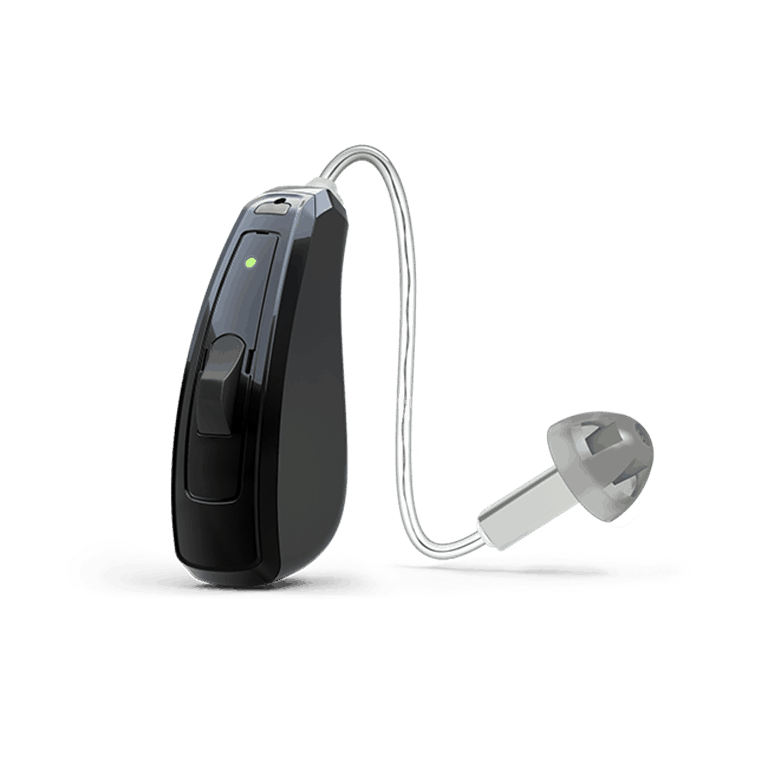
ReSound Hearing Aids Overview
ReSound built its reputation on cutting-edge connectivity and maintaining natural sound quality. It pioneered wireless features that are now standard in premium hearing aids, including Bluetooth connectivity.
The current ReSound product lineup includes:
- Vivia: The newest flagship features a new dual-chip processing system and is marketed as the world's smallest AI hearing aid.
- Nexia: The previous flagship model is still widely sold and highly relevant, and it was the first device to feature Auracast technology.
- Enzo IA: The new power flagship hearing aid replaces the Enzo Q (which is still widely sold) for severe-to-profound hearing losses and is marketed as the smallest rechargeable power BTE, bringing AI noise reduction to the Super Power category.
- Savi: The hearing aid is budget-friendly, offers core features (Auracast, rechargeable, IP68 waterproof rating) without the advanced “dual chip” AI processing of the Vivia.
While testing the Vivia model in an Auracast-enabled environment, we experienced seamless audio streaming directly from the venue’s sound system to the hearing aids. It could be the future of public space accessibility for hearing aid users.
While the Savi model features fewer enhancements than the premium models, we could still clearly understand speech in noisy environments.
ReSound’s Smart 3D app offers comprehensive control options, although we found it slightly less intuitive than the My Starkey app. The ReSound app, however, provides more sound customization options that audiophiles and people with specific hearing preferences will appreciate.
Like Starkey, ReSound hearing aids require professional fitting through licensed hearing care providers. If you want to kick-start the process online, you can use a platform like Yes Hearing.
Performance Comparison
We tested hearing aids from both brands to see how they stack up.
Sound Quality and Processing
Both manufacturers deliver exceptional sound quality, but they employ different approaches to sound processing.
Noise Management
While both Starkey and ReSound use advanced AI to filter out background noise, they approach the problem through different philosophies: Starkey prioritizes aggressive speech isolation, while ReSound focuses on spatial awareness.
Starkey: The “Speech First” Approach
Starkey’s latest architecture (featured in the Genesis AI and Edge AI lines) uses its integrated Neural Processor to actively “clean” speech.
- The Benefit: It isolates voices from background clatter with high intensity, creating a sharper, highly processed sound. This is an excellent choice for users who struggle significantly in crowds and want the hearing aid to do the heavy lifting.
- The Trade-off: By aggressively filtering the environment, some users may find the sound quality feels less “natural” or slightly clinical.
- Edge Mode: This on-demand feature performs an instant, high-intensity analysis of the room to further sharpen speech in the most challenging moments.
ReSound: The “Organic” Strategy
ReSound utilizes its AI to power an Organic Hearing philosophy. Rather than deleting the background noise entirely, it seeks to balance it.
- The Benefit: This approach preserves spatial awareness, meaning you can still hear the “atmosphere” of a room (like a bird chirping or a distant car) while focusing on a conversation. This results in a more open and realistic listening experience.
- The Trade-off: Because it doesn't “mute” the world as aggressively as Starkey, users who are highly sensitive to background noise might feel less isolated from distractions.
- Intelligent Focus: This technology maps the soundscape in 360 degrees, prioritizing clarity based on the direction you are looking without losing the sense of the space around you.
Connectivity Features
Both manufacturers offer comprehensive connectivity options, but ReSound holds a slight edge.
Starkey’s Bluetooth technology provides a seamless connection to smartphones and devices. During testing, we enjoyed clear audio streaming from both Apple and Android devices. The Edge AI model maintained stable connections throughout our evaluation, even when moving between rooms.
ReSound’s Auracast technology impressed us most. At an Auracast-enabled venue, we connected directly to the public audio system without additional accessories. While this feature is now available from many hearing aid brands, we found ReSound’s use of it to be particularly smooth. For people who frequently attend public events or travel through airports and train stations, it offers significant advantages as Auracast adoption increases.
Health Monitoring Capabilities
Starkey has invested heavily in health monitoring. The Edge AI model we tested had reliable fall detection that detected simulated falls and alerted designated contacts. Balance Builder helps patients proactively prevent falls through exercises designed to bolster balance and stability, while Respiratory Rate monitoring is also included, an industry first.
ReSound devices offer limited health monitoring compared to Starkey. Their app tracks hearing aid usage patterns, but they don’t provide the comprehensive health metrics that Starkey’s platform offers. Starkey provides clear advantages for users who prioritize integrated health monitoring.
According to the Centers for Disease Control and Prevention (CDC), falls are the leading cause of both fatal and nonfatal injuries for older Americans, affecting 1 in 4 adults ages 65 or over each year.2 Starkey’s fall-detection feature directly addresses that critical safety concern.
Battery Life and Power Management
Both manufacturers offer excellent battery performance in their rechargeable models; however, Starkey reigns supreme here.
Starkey’s rechargeable models provided up to 51 hours of use on a single 3.5-hour charge, which is among the best in the industry. That means users rarely worry about running out of power during daily use, even with streaming.
ReSound’s rechargeable models typically delivered 24 to 30 hours per charge, with the Vivia model reaching the upper end. It doesn’t match Starkey’s longevity, but that performance is still sufficient for most users’ daily needs.
Both manufacturers offer rechargeable and disposable battery options across most product lines.
Features Comparison
Functionality and special features significantly impact the user experience with hearing aids. Here’s how Starkey and ReSound compare.
Mobile Applications
Both Starkey and ReSound provide high-performing apps—My Starkey and ReSound Smart 3D—that offer a baseline of “Essential Controls” expected from premium hearing aids. These include independent volume adjustment, program switching, and “Find My Hearing Aid” GPS tracking.
The real decision for users comes down to the specialized tools built into each ecosystem.
FYI: According to the American Tinnitus Association, more than 50 million adults have experienced tinnitus symptoms lasting at least five minutes in the past year.3
Key Differentiators
ReSound: The Audiophile’s Choice
While both apps manage tinnitus, ReSound is widely considered the industry leader in this category. Their dedicated ReSound Relief integration allows for complex “soundscapes” (layering water, white noise, and music) that provide more nuanced relief than standard masking tones. Additionally, their Check My Fit feature uses a “selfie” to help users verify their hearing aids are inserted correctly—a common hurdle for new wearers.
Starkey: The “Health-Conscious” Choice
Starkey has pivoted toward a “whole-body” health approach. Their app is the only one to offer Fall Detection (which can alert emergency contacts) and Step Tracking. For those who want their hearing aids to function like a medical-grade wearable or smartwatch, Starkey provides a unique advantage. They also include a Self-Check tool that allows you to run a diagnostic on the microphones and receivers to see if they need cleaning before you drive to the clinic.
If you struggle with tinnitus or are tech-focused on sound quality, ReSound’s app-based ecosystem is likely the better fit. If you are concerned about personal safety (falls) or want your hearing aids to track your fitness, Starkey is the clear winner.
Pricing Comparison
In my experience, both brands offer models ranging from $2,000 to 8,000 per pair. There is no set MSRP for prescription hearing aids, meaning pricing will vary significantly by the model and the retailer.
Prices for identical models can vary by up to $800 across different audiologists and hearing centers, so we recommend consulting multiple providers before purchasing.
Did You Know? Medicare typically doesn’t cover hearing aids, but some Medicare Advantage plans include hearing benefits. According to Audiology.org, roughly 20 states mandate some form of insurance coverage for hearing aids, but the coverage is limited to children4.
Warranties Comparison
When comparing Starkey and ReSound, the warranty landscape is remarkably similar, as both brands adhere to industry-standard protections. The true variation typically lies with your local hearing care professional rather than the manufacturer itself.
Standard Repair Coverage
Both brands offer a one-to-three-year repair warranty, covering manufacturing defects and material failures. The length of this term is usually dictated by the specific technology level of the device you choose. While some providers may offer the option to extend a repair warranty for an additional fee, this is subject to the specific model and clinic policy.
Loss and Damage (L&D)
Loss and Damage protection is standard across both Starkey and ReSound, though it is important to understand the limitations:
- One-Time Use: L&D coverage typically allows for only one replacement per ear during the warranty period.
- Deductibles: If you lose or destroy a device, you will be required to pay a replacement deductible. These fees are set by the provider and can vary significantly between clinics.
- Non-Extendable: Unlike repair warranties, L&D coverage generally cannot be extended beyond the initial term.
Service Portability
While both brands have wide distribution, “universal” service can be tricky. Most audiologists familiar with these brands can facilitate repairs, but they are not required to do so for free. If you visit a provider other than the one who sold you the devices, expect to pay out-of-pocket office fees for the consultation and shipping. For international travelers, ReSound’s global network may offer some peace of mind, but local consultation fees will still apply abroad.
Customer Experience
Purchasing Process
Both Starkey and ReSound hearing aids must be purchased through licensed hearing care professionals. That approach ensures proper fitting and programming, but it requires more steps than direct-to-consumer brands.
The typical purchasing process for both brands includes:
- Initial hearing evaluation with an audiologist
- Consultation about appropriate models
- Custom fitting and programming
- Follow-up adjustments as needed
When we went through the process with both brands, we found the experience largely dependent on the individual provider rather than the manufacturer. Both Starkey and ReSound provide extensive training to their authorized distributors, resulting in generally consistent service quality.
Important Health Note: According to the NIH, only about 1 in 5 people who would benefit from hearing aids actually uses them.5 Getting professionally fitted hearing aids like those from Starkey or ReSound can help increase the chances of a person actually using their devices.
Remote Support Options
Telehealth services are available from both Starkey and ReSound.
- Starkey offers remote adjustments through the My Starkey app.
- ReSound provides similar capabilities through its Smart 3D app.
When we tested the remote support features, both performed well. They allowed minor adjustments without in-person visits. ReSound’s video call feature provided a slightly more personal experience during remote consultations.
Pro Tip: Even the experts need an expert sometimes. Do not be discouraged if your hearing care provider has to call Support during your appointment. This is actually a green flag! Hearing aid software updates so rapidly that controls can be finicky, and a provider who is willing to call for help is one who prioritizes getting it right over pretending to know everything.
User Reviews and Satisfaction
Individual experiences vary, but our research into user reviews revealed some consistent patterns:
- Starkey users frequently praised the health tracking features and battery life.
- ReSound users highlighted sound quality in complex environments and connectivity features.
Bottom Line
Starkey and ReSound both have our stamp of approval, and which one works best for you will depend on your needs and priorities.
Choose Starkey if you need:
- Comprehensive health monitoring capabilities
- Long battery life (up to 51 hours on a single charge)
Choose ReSound if you value:
- Cutting-edge connectivity and granular sound-adjustment options
- Industry-leading tinnitus management features
- Superior environmental awareness and wind noise reduction for active individuals
For more affordable alternatives to these premium brands, explore our guide to the best OTC hearing aids.
Our Methodology
Our comprehensive evaluation of Starkey and ReSound hearing aids involved:
Hands-on testing: We tested multiple models from each manufacturer in various environments, including quiet settings, restaurants, outdoor spaces and group conversations.
Comparative analysis: We directly compared equivalent models from both brands using standardized testing protocols for sound quality, battery life, connectivity and feature functionality.
Expert consultation: We interviewed audiologists and hearing instrument specialists who regularly fit both brands to gather professional insights.
User feedback: We collected experiences from long-term users of both brands to understand real-world performance and satisfaction.
Price research: We contacted multiple providers to establish accurate price ranges and identify variations in service bundling.
Warranty analysis: We reviewed warranty terms and conditions across providers to compare coverage options.
Frequently Asked Questions
-
Are both brands suitable for severe hearing loss?
Yes. Starkey’s Evolv AI and ReSound’s Enzo IA and Enzo Q models are designed for severe to profound hearing loss with powerful amplification and specialized features.
-
Can I switch providers after purchasing my hearing aids?
Transitioning your care to a new provider is absolutely possible and can be a seamless experience with a little preparation. Because prescription hearing aids are FDA-regulated medical devices, this is considered a medical transfer rather than a simple repair. Your new clinician will need your original purchase details to verify warranty coverage and may require an updated hearing test to ensure safe programming. Simply call ahead to confirm the clinic works with your specific brand/model, and view this as a fresh start for your hearing health.
-
What’s the main difference between these brands?
Starkey focuses on health monitoring and battery life, while ReSound emphasizes connectivity and environmental awareness.
-
Which brand is better for music lovers?
ReSound’s wider dynamic range preserves more nuance in complex musical pieces, while Starkey’s Edge AI excels with vocal-focused music. For dedicated musicians, we recommend exploring specialized options such as musician-focused hearing aids.
-
How do these brands compare to more affordable options?
Both Starkey and ReSound offer premium technology at premium prices. More affordable alternatives, such as MDHearing, Eargo and Jabra Enhance, provide basic functionality at lower price points, but they lack advanced features for people with severe or profound hearing loss.