The 4 Best Fall Detection Devices in 2026, Tested by Caregivers

Falls remain one of the greatest threats to independent living, with the Centers for Disease Control and Prevention (CDC) reporting that 1 in 4 older Americans experiences a fall each year.1 To make matters worse, fatality rates from falls are on the rise among seniors, with roughly 70% of falls resulting in death.2 This is why we conducted hundreds of hours of hands-on testing to find the best medical alert systems with automatic fall detection.
After testing 12 fall detection devices from 10 reputable providers, our caregivers and health-care professionals identified four standout fall detectors for elderly users that can deliver when it matters most. The MGMini Lite emerged as our top recommendation, accurately detecting 80 percent of test falls while triggering zero false alarms during our weeklong evaluation.
You can watch our hands-on review here:
Key Takeaways
- Medical Guardian MGMini Lite is our top fall detection device because it detected 80 percent of our test falls, triggered zero false alarms, and connected us to help in an average of eight seconds. It costs $149.95 for the device and $56.95 per month.
- Bay Alarm Medical SOS All-In-One 2 is the best pendant option for seniors who want strong fall detection at a lower monthly price. It detected 70 percent of our test falls and costs $149 for the device and $44.95 per month with fall detection.
- ADT On-the-Go is a strong choice for reliable monitoring and GPS accuracy, with 80 percent fall-detection accuracy and an average response time of 14 seconds. It has a $99 activation fee and costs $52.99 per month with Integrated Fall Detection.
- Apple Watch SE 3 is best for caregiver features and low monthly costs, especially for older adults who already use Apple products. It starts at $249 for the device, and monthly costs range from $0 to about $25, depending on cellular and GPS needs.
- No fall detection device is 100 percent accurate, so we recommend comparing fall-detection accuracy, false alarms, comfort, monitoring, and total cost before choosing a device.
What Is Fall Detection?
Fall detection is a safety feature that uses sensors and motion-detection technology to recognize when a person falls and automatically call for help, even if the user cannot press a button.
In medical alert systems, fall detection is usually built into a wearable pendant, bracelet, mobile device, or smartwatch. When the device senses a fall, it contacts either a professional monitoring center or emergency services, depending on the provider and device type.
Fall detection can be especially helpful for older adults who live alone, have balance issues, or are at higher risk of falling. It is not 100 percent accurate, and false alarms can happen, but it can provide an important extra layer of protection when someone falls and cannot call for help on their own.
Ever since Life Alert’s commercials featured the famous line, “I’ve fallen, and I can’t get up,” medical alert systems have been associated with getting older adults help in the wake of a fall.
Life Alert systems are, ironically, among the few that don’t support fall detection, but the companies on this list have reliable fall detectors for the elderly that can protect your loved ones.
>> Further reading: What Is a Medical Alert System?
Why Trust Us
The Senior List’s team of caregivers, experts, and health-care professionals conducted over 5,000 hours of in-depth research and testing, so we can recommend the most reliable medical alert devices that help seniors age in place. During the process, our team:
- Tested 50 medical alert devices from 15 brands
- Heard from 1,250 seniors and caregivers in our medical alert system usage survey
- Consulted with nurses, EMTs, and caregivers who are experts at caring for older adults
- Published dozens of videos that demonstrate our medical alert system testing3
- Evaluated verified customer reviews of medical alert companies from the Better Business Bureau
How We Tested Each Fall-Detection Device


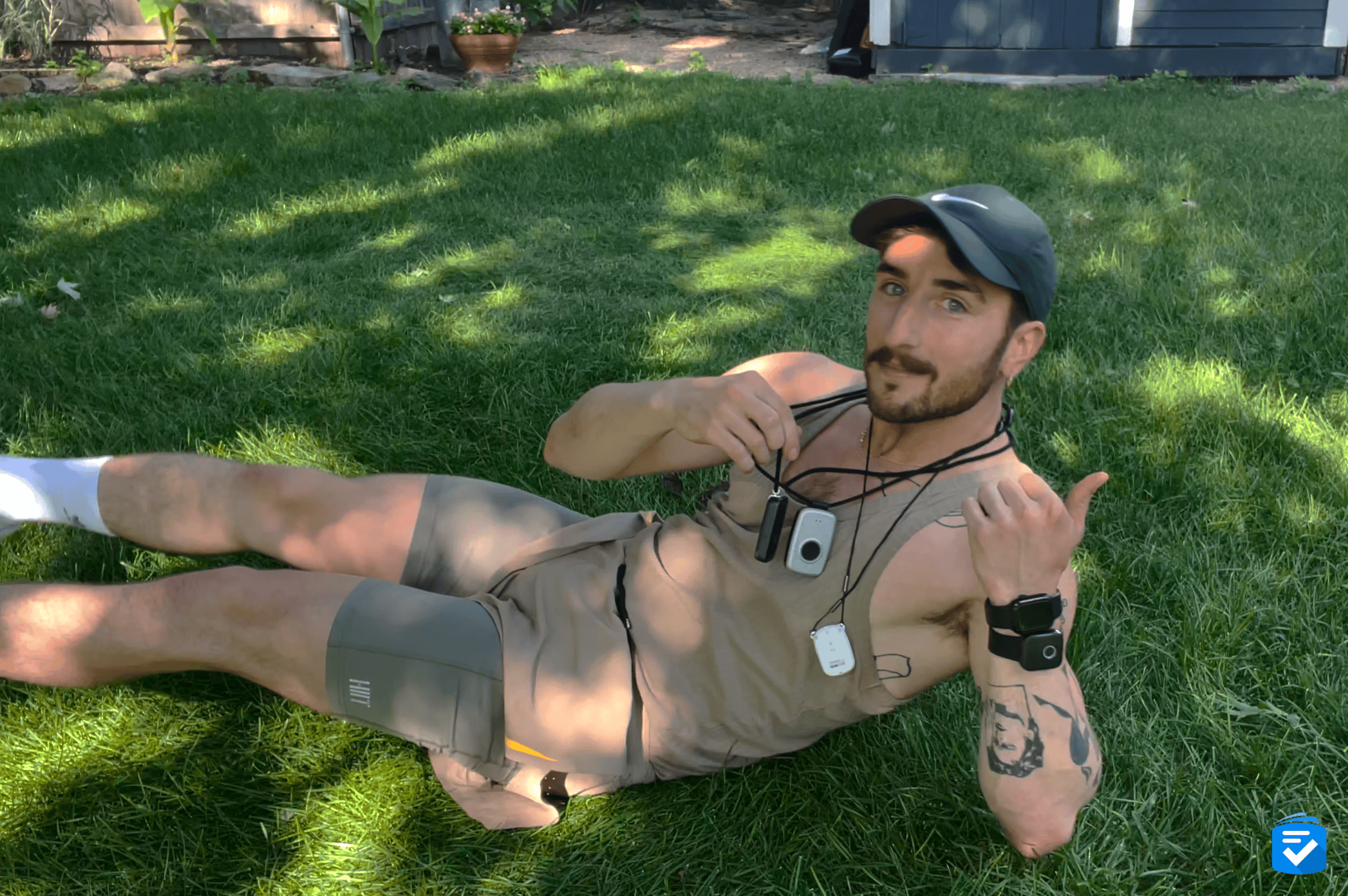
To find the best fall detection devices, we tested 12 devices from 10 companies and evaluated each one using the same hands-on criteria:
- Fall-detection accuracy: We performed 10 simulated falls with each device, including five fast falls and five slow falls.
- False alarms: Our testing team wore each device for one week and counted how often it incorrectly detected a fall.
- Response times: We measured how quickly each device connected us to help after an alert.
- Pricing: We compared device costs, monthly monitoring fees, and fall detection add-on fees.
- Comfort: We evaluated whether each device was comfortable enough to wear throughout the day.
- Monitoring: We prioritized devices that connect users to a professional monitoring center rather than only contacting 911.

The Best Fall Detection Devices
- Medical Guardian MGMini Lite : Most Accurate Fall Detection
- Bay Alarm SOS All-In-One 2 : Best Pendant Option
- ADT On-the-Go : Reliable Monitoring
- Apple Watch SE 3 : Best Caregiver Features
Fall Detection Devices Compared
|
Medical Guardian MGMini Lite
 |
Bay Alarm SOS All-In-One 2
 |
ADT On-the-Go
 |
Apple Watch SE 3
 |
|
|---|---|---|---|---|
| Rating out of 5 | 4.7 | 4.5 | 4.2 | 4.0 |
| Fast falls detected | 5 out of 5 |
4 out of 5 |
5 out of 5 |
4 out of 5 |
| Slow falls detected | 3 out of 5 |
3 out of 5 |
3 out of 5 |
0 out of 5 |
| Device type tested | Bracelet |
Pendant |
Pendant |
Smartwatch |
| False alarms | 0 | 4 |
12 |
0 |
| Cost (with fall detection) |
|
|
|
|
| Battery life | 36 hours |
60 hours |
40 hours |
18 hours |
| Ideal user | Seniors who want the most accurate fall detection and caregiver app support |
Budget-conscious users who want a pendant-style medical alert device |
Seniors who want strong GPS accuracy and reliable monitoring |
Tech-comfortable users who want smartwatch features and low monthly costs |
*ADT’s On-the-Go system technically requires no equipment charges; however, you will pay a nonrefundable $99 activation fee with this system. It also comes with Integrated Fall Detection for $11 per month, though users can opt for a separate fall detection pendant for an additional $3 per month, plus a one-time fee of $14.99.
Our Top Picks
1. Medical Guardian MGMini Lite - Most Accurate Fall Detection
877-947-4512
What We Like Most:
- 80 percent of falls were detected in our tests
- No long-term contracts required
- IP67 water-resistant device
- Useful app for caregivers
Overview
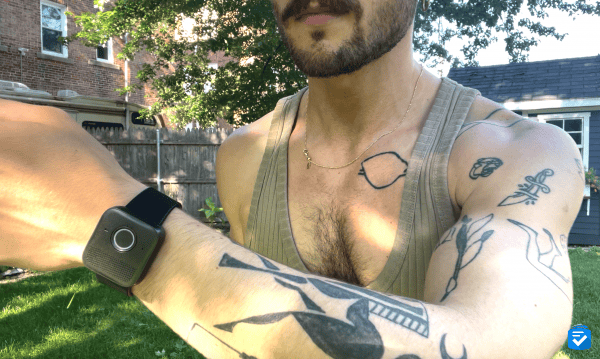
Due to their lightning-fast response times, Medical Guardian systems have long been among our favorites. The MGMini Lite, a mobile medical alert bracelet, combines the company’s reliable monitoring with the most accurate fall detection we’ve seen.
While the MGMini Lite has the most accurate fall detection, it’s also among the most costly systems on this list. We think, however, that the peace of mind is worth the extra cost. It’s also a great option for caregivers who want a quality app to know if and when a fall or similar emergency occurs.
Pro Tip: Want to learn about our full experience with the MGMini Lite beyond fall detection? Then read our full MGMini Lite review.
Testing
In our 10 test falls, the MGMini Lite detected all five fast falls and three slow falls, making it the most accurate device we tried. We were also impressed that, during our week wearing the device, it triggered no false alarms — something only the Apple Watch SE 3 could match.
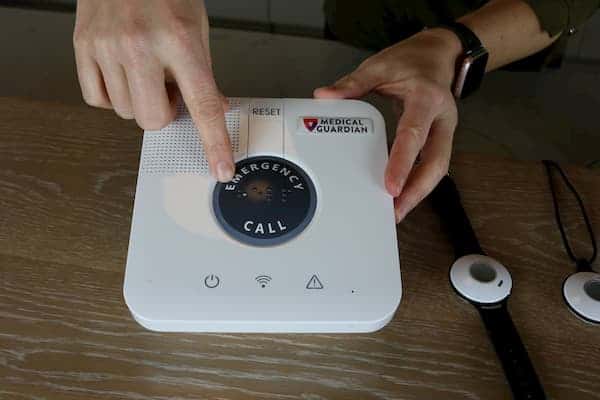
Once falls were detected, it was easy to communicate with monitoring agents via the device’s speakerphone. Much like other Medical Guardian devices, the MGMini Lite connected us to help in an average of eight seconds.
After each fall, the MGMini Lite also notified our loved ones via the MyMedicalGuardian app. The app allowed them to track the device’s live location and monitor its battery life.
Medical Guardian costs, including equipment fees and monthly plans, are the second highest of any provider we tested. The MGMini Lite is the most accurate fall detection device, but we can’t ignore that it’s also one of the most expensive on this list. It costs a one-time $149.95 fee, followed by monthly payments of $56.95.
Medical Guardian’s MGMini is slightly less expensive at $53.95 per month ($43.95 without fall detection); however, in our MGMini review, we found that the device’s automatic fall detection was not nearly as accurate.
Verdict
Reliable, comfortable, and capable of detecting the vast majority of falls, the MGMini Lite is our top-rated fall-detection device.
It detected 80 percent of test falls, which is great for seniors who are at higher risk of falls and just want peace of mind. The MGMini Lite costs more than other devices on this list, but its reliability makes it worth the higher price.
>> Learn more: Medical Guardian Review
Pros
- Reliable fall detection
- Accurate GPS capabilities
- Small and comfortable design
- Can be worn in the shower
Cons
- High monthly costs
- High equipment costs
2. Bay Alarm SOS All-In-One 2 - Best Pendant Option
What We Like Most:
- 70 percent fall detection accuracy
- Under $45 per month with fall detection
- No long-term contracts
- Small, comfortable size
Overview
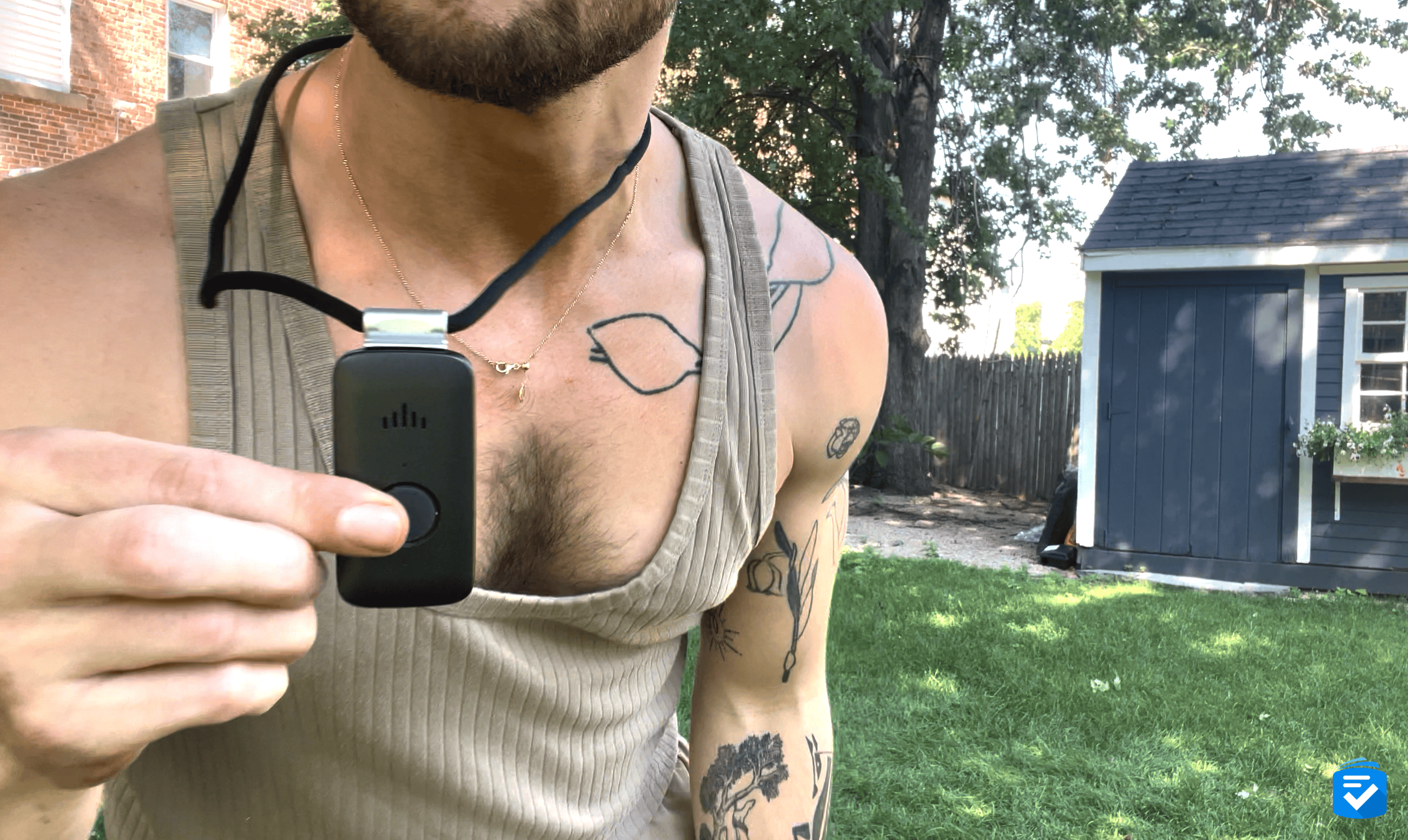
If the MGMini Lite is too expensive, Bay Alarm Medical’s SOS All-In-One 2 may be a better option. At $44.95 per month (fall detection included), it’s one of the most affordable fall-detection devices. However, you’ll still have to pay a similar equipment fee upfront ($149).
Costs aside, the SOS All-In-One 2 has an excellent two-way speaker. We were able to clearly hear the responder on the other end during each of the fall tests. And while it can’t quite match Medical Guardian’s accuracy, this system’s fall detection could still detect 7 out of 10 percent of falls (on par with industry standards).
Testing

In our 10 test falls, the SOS All-In-One 2 detected four fast falls and three slow falls. That isn’t quite as accurate as ADT’s On-the-Go system, but the SOS All-In-One 2 ranks more highly because it triggered far fewer false alarms.
Additionally, the SOS All-In-One 2 has automatic fall detection built into its compact unit, which means it’s much more comfortable to wear than ADT’s multipendant system (more on that below).
In our test calls, we found that the SOS All-In-One 2 quickly connected us to help, averaging 16 seconds in our 10 calls. That’s not quite as fast as Medical Guardian’s response times, but it’s still faster than average.
With the SOS All-In-One 2, we also got free access to the Bay Alarm Medical app. Through the app, loved ones could track our device’s location and receive notifications each time a fall was detected.
The primary drawback of the SOS All-In-One 2 is that it performed ever so slightly worse than the MGMini Lite. That said, Bay Alarm Medical’s prices are more affordable. For some users, the savings may be worth it.
Verdict
The SOS All-In-One 2 performed slightly worse than the MGMini Lite, but we’d still trust it to protect our loved ones. Plus, it will do so at a significantly lower price.
For those on a tighter budget who still want an accurate fall detector for elderly users, Bay Alarm Medical’s SOS All-In-One 2 is a solid choice.
>> Learn more: Bay Alarm Medical Review
Pros
- 70 percent fall-detection accuracy
- Useful app for caregivers
- Three-day battery life
- 4G LTE cellular coverage from Verizon or AT&T
Cons
- Can’t be immersed in water
- Not as accurate for slow fall detection
3. ADT On-the-Go - Reliable Monitoring
855-571-0361
What We Like Most:
- 80 percent fall detection accuracy
- In-home and mobile fall detection
- No long-term contracts
- Water-resistant devices
Overview
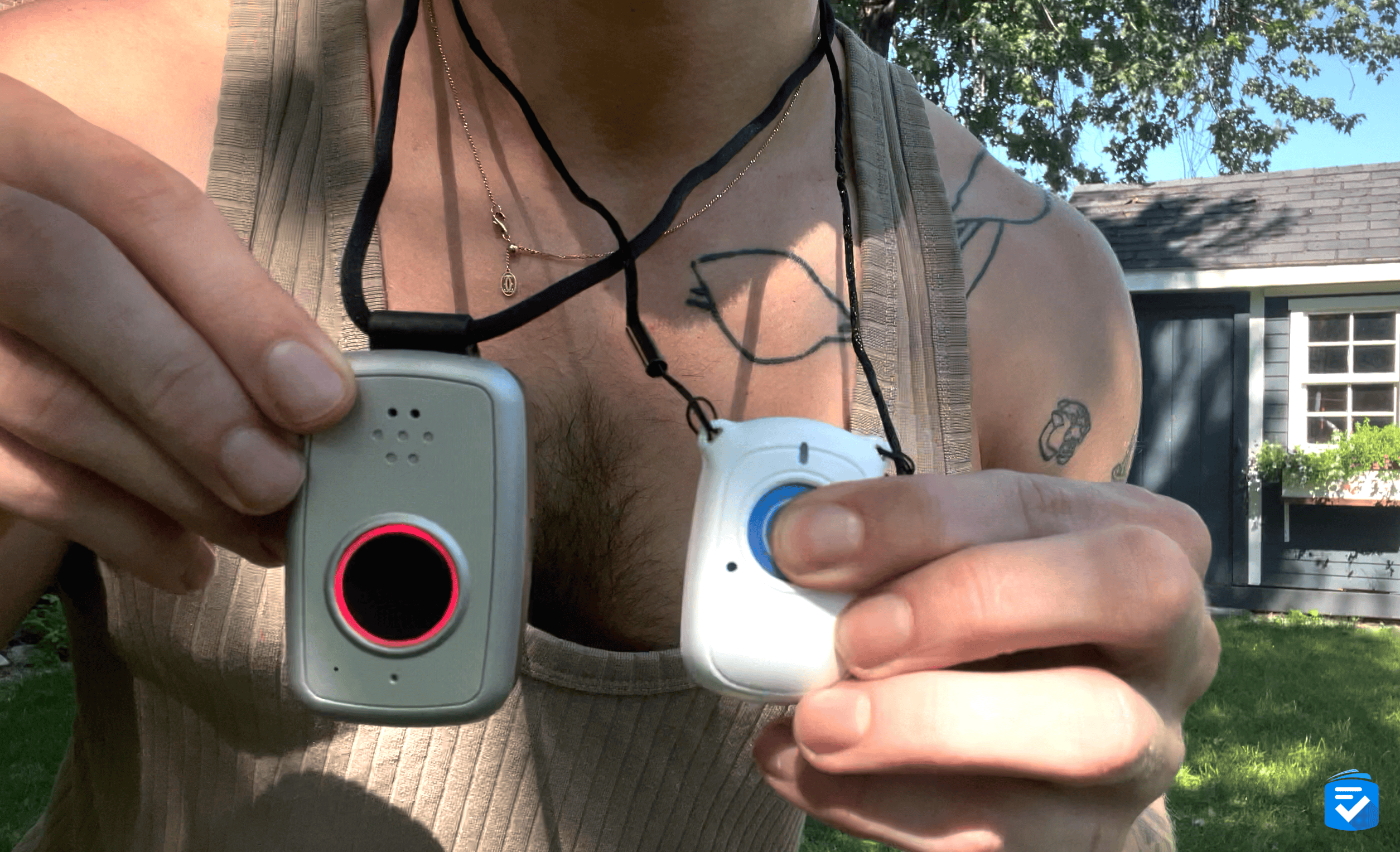
ADT charges $11 per month for fall detection (slightly higher than the standard $10). Their On-the-Go system detected eight out of our 10 test falls, however, making it among the most accurate devices. Though cost is definitely important, accuracy is our top concern, so we think it may be worth the extra dollar per month to see better results.
While ADT’s automatic fall detection service is a little more expensive than most other providers, it can offer highly accurate fall detection with systems that are more affordable than Medical Guardian’s MGMini Lite. The issue is that ADT’s automatic fall detection is a little too sensitive — it triggered a dozen false alarms during our weeklong test.
Testing
ADT’s On-the-Go detected five out of five fast falls and three out of five slow falls. That said, we ranked the SOS Mobile more favorably due to ADT’s proclivity for false alarms.
After wearing the device for one week, our testing team counted 12 false alarms. Deactivating the alarms was easy enough, but their frequency got pretty annoying.
In our 10 test calls, their agents answered in an average of 14 seconds. The agents were able to consistently report our GPS location, too.
Thanks to the recent implementation of Integrated Fall Detection, On-The-Go users have automatic fall detection built into their device. This eliminates the need for a separate fall detection pendant. Customers can still opt for a separate device if they want one, but it will cost an additional $3 per month, per pendant, plus a one-time fee of $14.99.
The biggest issue we had was that no ADT medical alert system supports any type of app or communicative features for caregivers. If caregiver connectivity is important to you, then I’d recommend the MGMini Lite.
Verdict
With accurate fall detection both in and out of the home, ADT is a solid option for a medical alert device.
It offers comparable fall detection accuracy to Medical Guardian’s MGMini Lite at 80 percent, so it’s a reliable option if you don’t mind managing more than one device.
>> Learn more: ADT Medical Alert Review
Pros
- GPS capabilities
- Water-resistant help buttons
- Accurate fall detection
- No long-term contracts required
Cons
- Option for a separate fall detection pendant costs more
4. Apple Watch SE 3 - Best Caregiver Features
What We Like Most:
- No required monthly cost for iPhone users
- Ample caregiver features
- Health-tracking capabilities
- Accurate detection of fast falls
Overview
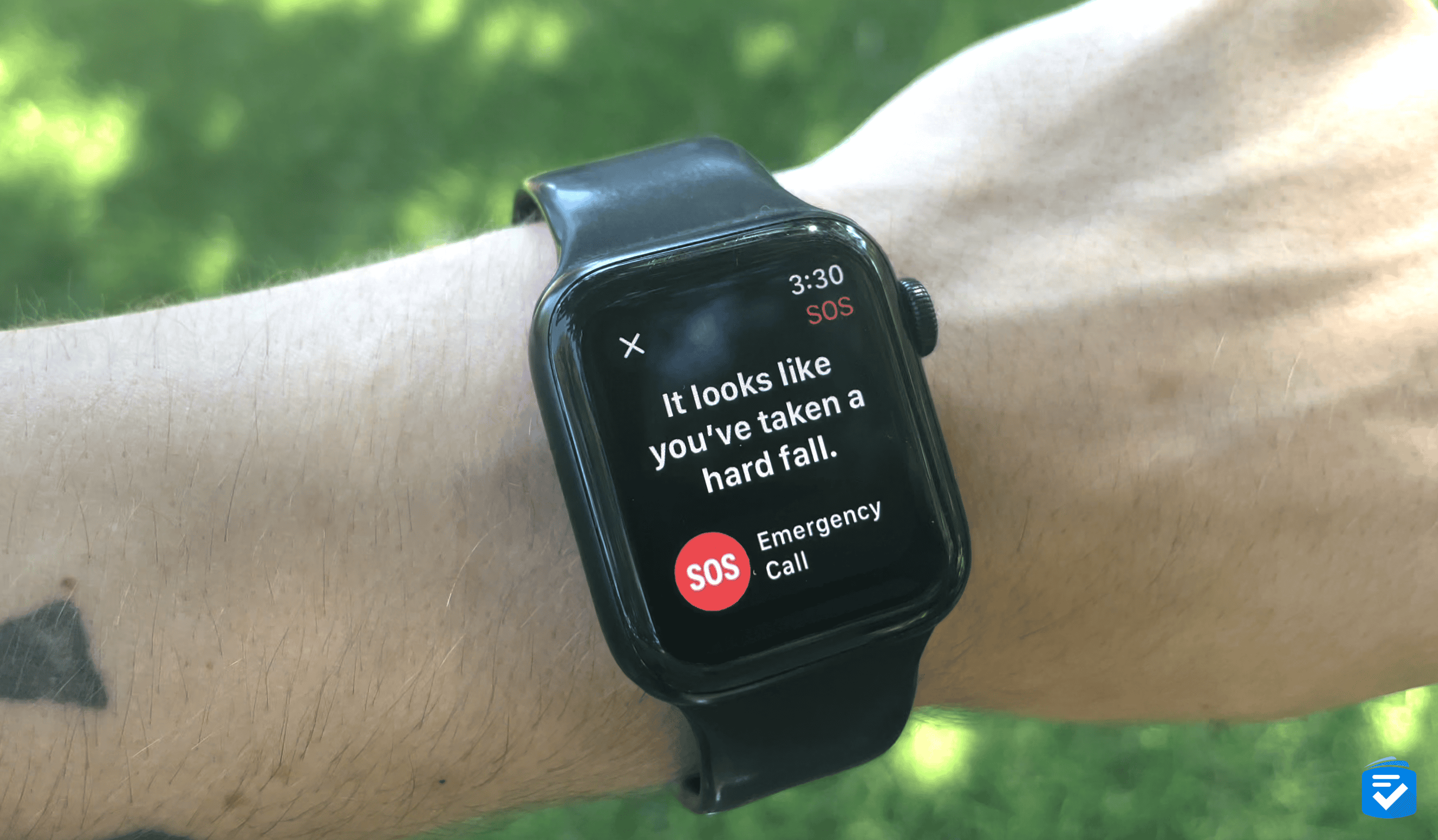
In our recent survey of medical alert system users, the vast majority of respondents reported using an Apple Watch as a medical alert system. In our tests, we found that the device may be a worthwhile option as long as the wearer can use its interface.
Since the monthly costs are far less than traditional medical alert systems with fall detection, the Apple Watch SE 3 is also a budget-friendly alternative. Keep in mind that the Apple Watch doesn’t have the most accurate fall detection on this list. Moreover, Apple doesn’t offer a dedicated response center like traditional medical alert providers do — a fall will just trigger a call to 911.
Testing
The Apple Watch SE 3 detected four fast falls and zero slow falls. So why did we include it on this list?
First, we appreciate the caregiver features of any Apple Watch. With this device, loved ones could track our location. When the watch detected our fast falls, we could automatically alert our loved ones. The Apple Watch is also the only device on this list that allows you to place phone calls and send text messages directly from the watch.
Second, the Apple Watch SE 3 is deceptively affordable. The device costs $249, but its monthly costs are incredibly low. I use an iPhone, which means I didn’t have to pay extra monthly fees for my Apple Watch. Fall detection is included at no extra cost.
Adding GPS would have been $249 a year, or $20.75 a month, while adding GPS and cellular would have been $299, or $24.91 a month — lower subscription costs than any other option on this list. Supported carriers include T-Mobile, Verizon, AT&T, and Boost Mobile.
The Apple Watch SE 3 proved useless when it came to detecting slow falls, but its biggest drawback is its complicated design. Compared to the other devices on this list, the Apple Watch has countless capabilities. That’s usually a good thing, but not when they’re all contained on a roughly 1.5-inch touch screen, especially for older adults with vision loss.
>>Read more: The Best iPhones for Seniors
Verdict
The Apple Watch SE 3 is not our top pick for accuracy, as it was unable to detect any slow falls. Provided you don’t care about slow fall detection, Apple Watch fall detection may be a good fit. However, it’s difficult to know if you’re more susceptible to slow or fast falls, so being able to detect both is always the safest bet.
Still, the Apple Watch SE 3 comes with a variety of health, communication, and entertainment features not seen on traditional medical alert systems. We recommend the Apple Watch SE 3 to older adults who are familiar with Apple products or don’t mind a learning curve to figure out their device.
>> Learn more: Apple Watches vs. Medical Alert Systems
Pros
- Reliable, fast fall detection
- Ample communication features
- Low or no monthly fees
- Accurate location features
Cons
- Calls 911 instead of a monitoring center
- Does not detect slow falls
Honorable Mentions
The following devices did not make our top four, but they performed well in our tests and may work for certain users.
- Unaliwear Kanega Watch: The device detected a majority of falls, but it costs more than any other device we tested, with equipment costs starting at $299. Read our Kanega Watch review to learn more.
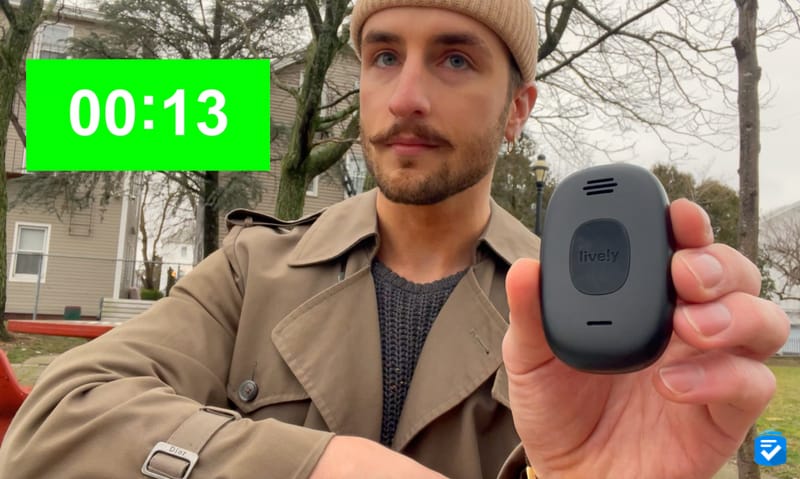
- Lively Mobile2: The Lively Mobile2 detected most of our falls, but frequent false alarms were an issue with this one. Read our full Lively Mobile2 review to learn more.
- MobileHelp: MobileHelp offers fall detection on a number of its systems, but the company will nickel-and-dime you to unlock features in its caregiver app. Read our MobileHelp review to learn more.
Types of Fall Detection Devices
There are a few common types of fall detection devices, and the best option depends on your lifestyle, comfort, and budget.
Pendants
These are among the most common fall detection devices. Pendants are usually worn around the neck and are often paired with either a mobile unit or an in-home base station. They can be a good fit for older adults who want a traditional medical alert setup and do not mind wearing a visible device.
While pendants worn around the neck have historically been the most accurate at detecting falls, recent advancements in multi-sensor technology have helped ensure that devices worn around the neck, on the wrist, or even on the hip can deliver accurate results.
Bracelets and wrist-worn devices
Bracelet-style devices, such as the MGMini Lite, may feel more natural for seniors who dislike neck pendants. They can also be easier to wear consistently throughout the day. The tradeoff is that some users may prefer the larger size or simpler button placement of a pendant.
All-in-one mobile devices
Some systems build fall detection directly into the main mobile unit, so there is no need to wear both a base device and a separate fall detection pendant. These options, like On-The-Go from ADT, can be more convenient for seniors who want fewer pieces of equipment to manage.
Smartwatches
Smartwatches with fall detection, such as the Apple Watch SE 3, can be a good option for older adults who are already comfortable with touch screens and app-based features. They usually offer the most extra features, but they may also have a steeper learning curve than traditional medical alert systems.
How Does Automatic Fall Detection Work?
In layman’s terms, an automatic fall detection device is designed to recognize the kind of sudden movements that occur during a fall and then contact help accordingly.
Through a combination of accelerometers, sensors, machine learning, and advanced algorithms, a fall-detection device automatically senses when a person falls.4 In many cases, fall detection uses the same accelerometer technology that allows your smartphone to adjust the screen when you rotate the phone.
Once a device detects a fall, it automatically sends a signal to an urgent-response call center. Even if a person is unable to press a help button, help will still be contacted.
This is what makes automatic fall detection such an important feature in medical alert systems. Many emergencies occur that prevent the user from being able to reach the button.
While automatic fall detection can’t detect falls with 100 percent accuracy, it can detect most falls — greatly reducing the risk of a senior falling and being unable to get help.
>> Read more: The Best Smartphones for Seniors
Fall Detection and False Alarms
One concern we hear frequently regarding fall detection is that the pendants can send out false alarms.
Full transparency: This is a genuine issue. No fall-detection system is perfect. Plus, from time to time, the sensors may mistake an ordinary movement — such as bending forward or getting into bed — for a fall and send out an alarm.
If it happens, however, you can simply press the button on your base station or pendant to contact the call center and let the agent know there’s no problem.
On the flip side, most systems are set not to send out an alarm if they detect movement after a fall. That is to prevent false signals. The system assumes if you can move, then you can press your alarm. It’s a good idea to press your help button after a fall to make sure help is coming.
Fall-detection systems aren’t perfect, but we firmly believe they are worth the investment. That is especially true for older adults who are particularly at risk of falls — such as people with balance issues, unsteadiness on their feet or a history of falls.5
That is why we recommend looking at both fall detection accuracy and false alarm rates, not just one or the other. A device that detects many falls but triggers constant false alarms may still be frustrating to use in everyday life.
Still, it’s far better to risk the occasional false alarm than be left without a way to get help after a fall. Medical alert companies are well aware of the potential for false alarms, so they’re prepared for them when they happen.
How to Choose a Fall Detection Device for Your Situation
Use the following to match your needs with the right type of fall detection device:
- If you live alone, then choose a device with strong fall-detection accuracy and few false alarms. Medical Guardian’s MGMini Lite is our top pick for this situation because it detected 80 percent of our test falls and triggered zero false alarms.
- If you live with a family member or caregiver, then prioritize caregiver app features. The MGMini Lite is a strong fit because the MyMedicalGuardian app lets loved ones track location and battery life.
- If you have reduced mobility, then choose a device that is accurate, comfortable, and easy to wear consistently. The MGMini Lite is a good option because it can be worn in the shower and detected 80 percent of our test falls.
- If you or a loved one has dementia or memory issues, then prioritize battery life and simplicity. Bay Alarm Medical’s SOS All-In-One 2 has the longest battery life on our list at 60 hours, which may help if the user forgets to recharge the device regularly.
- If you want professional monitoring, then choose a traditional medical alert system instead of a smartwatch. Medical Guardian, Bay Alarm Medical, and ADT connect users to monitoring centers, while the Apple Watch SE 3 calls 911 instead.
- If you want the lowest long-term monthly cost, then consider the Apple Watch SE 3. It costs more upfront at $249, but monthly costs range from $0 to about $25, depending on GPS and cellular needs.
- If you want a lower upfront cost, then consider ADT On-the-Go or Bay Alarm Medical SOS All-In-One 2. ADT has a $99 activation fee, while Bay Alarm Medical’s SOS All-In-One 2 has a $149 device fee and a lower monthly cost than the MGMini Lite.
Final Thoughts on the Best Fall Detection Devices for Seniors
No matter how much you pay, we have yet to encounter any fall detector for elderly users that is 100 percent accurate. For users prone to falls, however, fall detection could be the difference between getting quick help and waiting on the ground for hours.
Medical Guardian’s MGMini Lite is our top pick for accuracy, while Bay Alarm Medical’s SOS All-In-One 2 comes in second for solid accuracy and competitive monthly costs. If you want excellent monitoring at an even lower price point, ADT’s On-the-Go system is a great choice. Finally, if you want an advanced smartwatch that also functions as a low-cost fall detection watch, the Apple Watch SE 3 could be a good fit.
Frequently Asked Questions
-
Is there a device that detects a fall?
Yes, many medical alert systems, smartwatches, and some smartphones can detect falls. The best fall detection devices we tested include the Medical Guardian MGMini Lite, Bay Alarm Medical SOS All-In-One 2, ADT On-the-Go, and Apple Watch SE 3. These devices use built-in sensors to detect a fall and then contact a monitoring center, emergency services, or a caregiver, depending on the device.
-
Which is the best fall detection system?
The best fall-detection system we tested is the Medical Guardian MGMini Lite because it detected 80 percent of our test falls and triggered zero false alarms. Bay Alarm Medical’s SOS All-In-One 2 is another strong option for seniors who want a more affordable pendant-style device, while ADT On-the-Go is a good fit for users who want reliable monitoring and GPS accuracy.
-
Do smartphones have fall detection?
Yes, some newer smartphones and connected smart devices can detect falls, but they may not offer the same protection as a monitored medical alert system. Fall detection features are more common in smartwatches, such as the Apple Watch and Galaxy Watch, than in standalone smartphones. For seniors at higher risk of falling, a monitored medical alert system may provide more reliable emergency support.
-
Can an iPhone tell if you fall?
Yes, an iPhone can record fall history through Apple’s Health app when paired with a compatible Apple Watch. However, the Apple Watch is the device that detects the fall, not the iPhone by itself. Users can check fall history by opening the Health app on their iPhone.
-
Does Medicare cover fall detection devices?
No, Original Medicare does not cover fall detection devices because medical alert systems are generally not considered durable medical equipment. Some Medicare Advantage plans may offer discounts or limited benefits for select medical alert systems, including devices with automatic fall detection, but coverage varies by plan.